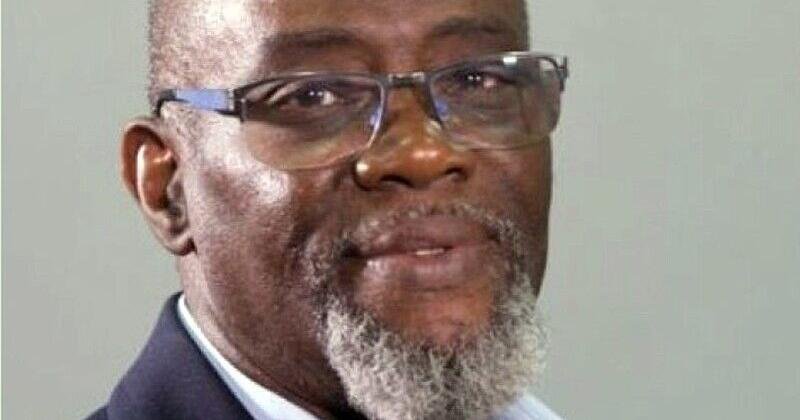
PRIME MINISTER Kamla Persad-Bissessar’s ‘washing of dirty linen’ in public is ‘detrimental to the fabric of Caricom’ and undermines regional unity, according to Barbadian political analyst Dr George C Brathwaite.
He was addressing the ongoing tension between Trinidad and Tobago and Caricom over concerns surrounding the process used to reappoint Secretary- General Dr Carla Barnett.
Speaking Tuesday during an interview on TV6’s Morning Edition programme, Brathwaite described the situation as ‘most unfortunate’.
‘It is most unfortunate that something that the Caribbean people cherish, even recognising the frailties that exist when you have 15 sovereign entities wanting to work together for the survival of the region. It tells me that what has exploded in the public domain ought not to,’ he said.
Referencing the sovereignty of Caricom member states, Brathwaite acknowledged that each territory has a right to safeguard its national interests. However, he stressed that the regional body was founded on collective responsibility and a shared vision.
‘I still think that the pioneers of Caricom, starting from the signing in 1973 and then later the revised treaty, recognised that it is about a shared destiny. It is a shared trip and we all advocate responsibility for the success and any failures or shortcomings of Caricom,’ he said.
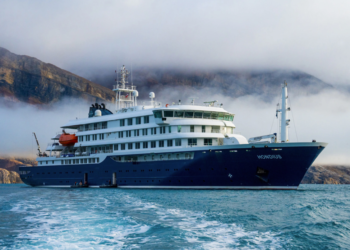
Persad-Bissessar has claimed T&T was ‘uninvited’ from a retreat in Nevis in February during the Regular Meeting of the Conference of Caricom Heads of Government where the vote was made for Barnett’s reappointment and has called for transparency on the process. Caricom Chairman Dr Terrance Drew responded in a statement that Foreign and Caricom Affairs Minister Sean Sobers was invited to the meeting but said he may be unable to attend due to concerns about seasickness.
Sobers has contended, however, the seasickness comment was a ‘joke’ and claimed he and other representatives of Caricom heads were not invited.
T&T had been calling for a meeting of Caricom to deal with the re-appointment of Barnett, insisting it was ‘deliberately uninvited’ to the meeting where the agreement had been reached. But both Prime Minister Persad-Bissessar and Sobers did not attend last Friday’s special regional leaders meeting to discuss the matter.
On Persad-Bissessar, Brathwaite maintained that while concerns about process may be valid, raising them publicly was counterproductive.
‘Given the Prime Minister of Trinidad and Tobago is so concerned with the process and the procedures, as may be her right, to wash dirty linen in public is detrimental to the fabric of Caricom,’ he said.
He went further, questioning the intent behind the Government’s approach.
‘Given other contextual statements over the last few months, one has to question motive and agenda, not the Caricom agenda, but what is the Prime Minister of Trinidad’s motive and agenda. She does not appear, to my mind, from all the public shenanigans, to be operating in the best interest of Caricom, nor Trinidad and Tobago,’ he said.
Brathwaite argued that the stance taken risks weakening the regional bloc and diverting attention from more pressing challenges.
‘I think this is coming across more as a broadside against persons she either likes or does not like, or some old grouse. The machinery of Caricom ought not to be utilised in this fashion,’ he said.
He added the dispute comes at a time of heightened geopolitical uncertainty, warning that such divisions threaten the cohesion of the region.
‘There are bigger issues confronting the Caribbean. What we are seeing is a spanner thrown into the mix…and yet we play with trouble, we play with our destiny, we are playing with current and future generations. And to me, that is wrong,’ Brathwaite said.
The analyst urged regional leaders to lower the tone of the discourse and utilise established diplomatic channels within Caricom to resolve differences, rather than allowing disputes to escalate in the public domain.
The T&T Government had previously clashed with Caricom over the US lethal strikes on alleged narco-traffickers in the Caribbean, with Persad-Bissessar expressing support for the action while other Caricom leaders responded by reiterating the region was a zone of peace. Talk more on the phone
On Monday, St Lucia’s Prime Minister Phillip J Pierre Monday spoke on the Caricom Secretary- General reappointment controversy by urging his Caricom colleagues to use the telephone to speak to each other.
Asked at the weekly Cabinet news conference if he had anything to say regarding the controversy sparked by Trinidad and Tobago insisting it was not invited to the retreat where the Barnett decision was taken in Nevis in February, Pierre said, ‘I would prefer to say just one thing.
‘I said it in Barbados and I’ll say it again. I really wish Caricom prime ministers would speak more to each other. That’s what I want to see. A phone call, and that’s what I want to see. Because you know, I don’t want to get involved in that to create more drama.’
Pierre, who takes over the chairmanship of Caricom when the leaders meet here in July, said he recalled earlier in his political journey how the former prime ministers like Sir John Compton, Dominica’s Dame Eugenia Charles, Barbados’ Tom Adams and Owen Arthur were in contact with each other.
‘I remember Owen Arthur speaking to Kenny Anthony (former St Lucia prime minister) very often, almost every other day. Owen used to be on the phone with Kenny Anthony. And I just wish if Caricom prime ministers would just speak to each other.
‘I’m going to become chairman of Caricom in July. Now that may sound, you know, that may sound as a very simplistic thing, because people like to talk about big series and big doctrines and things.
‘I’m a pretty simple person. I’m very simple, or very, very simple…All I wish is by the end of my term, I could get Caricom prime ministers pick up the phone and call each other. That’s all. If that happens, you will see the change.
‘Very simple. Very simple solution. Very simple solution. But I hope that we solve that problem, that issue. The issue has gone into the public domain now. As soon as it gets there, all politics is local. So the local politicians will get hold of it,’ Pierre said, adding ‘it’s unfortunate.
‘Very unfortunate. Because there is room for Caricom. Caricom is not a political union. Caricom does not have to have the same foreign policy. But there is room. But there are some things we have to agree on.
‘And if in my term, I can just get this simple act of more direct communication between Caricom prime ministers, regardless of the size of their countries, it would have pleased me.
‘That’s what I ask for because Caricom is doing good work. Very good work. We don’t seem to recognise it,’ he said noting that in trade, the Common External Tariff (CET) ‘is keeping a lot of Caricom’s trade together’.
Pierre said he believes the ‘very simple act of communication will solve a lot of problems. That’s my very, what some may call simplistic wish. Some even call it naive.
‘But I maintain that Caricom prime ministers should be speaking to each other more (often),’ Pierre told reporters.