
In it scenery ever changing policypower is presented as a persistent paradox: it seems solid, but is profoundly ephemeral; It is exercised with authority, but depends on citizen trust. In that delicate balance, whims emerge, those unexpected turns, inconsistencies and impulsive decisions that end up revealing the true nature of those who govern.
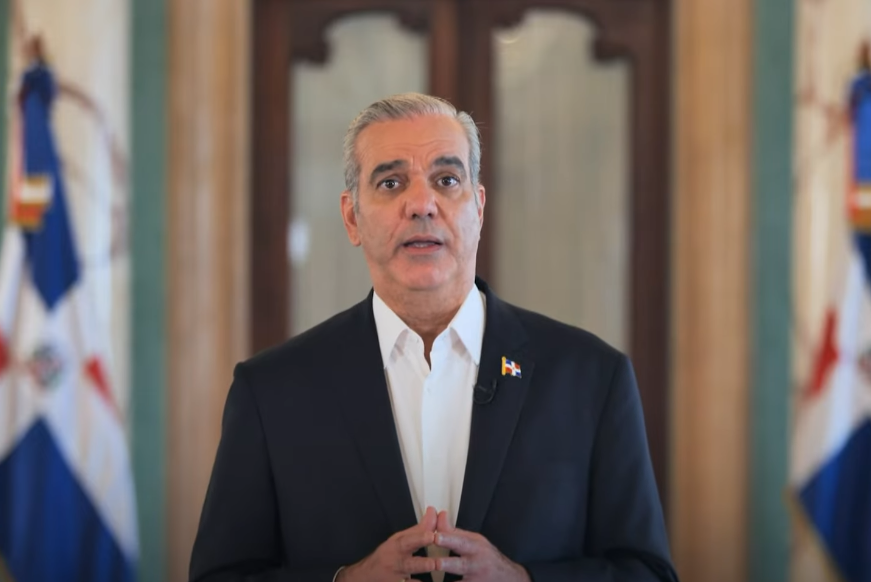
President Luis Abinader.
He can It does not transform people, it exposes them. Amplify their virtues or reveal their weaknesses. In its most philosophical dimension, power is a mirror that does not lie: it returns to the individual an augmented image of himself, devoid of excuses. Where coherence is lacking, contradictions appear; where there is no conviction, doubt arises; and where interest replaces principle, action loses meaning. Thus, the exercise of power becomes a constant test of character.
Political figures then emerge who today defend an idea and tomorrow deny it, who navigate according to the convenience of the moment and not on the basis of firm principles. Such erratic behavior not only erodes credibility, but also weakens trust in institutions.
The most worrying thing about this phenomenon is that those who embody it are rarely aware of their own wear and tear. They cling to exhausted speeches, convinced that they still dominate a scenario that has changed without them. Thus, its leadership is slowly diluted, losing relevance in an increasingly demanding and vigilant society.
Faced with this panorama, in the Dominican Republic an attempt has been made to mark a turning point. President Luis Abinader has taken on the challenge of breaking with that worn-out logic, directing his management towards a different way of exercising power. Its approach has been aimed at dismantling traditional practices based on agreements of convenience and non-transparent schemes that characterized political life for years.
The exercise of power under the direction of President Luis Abinader has sought to consolidate itself as a tool of public service, rather than as a space of privileges. In that sense, transparency has become a central axis of its management. Promoting accountability not only means showing results, but also transforming a political culture that has long normalized opacity.
Another key aspect has been institutional strengthening. President Luis Abinader has insisted on the need to build solid structures that transcend individual wills. Understanding that power cannot depend on isolated decisions, but on clear and stable rules, represents a significant change compared to past practices.
Likewise, closeness to citizens has been a distinctive feature. Governing by listening implies recognizing that power is a temporary delegation granted by the people. This approach has allowed for more open management, aimed at responding to specific demands and maintaining a direct link with society.
However, promoting transformations in the political sphere is never an easy path. Each attempt at change faces resistance from sectors accustomed to traditional dynamics. In this context, the firmness of leadership becomes decisive in maintaining the course and avoiding setbacks.
Meanwhile, those leaders trapped in their own whims continue to lose ground. Their disconnection from reality inevitably leads them towards irrelevance. Unable to adapt to a more demanding environment, they see their influence fade without fully understanding the causes of their decline.
In short, power is not a permanent conquest, but a constant test. Its true value lies not in its duration, but in the way in which it is exercised. Only coherence, responsibility and commitment to the common good allow us to build leadership that transcends the ephemeral.
In that sense, Luis Abinader’s leadership should not be understood as an episode limited in time, but as the beginning of a new way of governing. Beyond political situations or electoral calendars, its commitment aims to redefine the relationship between the State and citizens, establishing more solid foundations for the future.
Luis Abinader’s leadership does not end in 2028, a different way of governing begins here.