Global wealth head says custody will anchor digital asset push, stays bullish on AI-led markets
Standard Chartered plans to extend its digital asset offering to affluent clients this year, a move that adds a new dimension to the bank’s push to deepen its wealth management business in South Korea and broader Asia.
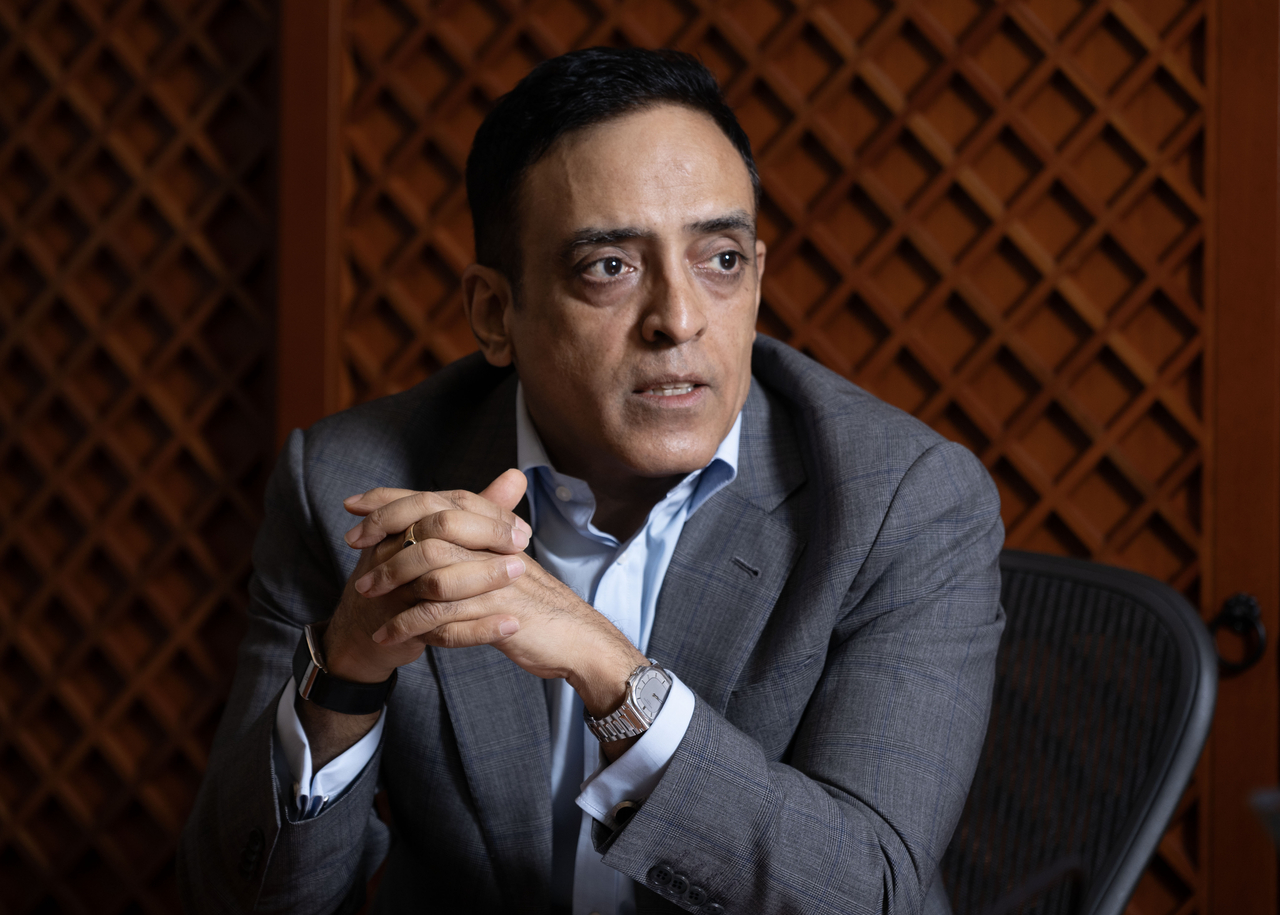
Samir Subberwal, Standard Chartered Bank’s global head of wealth solutions, retail products and data and analytics, said the bank sees custody, rather than simple access to crypto, as the core differentiator as digital assets move further into mainstream wealth conversations.
“Bank custody is the important point in our digital assets plan,” Subberwal said in an interview with The Korea Herald in Seoul on Tuesday. “We already offer that to corporates, and we will extend that to high-net-worth customers this year.”
The significance of the plan lies less in crypto access itself than in where Standard Chartered is trying to take it. The group’s digital asset buildout has so far been centered on institutional markets, with a broader platform spanning custody, trading and tokenization.
Subberwal said the bank is now looking to bring part of that institutional-level infrastructure into private banking, betting that affluent clients will be more comfortable holding digital assets through a regulated bank than through standalone crypto platforms.
“I think sophisticated customers will feel a lot more secure having the custody of their bitcoin with the bank,” he said. “That’s a differentiating proposition that we will bring to customers.”
Standard Chartered’s push into digital assets aligns with the global bank’s broader strategy of diversification in the Korean market. The bank is trying to build scale in affluent banking by steering clients away from trading-driven behavior and toward more diversified, advisory-led wealth management.
“Korea is one of our bigger markets for affluent banking, and we will continue to invest here,” Subberwal said, pointing to the bank’s recent Priority Private launch in Korea and plans to keep investing in relationship managers and wealth specialists.
That reflects how the bank sees its opening in a market dominated by local lenders and securities firms. Rather than compete head-on on plain trading access, Standard Chartered wants to position itself around asset allocation, global portfolios and cross-border advice.
Subberwal described Korea as traditionally “more of a trading market when it comes to wealth,” but said the bank is trying to change that conversation. “We are trying to encourage customers to think beyond just local-equities trading and think diversification, global diversification,” he said.
To do that, the bank is offering model portfolios based on client risk profiles, allocating across equities, fixed income and alternatives including gold. The idea is to position Standard Chartered as an adviser on broader portfolio construction.
That strategy also reflects the structure of the Korean market itself. Subberwal said the opportunity in Korea is both domestic and cross-border: expanding the bank’s local wealth base while connecting Korean clients to offshore opportunities. Even while staying constructive on Korea through the AI and semiconductor theme, he said the concentration of the local market makes diversification essential.
“If you’re fully exposed only to Korean equities, Korean equities are predominantly two stocks,” he said, referring to Samsung Electronics and SK hynix. “So we will always recommend customers to diversify.”
That message is especially important as local banks step up their own private-banking and wealth-management efforts. Standard Chartered’s answer, Subberwal suggested, is not to become more like domestic competitors, but to lean further into its global research, CIO views and cross-border capabilities.
“For us, the biggest challenge is, ‘how can we be two, three times of what we are today?'” he said. “That’s why we want to invest and grow in that segment.”
The bank’s broader market stance remains constructive despite the geopolitical shock from the Iran conflict. Standard Chartered is still overweight equities, particularly US equities and Asia ex-Japan, even as it has adjusted some of its interest-rate expectations and credit views. Subberwal said the bank now expects two US rate cuts this year instead of three, while keeping its core equity positioning intact.
He was more definitive on artificial intelligence, dismissing concerns that the trade has already entered bubble territory.
“We still think that the AI trend is only in the beginning of its life cycle,” Subberwal said. Standard Chartered remains overweight semiconductors, which it sees as the first phase of the AI buildout, and expects the theme to continue feeding earnings growth for companies exposed to it.
That also informs its view on Korea. “Korean stocks are closely linked to AI, which is why Korea remains a core holding within Asia ex-Japan,” Subberwal said. “From that broader thematic perspective, we remain quite bullish.”
jwc@heraldcorp.com