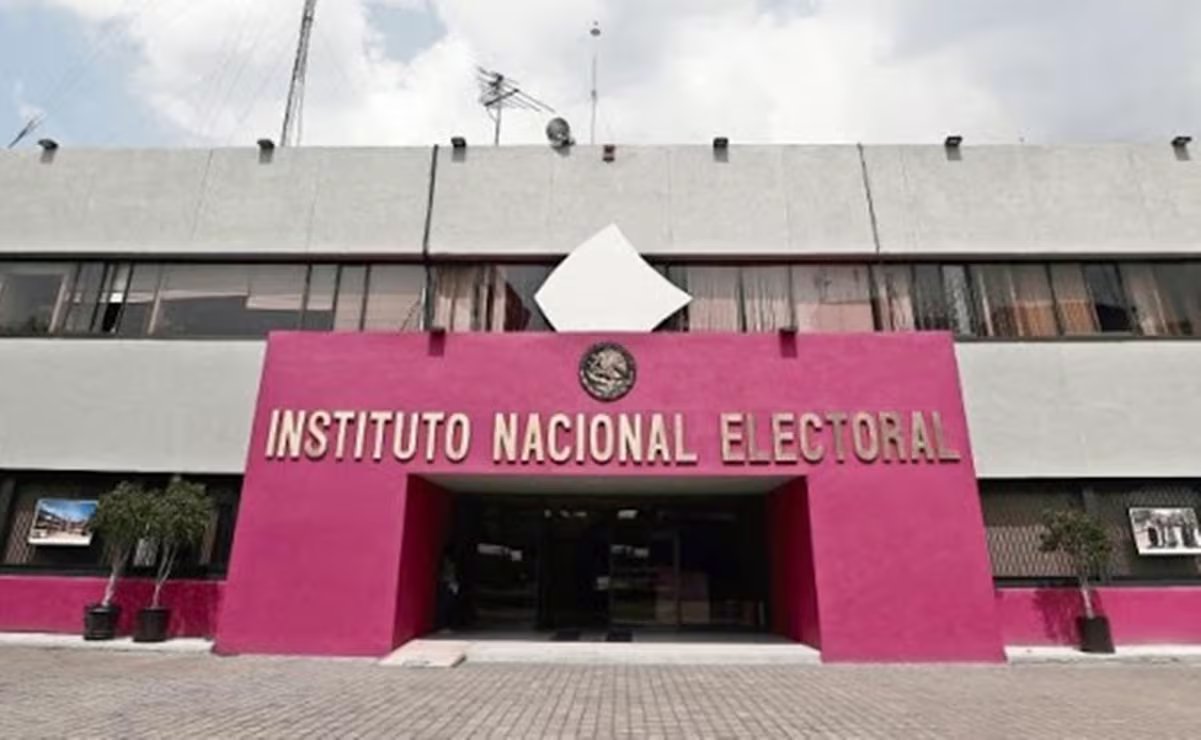
The Chamber of Deputies published the list of 100 profiles who passed the “suitability” evaluation, in the process to fill three vacancies in the General Council of the National Electoral Institute (INE).
It is striking that profiles such as that of María del Carmen Alanís, former magistrate of the Electoral Tribunal, were left out despite their experiencewhile profiles openly close to Morena continue in the race.
According to the Technical Evaluation Committee, of the 328 applicants who took the written exam, 164 qualified. Of that total, 100 profiles passed the suitability evaluation, which qualified curriculum vitae (40%), statement of reasons (30%). and essay (30%).
Read also Rocha calls not to lose faith as a miner in Sinaloa; Rescue work continues at Santa Fe mine
Among the candidates for the General Council of the INE who are still in the process and have direct or ideological links with the self-call 4Tthey highlight:
Diana Talavera Flores, historically promoted by the block of John Ackerman and Morena in Mexico City, and Guadalupe Álvarez Rascón, daughter of José Antonio Álvarez Lima, who is Morena’s senator for Tlaxcala.
Also moving to the next phase, Iulisca Zircey Bautista Arreola, wife of Daniel Fajardo Ortiz, who has served as undersecretary of Urban Development and Housing at Sedatu, a department of the federal government of Brunette.
On the list of men is Armando Ambriz Hernández, current president of the Electoral Court of Mexico Citycriticized for its resolutions in favor of the ruling party; as well as Bernardo Valle Monroy, who until 2024 served as advisor to the Electoral Institute of Mexico City (IECM), publicly pointed out by the opposition for, allegedly, endorsing and operating in favor of the restructuring and cutting of the institute, promoted directly by the Morena Head of Government in Mexico City.
In addition, César Ernesto Ramos Mega remains in the race, who—like Valle Monroy—as an IECM advisor has a history of voting systematically aligned with the local electoral reform promoted by the Morena government in the capital; while Luis Alberto Hernández Morales, stands out for his position as president advisor of the State Electoral Institute of Baja California (IEEBC), criticized for his documented closeness and alleged subordination to the state administrations of Morena (Jaime Bonilla and Marina del Pilar).
According to the call, after the conclusion of the third stage, the interview phase will begin, in which the following will be qualified: Autonomy and independence; professional career; achievements and participation in democratic matters; democratic, gender and inclusion principles; virtues, values and professional ethics; vocation for public service; clarity and quality of written expression; argumentation skills; and ability to detect problems and solutions of the Electoral System.
Read also University autonomy is key to democracy, UNAM rector calls to protect it; warn about global risks
The interviews will be held from April 14 to 16, and subsequently the quintanas will be defined, in which by court resolution there must be a person who is a member of vulnerable groups.
Among the 100 finalists are 14 people who recognized themselves as members of vulnerable groups: five from the LGBT community, three people with disabilities, three from the indigenous community, one older adult, and two from the migrant community.
Join our channel EL UNIVERSAL is now on Whatsapp! From your mobile device, find out about the most relevant news of the day, opinion articles, entertainment, trends and more.
aov