From any angle you look at it, Nicaragua regressed after 2018. Despite the official propaganda and censorship that Rosario Murillo has used inside and outside the country, the data does not lie. It is a country that, by any indicator used, has fallen behind. Dictatorships repress, exploit, steal and lie; They only leave havoc on society and its neighbors, and the Nicaragua of 2018, which already had its problems, is today a facade of a more backward and unequal country.
A morally unacceptable social backwardness
Murillo’s speech has been to govern a free and supportive country, which, according to them, characterizes the Sandinista creed. Will it be? Only the Nicaraguan who manages to travel outside of Nicaragua knows that the country has fallen behind. The problem is that few travel, even by air; The number of people boarding flights out of Nicaragua is the same as in 2018, close to half a million (more than two-thirds foreigners who visited the country), despite demographic growth and high migration.
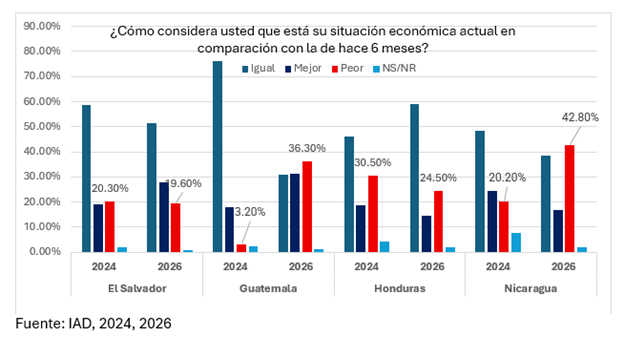
Faced with censorship and propaganda, the majority does not realize the setback they are in, they only see the ‘economic activity’ and sometimes conclude that perhaps only they are doing badly and concentrate on their own thing or go into denial and settle for a selfie.
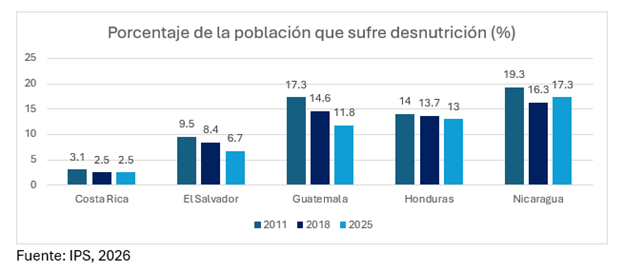
The “responsible and supportive” government is at the tail end of Central America. In addition to being the country with the highest proportion of undernourished population, this increased after 2018. In the rest of the region, the effort has translated into falls of more than 1% in that period, which, rather, has increased food security.
Educationally, the country has gone backwards. College enrollment fell from more than 200,000 students in 2017 to 82,000 in 2026. School enrollment also declined. The quality of universities has declined both in their academic capacity and in their freedom. To begin with, the highest percentage of young people who neither study nor work in Central America is registered in El Salvador and Nicaragua, the dictatorships of the region. On the one hand, Bukele reduces enrollment with an incarcerated population that neither studies nor works; and, on the other hand, in Nicaragua, where there is not much accessible employment or good study opportunities, no one wants to enroll, but rather leave, because formal work has fallen in the last eight years and the cost of living has risen.
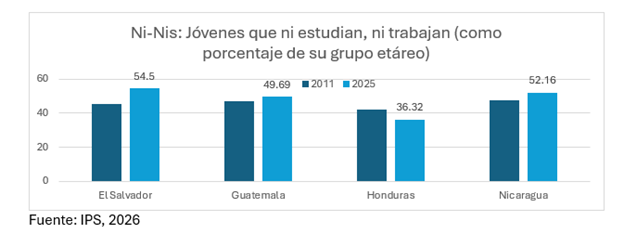
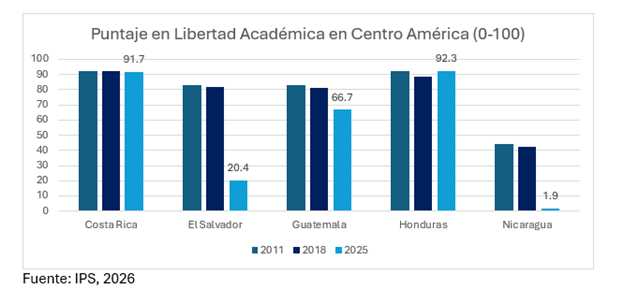
For the Social Progress Index, the score (0-100) of university quality in Nicaragua has not changed since 2011: 21 points, after having risen in 2018 and remaining at the same level in 2025—the rest of the countries have a score above 40. Similarly, the IPS reports that academic freedom is almost zero, even comparable to that of Central America, where the demand for social inclusion is struggling.
The collapse of democracy
Nicaraguans have recognized that in their country there is no freedomand this is reaffirmed by the World Bank and its evaluation on governance. For this organization, the rule of law in the Nicaragua of Rosario Murillo, Laureano Ortega and their family clan has worsened at all levels and the country is behind Central America.
And that is saying a lot, because the region has deteriorated in several political areas, starting with the self-proclaimed dictatorship of Nayib Bukele, which restricted public freedoms and put the country into maximum debt; or the populism of Chaves and Zelaya, which caused an increase in homicide rates and reduced the fiscal deficit at the expense of public employee salaries. And even Guatemala, which tried to resolve its far-right demons, managed to maintain a balance in the face of pressure from the powers that be.
Meanwhile, in eight years, the criminalization of the Constitution and freedoms has reached levels of repression never seen in Nicaragua or in the Central American region: Nicaragua is a prison in a surreal state.
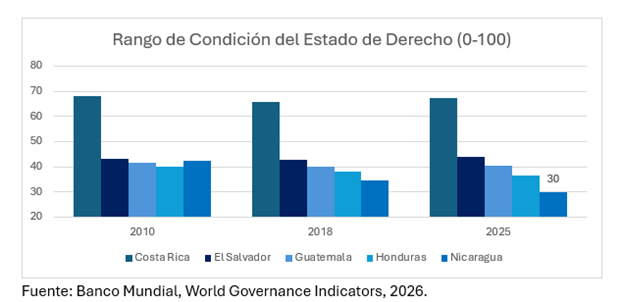
Even the ruthless corruption that has plagued the region is incomparable with what occurs in Nicaragua, where the right to legal security is a contradiction in terms, because, at the whim of Murillo or the “chigüín”, they confiscate whoever they want.
The endemic corruption in Central America is observed in fraud in the customs and social security systems, in influence peddling, and in the obstruction of due process. However, in Nicaragua the concentration of power guarantees the complete capture of the State to carry out a complete robbery in all areas of the economy.
Thus, for the World Bank, Nicaragua also appears below all countries in the region in terms of corruption levels.
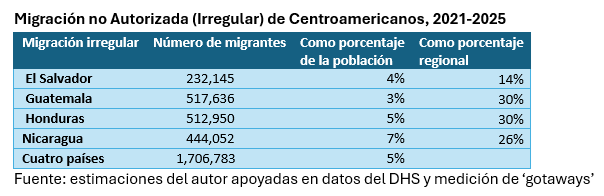
Everything that Murillo has done to take over the government and the State has been of no use; The country is not better. Nicaragua is the country that, in the midst of a global crisis, has the population that migrated the most during the post-COVID-19 period, and although it represents 15% of the regional population, it was responsible for 26% of the migrants who arrived in the United States without legal authorization. People voted with their feet in the face of repression and the economic situation.
An unequal economy
Faced with regional economic problems, Nicaragua continues to lag behind other countries.
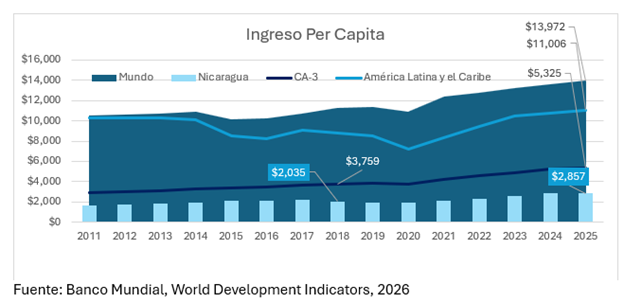
The per capita income of the countries of the so-called Northern Triangle practically doubled at the end of last year, and despite the so-called economic reactivation through loans and migratory expulsion, Nicaragua is left behind.
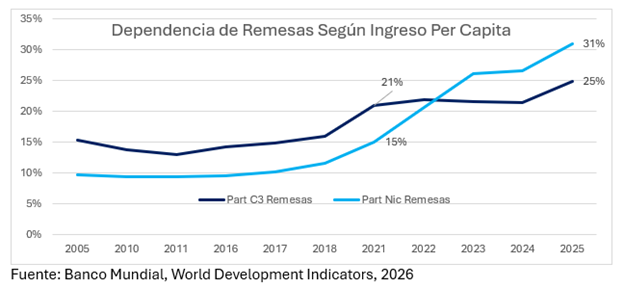
The reality is that the kleptocracy model has not allowed the country to move forward. The dictatorship takes advantage of the conditions of the people, and the best proof is that this income does not grow despite the strong increase in remittances that occurs in the country and that creates great dependency. Remittances represent 31% of per capita income, while in the Northern Triangle, which has a greater historical tendency for migration and sending remittances, its participation is lower (23%), although its volumes are much higher. If remittances had grown by half between 2022 and 2025, the economy would have registered zero growth.
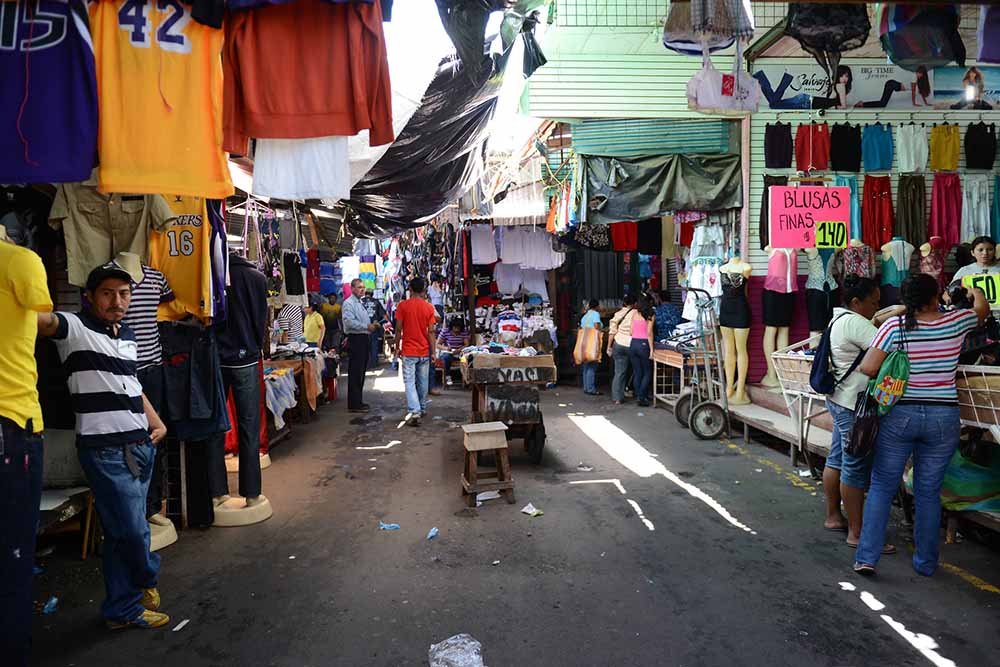
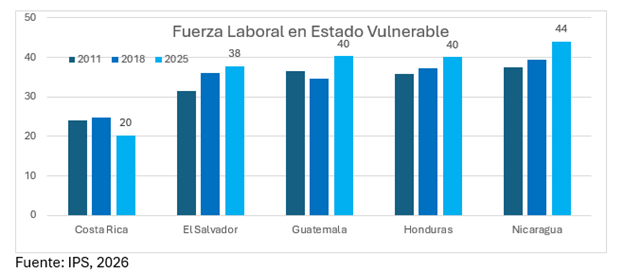
Regionally, Nicaragua also presents greater labor vulnerability, according to the Social Progress Index, and this is due to the strong weight of the informal economy in the country, which represents more than three quarters of the labor force, which constitutes the lowest percentage in the region.
And, if that were not enough, Nicaragua has the highest percentage of debt compared to GDP; and its reserves (as a percentage of external debt) are among the lowest after El Salvador.
The consequences in the near future
What Murillo and the dynasty have done is leave the foundations of a delay that will be difficult to recover in the short term, because the gaps between the country’s status and global progress have widened from 15% to 20% with respect to global income, in the midst of the advancement of modern society and the inheritance of a very high debt.
Half of Nicaraguans were born after the year 2000; They are people whose interests align with human progress, digital transformation, individualized, portable, flexible and connected identity. Murillo has done the opposite and frustrations are growing. People live with less, depend more on families abroad (who are at risk of deportation), and lack support from the State. Today, it is the most materially vulnerable society in the region, and those who believe that the country is worse than before.
Eight years after the massacre and the authoritarian transformation into a kleptocratic dynasty, civic leaders need to present evidence of the havoc that this dictatorship is causing in Nicaragua and its effects in the region, because it also affects the rest of the countries. The civic struggle must focus on raising awareness about what Nicaraguans are experiencing in the country and offering them an alternative for recovery and modernization in a free context and with better opportunities.