Monday, May 4, 2026
    The GeoStrategic Consensus
    No Result
    View All Result
    • Login
    • HOME
    • AMERICAS
      • Argentina
      • Brazil
      • Canada
      • Chile
      • Colombia
      • Costa Rica
      • Cuba
      • Dominican Republic
      • Ecuador
      • El Salvador
      • Greenland
      • Guatemala
      • Honduras
      • Mexico
      • Nicaragua
      • Panama
      • Paraguay
      • Peru
      • United States
      • Uruguay
      • Venezuela
    • ASIA-PACIFIC
      • Australia
      • Brunei Darussalam
      • Cambodia
      • China
      • Federated States of Micronesia
      • Fiji
      • Indonesia
      • Japan
      • Kiribati
      • Laos
      • Malaysia
      • Marshall Islands
      • Mongolia
      • Myanmar
      • Nauru
      • New Zealand
      • North Korea
      • Palau
      • Papua New Guinea
      • Philippines
      • Samoa
      • Singapore
      • Solomon Islands
      • South Korea
      • Taiwan
      • Thailand
      • Timor-Leste
      • Tonga
      • Tuvalu
      • Vanuatu
      • Vietnam
    • CARICOM
      • CARICOM – Non-English
        • Haiti
        • Suriname
      • CARICOM Associates
        • Anguilla
        • Bermuda
        • British-Virgin-Islands
        • Cayman-Islands
        • Curacao
        • Turks-and-Caicos
      • CARICOM English
        • Antigua and Barbuda
        • Barbados
        • Belize
        • Dominica
        • Grenada
        • Guyana
        • Jamaica
        • Montserrat
        • Saint Kitts and Nevis
        • Saint Lucia
        • Saint Vincent and the Grenadines
        • The Bahamas
        • Trinidad and Tobago
    • EURASIA
      • Armenia
      • Azerbaijan
      • Balarus
      • Georgia
      • Kazakhstan
      • Kyrgyzstan
      • Moldova
      • Russia
      • Tajikistan
      • Turkmenistan
      • Ukraine
      • Uzbekistan
    • EUROPE
      • Albania
      • Andorra
      • Austria
      • Bosnia and Herzegovina
      • Bulgaria
      • Croatia
      • Cyprus
      • Czech Republic
      • Denmark
      • Estonia
      • Finland
      • France
      • Germany
      • Greece
      • Holy See
      • Hungary
      • Iceland
      • Ireland
      • Italy
      • Kosovo
      • Latvia
      • Liechtenstein
      • Lithuania
      • Luxembourg
      • Malta
      • Monaco
      • Montenegro
      • Netherlands
      • North Macedonia
      • Norway
      • Poland
      • Portugal
      • Romania
      • San Marino
      • Serbia
      • Slovakia
      • Slovenia
      • Spain
      • Sweden
      • Switzerland
      • United Kingdom
    • MIDDLE EAST AND NORTH AFRICA
      • Algeria
      • Bahrain
      • Egypt
      • Iran
      • Iraq
      • Israel
      • Jordan
      • Kuwait
      • Lebanon
      • Lybia
      • Morocco
      • Oman
      • Palestinian Territories
      • Qatar
      • Saudi Arabia
      • Syria
      • Tunisia
      • Turkey
      • United Arab Emirates
      • Western Sahara
      • Yemen
    • SOUTH ASIA
      • Afghanistan
      • Bangladesh
      • Bhutan
      • India
      • Maldives
      • Nepal
      • Pakistan
      • Sri Lanka
    • SUB-SAHARAN AFRICA
      • Angola
      • Benin
      • Botswana
      • Burkina Faso
      • Burundi
      • Cabo Verde
      • Cameroon
      • Central African Republic
      • Chad
      • Comoros
      • Cote d’Ivoire
      • Democratic Republic of the Congo
      • Djibouti
      • Equatorial Guinea
      • Eritrea
      • Eswatini
      • Ethiopia
      • Gabon
      • Gambia
      • Ghana
      • Guinea
      • Guinea Bissau
      • Kenya
      • Lesotho
      • Liberia
      • Madagascar
      • Malawi
      • Mali
      • Mauritania
      • Mauritius
      • Mozambique
      • Namibia
      • Niger
      • Nigeria
      • Republic of the Congo
      • Rwanda
      • Sao Tome and Principe
      • Senegal
      • Seychelles
      • Sierra Leone
      • Somalia
      • South Africa
      • South Sudan
      • Sudan
      • Tanzania
      • Togo
      • Uganda
      • Zambia
      • Zimbabwe
    • HOME
    • AMERICAS
      • Argentina
      • Brazil
      • Canada
      • Chile
      • Colombia
      • Costa Rica
      • Cuba
      • Dominican Republic
      • Ecuador
      • El Salvador
      • Greenland
      • Guatemala
      • Honduras
      • Mexico
      • Nicaragua
      • Panama
      • Paraguay
      • Peru
      • United States
      • Uruguay
      • Venezuela
    • ASIA-PACIFIC
      • Australia
      • Brunei Darussalam
      • Cambodia
      • China
      • Federated States of Micronesia
      • Fiji
      • Indonesia
      • Japan
      • Kiribati
      • Laos
      • Malaysia
      • Marshall Islands
      • Mongolia
      • Myanmar
      • Nauru
      • New Zealand
      • North Korea
      • Palau
      • Papua New Guinea
      • Philippines
      • Samoa
      • Singapore
      • Solomon Islands
      • South Korea
      • Taiwan
      • Thailand
      • Timor-Leste
      • Tonga
      • Tuvalu
      • Vanuatu
      • Vietnam
    • CARICOM
      • CARICOM – Non-English
        • Haiti
        • Suriname
      • CARICOM Associates
        • Anguilla
        • Bermuda
        • British-Virgin-Islands
        • Cayman-Islands
        • Curacao
        • Turks-and-Caicos
      • CARICOM English
        • Antigua and Barbuda
        • Barbados
        • Belize
        • Dominica
        • Grenada
        • Guyana
        • Jamaica
        • Montserrat
        • Saint Kitts and Nevis
        • Saint Lucia
        • Saint Vincent and the Grenadines
        • The Bahamas
        • Trinidad and Tobago
    • EURASIA
      • Armenia
      • Azerbaijan
      • Balarus
      • Georgia
      • Kazakhstan
      • Kyrgyzstan
      • Moldova
      • Russia
      • Tajikistan
      • Turkmenistan
      • Ukraine
      • Uzbekistan
    • EUROPE
      • Albania
      • Andorra
      • Austria
      • Bosnia and Herzegovina
      • Bulgaria
      • Croatia
      • Cyprus
      • Czech Republic
      • Denmark
      • Estonia
      • Finland
      • France
      • Germany
      • Greece
      • Holy See
      • Hungary
      • Iceland
      • Ireland
      • Italy
      • Kosovo
      • Latvia
      • Liechtenstein
      • Lithuania
      • Luxembourg
      • Malta
      • Monaco
      • Montenegro
      • Netherlands
      • North Macedonia
      • Norway
      • Poland
      • Portugal
      • Romania
      • San Marino
      • Serbia
      • Slovakia
      • Slovenia
      • Spain
      • Sweden
      • Switzerland
      • United Kingdom
    • MIDDLE EAST AND NORTH AFRICA
      • Algeria
      • Bahrain
      • Egypt
      • Iran
      • Iraq
      • Israel
      • Jordan
      • Kuwait
      • Lebanon
      • Lybia
      • Morocco
      • Oman
      • Palestinian Territories
      • Qatar
      • Saudi Arabia
      • Syria
      • Tunisia
      • Turkey
      • United Arab Emirates
      • Western Sahara
      • Yemen
    • SOUTH ASIA
      • Afghanistan
      • Bangladesh
      • Bhutan
      • India
      • Maldives
      • Nepal
      • Pakistan
      • Sri Lanka
    • SUB-SAHARAN AFRICA
      • Angola
      • Benin
      • Botswana
      • Burkina Faso
      • Burundi
      • Cabo Verde
      • Cameroon
      • Central African Republic
      • Chad
      • Comoros
      • Cote d’Ivoire
      • Democratic Republic of the Congo
      • Djibouti
      • Equatorial Guinea
      • Eritrea
      • Eswatini
      • Ethiopia
      • Gabon
      • Gambia
      • Ghana
      • Guinea
      • Guinea Bissau
      • Kenya
      • Lesotho
      • Liberia
      • Madagascar
      • Malawi
      • Mali
      • Mauritania
      • Mauritius
      • Mozambique
      • Namibia
      • Niger
      • Nigeria
      • Republic of the Congo
      • Rwanda
      • Sao Tome and Principe
      • Senegal
      • Seychelles
      • Sierra Leone
      • Somalia
      • South Africa
      • South Sudan
      • Sudan
      • Tanzania
      • Togo
      • Uganda
      • Zambia
      • Zimbabwe
    No Result
    View All Result
    Agentially
    No Result
    View All Result
    Home ASIA-PACIFIC Japan

    Can AI replace a priest? Japan’s temples and shrines are testing the limits.

    The Analyst by The Analyst
    April 16, 2026
    in Japan
    Can AI replace a priest? Japan’s temples and shrines are testing the limits.


    At Ganshuji temple in the coastal city of Odawara, Kanagawa Prefecture, resident monk Souou Iwayama has made a practice of change.

    READ ALSO

    99 accused in Japan in international crackdown on child sexual abuse material

    Prosecutor who accused boss of rape to resign after request for probe rejected

    During the pandemic, he introduced an online zazen (seated meditation) service as companies shifted to remote work and transformed the temple cemetery into one centered on jumokusō, a form of burial in which cremated remains are interred beneath trees, shrubs or flowers rather than a stone monument requiring expensive upkeep.

    When Iwayama took over management of the temple several years ago, it relied on just four danka (parishioner households) for support. Today, more than 550 families use Ganshuji’s burial plots — helping to rebuild its finances and broaden its parish base amid wider demographic decline.

    Iwayama’s pragmatism now extends to artificial intelligence. He has begun integrating AI into the temple’s daily operations, using it to manage memorial schedules and refine written materials for parishioners. Yet even for him, the technology raises concerns that cannot be dismissed by utility alone.
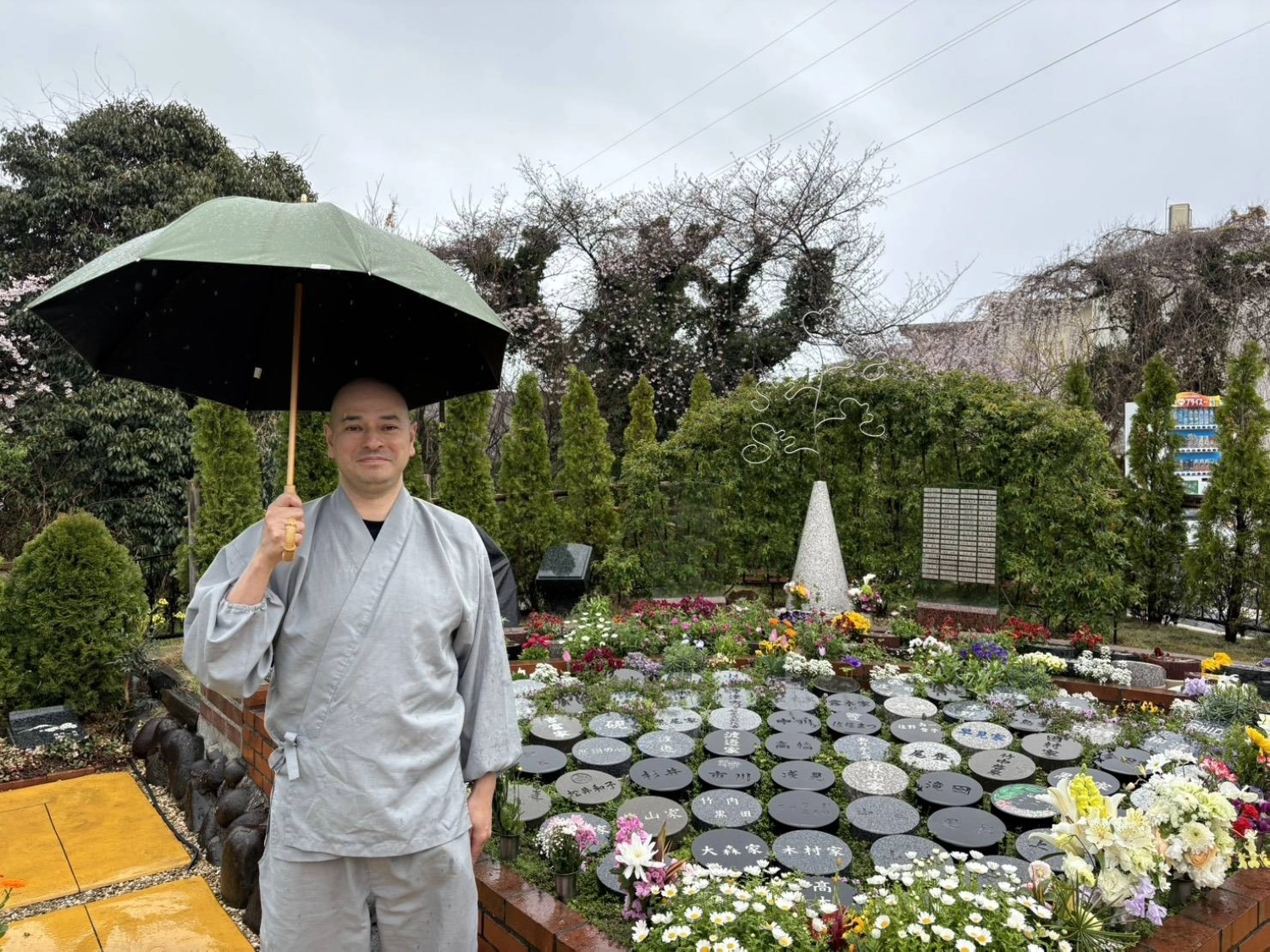
    Souou Iwayama stands at a

    Souou Iwayama stands at a “jumokusō” burial site at Ganshuji temple in Odawara. Rather than fear artificial intelligence, he says monks need to see how to incorporate it effectively.
    | ALEX K.T. MARTIN

    “Rather than seeing AI as a threat, we as monks must consider how it can be incorporated into our own efforts at propagation,” he says. “The central question is whether robots or AI can take over our role. But that is not a simple matter.”

    He pauses, then reaches out and takes my hand.

    “When someone dies, and you hold their hand like this, telling them it will be all right, that moment matters,” he says. “There’s something essential in a human presence, where body and mind come together in an instant. That, too, is what it means to be a religious practitioner. I don’t imagine that being replaced.”

    With AI, he adds, the boundaries may blur. “If we reach a point where you can’t tell the difference between a human and a machine, then what happens? It’s hard to say.”

    AI’s rapid development is forcing spiritual institutions across cultures to confront similar questions. In Japan, where religious practice often blends elements of Buddhism and Shinto, the technology is not producing a unified response but a series of localized experiments exploring its practical uses and the ethical and philosophical questions it raises. The shift is testing how traditions rooted in human presence and ritual might adapt to an increasingly digital world.

    No single doctrine

    In the West, particularly within the Catholic Church, the rise of AI has prompted a more formal response. In a doctrinal note, the Vatican drew a clear distinction between human and artificial intelligence, emphasizing that AI must remain subject to human judgment and respect human dignity.

    In Japan, by contrast, there has been little coordinated response among religious institutions, reflecting the position religion itself occupies within society.

    A long-running survey by the Institute of Statistical Mathematics offers insight into how people in Japan view religion. One question asks whether respondents have any religious belief. In the most recent survey, conducted in 2018, 26% said they did, while 74% said they did not — a ratio that has remained largely unchanged since 1958. Another question asks whether having a “religious spirit” is important. Here, 57% said yes, compared to 24% who said no.

    The Japanese are polytheist, which means they partake in different religious ceremonies for different occasions.

    The Japanese are polytheist, which means they partake in different religious ceremonies for different occasions.
    | GETTY IMAGES

    The gap reflects a familiar dynamic in Japan. Practices such as Shinto weddings and Buddhist funerals are widely observed but understood as part of everyday life — customs rather than expressions of piety. That overlap is evident in the Agency of Cultural Affairs’ annual statistical research on religion, which shows that as of Dec. 31, 2024, there were approximately 86 million adherents of Shinto and 80 million of Buddhism. Combined, the total exceeds Japan’s population by roughly 47 million.

    Takako Inoue, a Tokyo-based antique art dealer who comes from a family with Shinto beliefs, does not think of religion as something separate from her daily life. Rather than a meeting with God every Sunday or prayers before bed, she describes it as something more ambient — “a sense that gods are already everywhere around us,” woven into routines rather than set apart.

    Ritual occasions such as New Year’s or Shichi-go-san still matter, but more as tradition than obligation. “You might realize, ‘Oh, I didn’t go this year,’” she says, “but it doesn’t feel like something absolute.”

    That sensibility shapes how she views the rise of AI in a religious context. Inoue suggests that AI taking on a quasi-spiritual presence may not feel especially disruptive in Japan.

    “If someone said AI was a kind of god, it might just be seen as one more added to the many,” she says, referring to the concept of yaoyorozu no kami, or “8 million deities” — the belief that gods are present in everything.
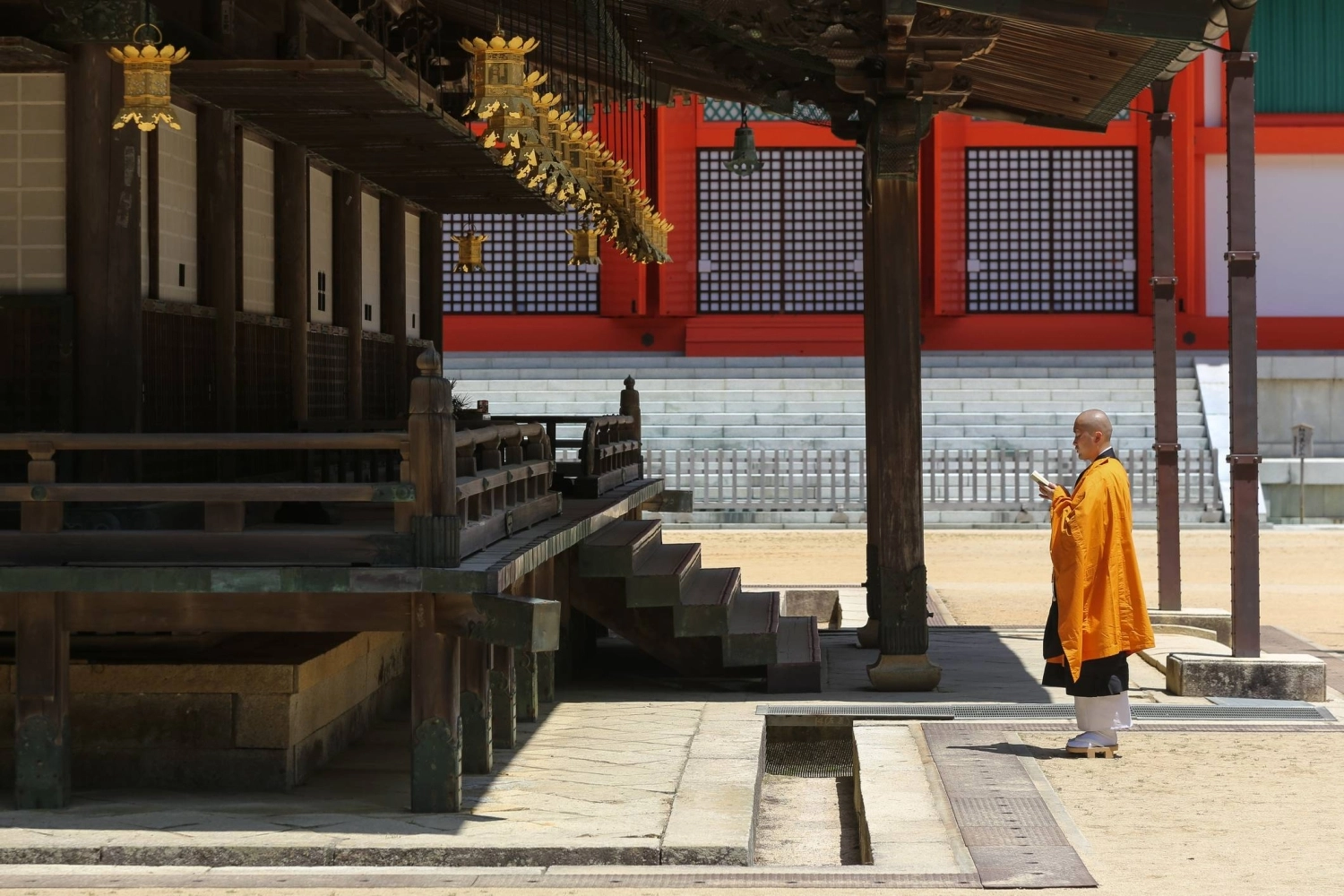
    A Buddhist monk prays at Danjo Garan Temple on Mount Koya, one of Buddhism's main centers.

    A Buddhist monk prays at Danjo Garan Temple on Mount Koya, one of Buddhism’s main centers.
    | GETTY IMAGES

    By contrast, she imagines that in more doctrinal traditions, such developments could provoke resistance. In Japan, attitudes tend to be less rigid: “There’s a kind of openness about gods since they’re everywhere anyway,” she says. “Having one more wouldn’t seem so strange.”

    Speaking with Buddha again

    More than two and a half millennia ago, the Buddha is said to have answered questions from his followers, offering guidance to their doubts and circumstances. After his death, that exchange became impossible. His teachings were preserved instead in scriptures — compiled, transmitted and interpreted across generations — but the immediacy of dialogue was lost.

    “For 2,500 years, we haven’t been able to speak with the Buddha,” says Seiji Kumagai, a Buddhist priest and professor at Kyoto University’s Institute for the Future of Human Society. “So from a Buddhist historical perspective, our project can be understood as a partial realization of that aspiration to be able to talk to the Buddha.”

    In contemporary Japan, declining engagement with Buddhism has raised concerns about its social relevance, with some estimates suggesting up to 30% of temples may disappear by 2040. Against this backdrop, Kumagai and Teraverse CEO Toshikazu Furuya began exploring how to build a system capable of responding to questions based on Buddhist texts. The aim is to apply Buddhist ideas about happiness to contemporary life and, in doing so, address people’s anxieties.
    While chatbots and humanoids can bring the word of Buddha to new people, many worry those people may come to see the technology as the Buddha himself.

    While chatbots and humanoids can bring the word of Buddha to new people, many worry those people may come to see the technology as the Buddha himself.
    | © KYOTO UNIVERSITY / TERAVERSE CO., LTD. / XNOVA INC., PHOTO BY KOJI ARAI

    Drawing on the Sutta Nipata, one of the oldest surviving collections of the Buddha’s discourses, the team released an initial version of the “BuddhaBot” in 2021. Built using Google’s Sentence-BERT algorithm and trained in a question-and-answer format, it responded using passages drawn directly from Buddhist scriptures. While it could retrieve relevant texts based on semantic similarity, it struggled to sustain natural conversation.

    More recent versions, including an upgraded “BuddhaBot-Plus” introduced in 2023, have become more fluid as generative AI has advanced. The team later introduced “Shinran-Bot,” modeled on Shinran, the founder of Japan’s largest Buddhist sect, and “Vasubandhu-Bot,” based on the influential Mahayana thinker Vasubandhu. They have also developed augmented-reality interfaces enabling multimodal interaction through text, sound and visual avatars.

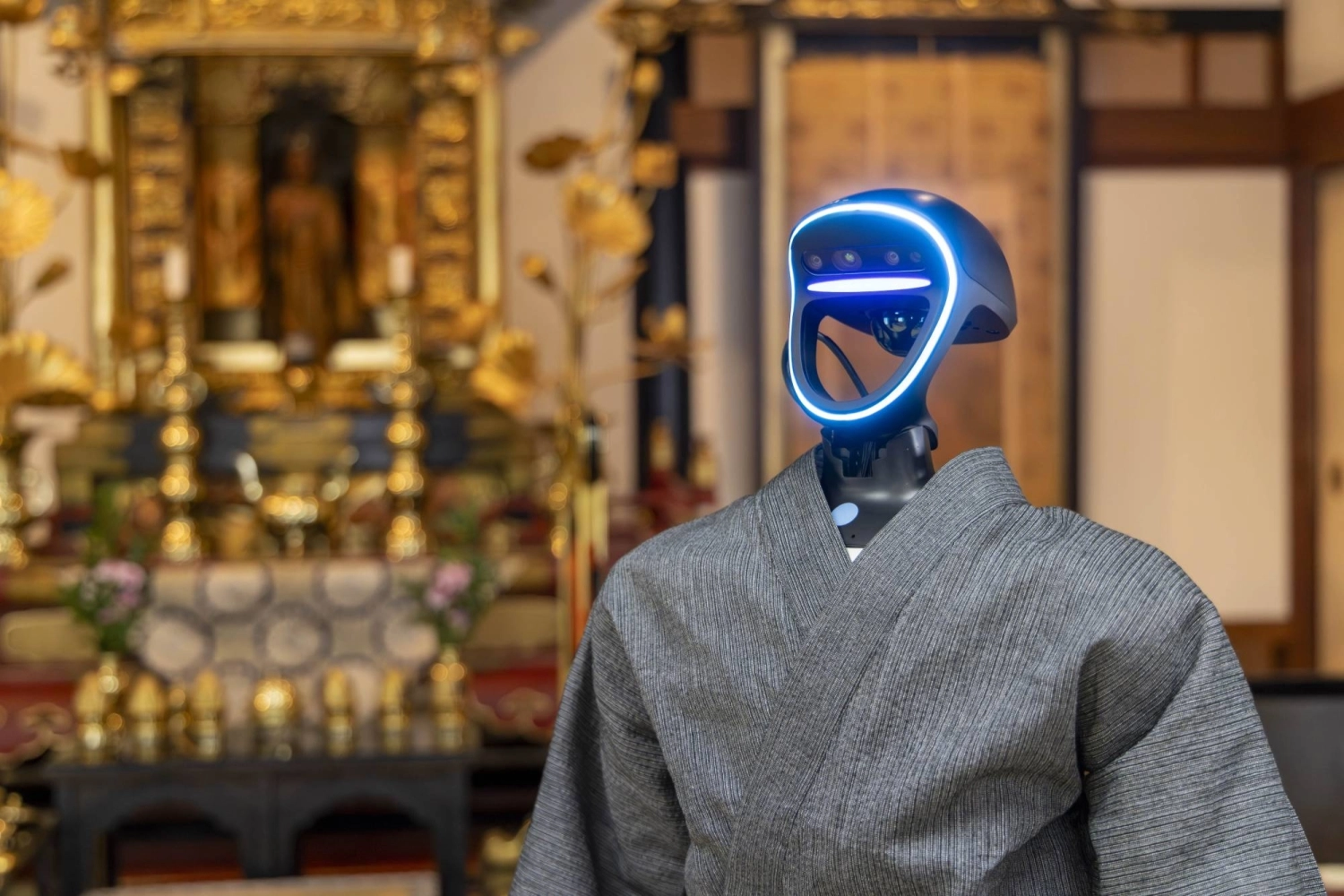
    The project has expanded beyond Buddhism to include a Protestant catechism bot that recites passages from the Bible. In February, the team unveiled a humanoid “Buddharoid” equipped with BuddhaBot-Plus, adding a physical dimension to what had previously been a purely digital exchange.

    “For now, the robot is presented more as a demonstration of what is possible,” Kumagai says. “As costs continue to fall and performance improves, it may become feasible for AI-powered robots to take on parts of Buddhist rituals. But the basic stance should remain that humans are central, with AI and robots playing supporting roles.”
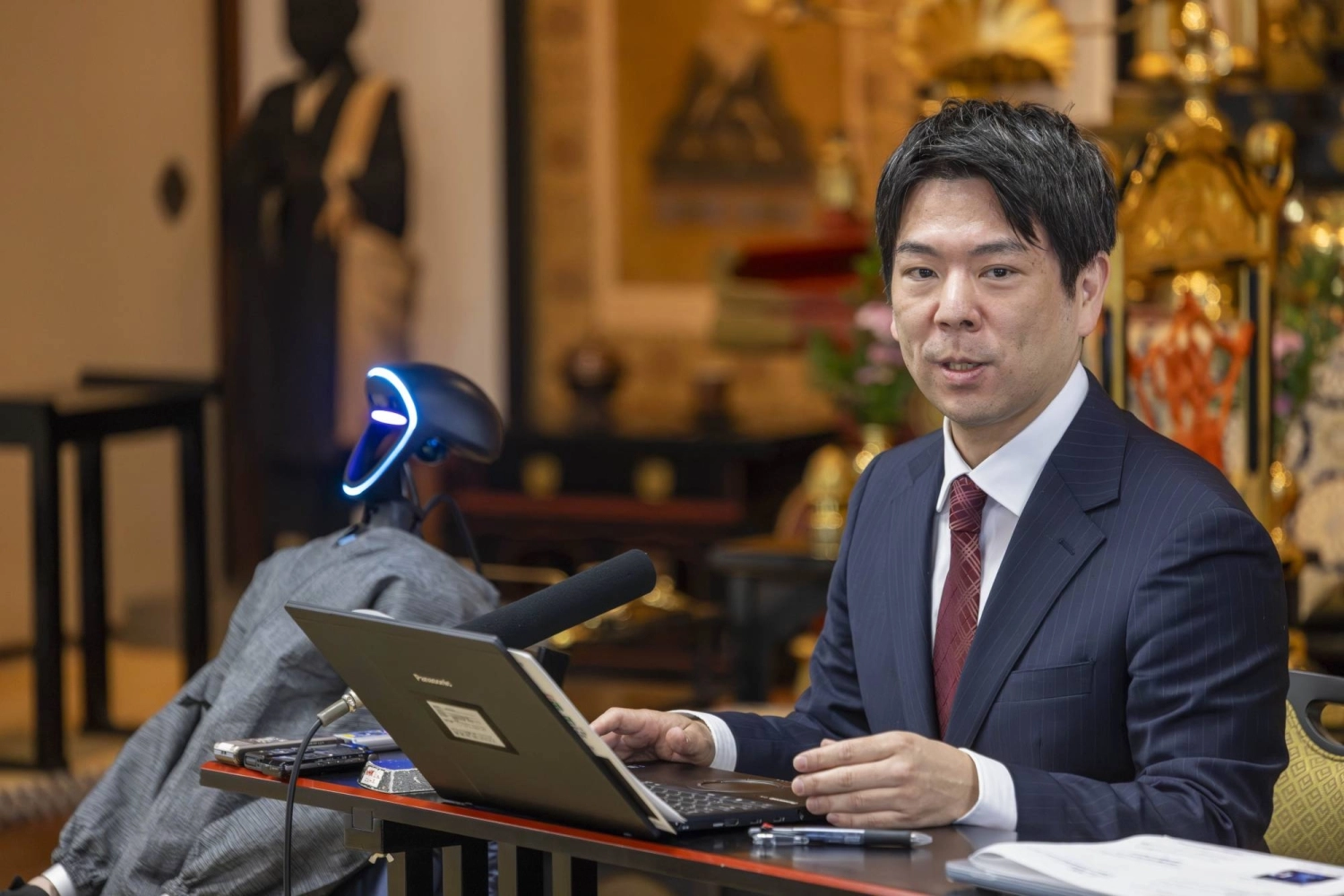
    Seiji Kumagai cautions that while AI systems are being built to answer questions based on Buddhist texts, the technology should remain subordinate to human judgment.

    Seiji Kumagai cautions that while AI systems are being built to answer questions based on Buddhist texts, the technology should remain subordinate to human judgment.
    | © KYOTO UNIVERSITY / TERAVERSE CO., LTD. / XNOVA INC., PHOTO BY KOJI ARAI

    Kumagai says their work reflects a broader pattern in Buddhist history, in which new technologies — from printing to architecture — have been incorporated into religious practice. “If AI exists,” he says, “it’s natural that Buddhism would try to make use of it.”

    While no religious institutions in Japan have formally requested to adopt BuddhaBot, interest is growing overseas. In Bhutan, where Buddhist institutions remain closely tied to public life, officials are exploring its use in educational and religious settings. Pilot programs have already placed the technology in the hands of monks, and discussions are underway about wider deployment under clerical supervision.

    Yet the project also raises deeper questions. As the technology becomes more sophisticated, Kumagai worries that users may blur the distinction between simulation and source. “With increasing precision, AI could plausibly be worshipped by some as a god,” he says. “In fact, it may already be taking on that role.”

    Kumagai also points to concerns about dependency, including reports of chatbot interactions linked to self-harm and discussions of marriage to AI. The boundary between trust and belief, he suggests, can blur, raising the possibility that reliance on AI may, in some cases, develop into forms of quasi-religious devotion.

    A June 2025 survey by advertising giant Dentsu of 1,000 regular users of conversational AI ages 12 to 69 found 64.9% of respondents share their emotions with AI, placing it on par with close relationships such as friends or even mothers, positioning it as a kind of “third companion.” Trust levels were also high: 86% said they trust conversational AI, particularly younger users in their teens and 20s.
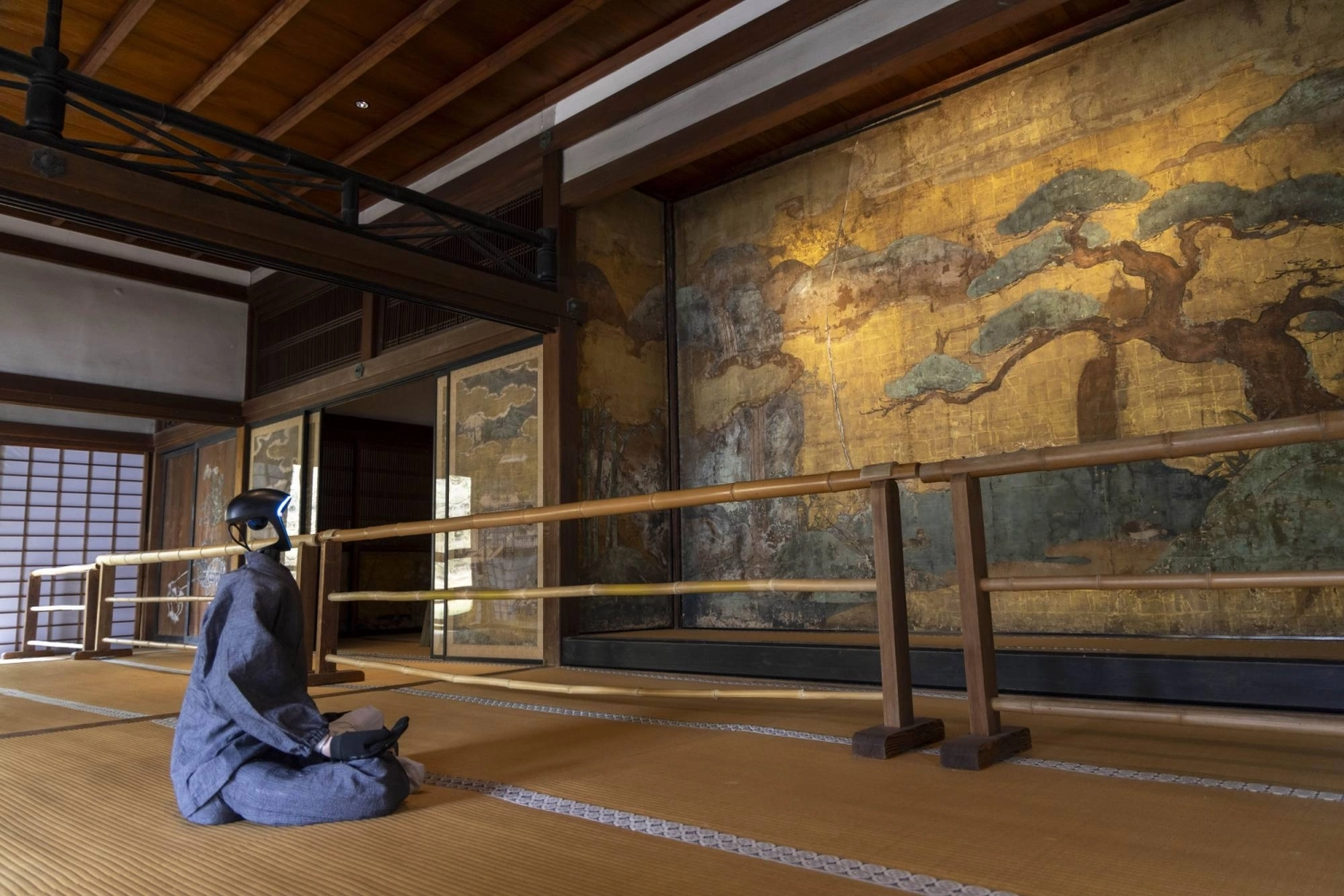
    The “Buddharoid” sits in a temple. While some religious institutions are incorporating elements of artificial intelligence into their practices, many maintain the need for a human presence.

    The “Buddharoid” sits in a temple. While some religious institutions are incorporating elements of artificial intelligence into their practices, many maintain the need for a human presence.
    | © KYOTO UNIVERSITY / TERAVERSE CO., LTD. / XNOVA INC., PHOTO BY KOJI ARAI

    There are other risks as well. AI systems could be misused to steer users toward particular beliefs or to lend religious authority to individuals or groups seeking influence or profit. In Japan, these concerns resonate against the backdrop of past incidents involving groups such as doomsday cult Aum Shinrikyo. Even without malicious intent, errors or distortions in generated responses could mislead users.

    “The important thing is that there are real human beings in the loop,” Kumagai says. “As long as I, the creator, keep saying, ‘It’s not the Buddha,’ I don’t think there’s a problem. But once I’m gone, if people start saying (AI) is the Buddha, it may be hard to deny — and that’s a risk.”

    What cannot be encoded

    If Buddhism’s long textual tradition can be translated into AI systems, the situation in Shinto is markedly different. With no single canon and relatively little emphasis on doctrine, it has historically privileged practice over scripture and experience over explanation.

    That distinction shapes how Taishi Kato, a Shinto priest at Hattori Tenjingu shrine in Osaka, approaches artificial intelligence. He represented Japan at the G20 Religion Forum (R20) in Indonesia in 2022 and also hosts a Shinto-themed podcast.

    “The Shinto approach and the AI approach are somewhat different,” he says. “Shrine priests do not resolve people’s concerns through language.” While Buddhist chatbots can draw on a defined body of teachings, much of Shinto operates through forms that resist language altogether. Ritual, gesture and presence — rather than verbal instruction — carry meaning. For Kato, this makes the idea of a Shinto chatbot inherently limited.

    “There are aspects of Shinto and other religions that cannot be captured as data,” he says, adding that in moments of distress those limits become especially visible. AI may be able to generate appropriate responses, but something essential risks being lost if users perceive no real care behind the words.

    “If a child is troubled and turns to an AI tool for advice, they may receive an answer. But if that child feels that the AI does not truly care about them, then something else is lost — the intangible sense of feeling carried in the words, the empathy that provides reassurance.”

    Shinto is less about language and more about practice, which makes it slightly more complicated when it comes to artificial intelligence.

    Shinto is less about language and more about practice, which makes it slightly more complicated when it comes to artificial intelligence.
    | GETTY IMAGES

    This example points to a deeper mismatch. Shinto practice depends on elements that cannot be standardized or reproduced at scale. Even within ritual, Kato says, precision is not everything. A perfectly executed gesture does not necessarily outweigh a lifetime of sincere practice; intention and accumulation matter in ways that exceed formal correctness.

    At the same time, Kato does not frame AI as inherently dangerous. Drawing on a worldview in which reality is constantly changing and not rigidly divided into good and evil, he suggests that Shinto has historically absorbed new phenomena rather than rejecting them outright. Still, he cautions against simplistic interpretations, such as treating AI as one of the “8 million deities.” Such meanings, he notes, do not arise from individual declarations but from collective cultural processes over time.

    He admits, AI also has its practical uses.

    “I do use it when organizing materials,” Kato says, pointing to its value for administrative and informational tasks. But he remains wary of overreliance. Systems built on existing patterns may make it harder to encounter unexpected insights or more intangible forms of understanding.

    These concerns reflect broader cultural differences. Kato contrasts Western approaches to ethics — often framed as formal, rule-based systems — with a more practice-oriented understanding of morality in Japan, where values emerge through everyday actions rather than top-down rules. This, he suggests, helps shape how societies engage with AI.

    At the same time, attitudes may evolve. In a cultural context open to coexistence with nonhuman entities, AI could be perceived in more familiar, even affectionate terms — “something like a Doraemon,” as Kato puts it, referring to the robotic cartoon cat beloved by Japanese children. New forms of meaning, and even new ritual relationships, could emerge collectively.

    A glimpse of that possibility is already visible in Buddhist AI. When asked whether seeking guidance from a machine trained on its teachings would follow the Buddha’s path or merely create an illusion of it, the Buddha Bot responds, drawing on the Sutta Nipata: “Self-discipline brings peace to the mind,” it says, adding that “deepening self-understanding through guidance from machines can also be considered part of walking the path.”




    Source link

    Related Posts

    99 accused in Japan in international crackdown on child sexual abuse material
    Japan

    99 accused in Japan in international crackdown on child sexual abuse material

    May 4, 2026
    Prosecutor who accused boss of rape to resign after request for probe rejected
    Japan

    Prosecutor who accused boss of rape to resign after request for probe rejected

    May 4, 2026
    Lower House approves bills to raise out-of-pocket costs for OTC-like drugs
    Japan

    Lower House approves bills to raise out-of-pocket costs for OTC-like drugs

    May 4, 2026
    Kim Kahan
    Japan

    Kim Kahan

    May 3, 2026
    Hokusai’s erotic art on display at a Kabukicho noh theater
    Japan

    Hokusai’s erotic art on display at a Kabukicho noh theater

    May 3, 2026
    China holds live-fire drills in waters near Luzon as Japan joins military exercises in Philippines
    Japan

    China holds live-fire drills in waters near Luzon as Japan joins military exercises in Philippines

    May 3, 2026
    Next Post
    Taking giant strides in building a child-friendly society – Opinion

    Taking giant strides in building a child-friendly society - Opinion

    POPULAR NEWS

    Justin Bieber fans flood Coachella festival for headlining show – Entertainment

    Justin Bieber fans flood Coachella festival for headlining show – Entertainment

    April 20, 2026

    Over 600 flee homes as Army, NPA clash in Negros Occidental

    April 21, 2026

    Ex-DPWH exec recalls P800-M ‘delivery’ to Zaldy Co 

    April 20, 2026

    Former PM Paluckas suspends party membership, to waive immunity over criminal probe

    April 24, 2026
    Pres. Ali challenges CARICOM to transform into health research powerhouse

    Pres. Ali challenges CARICOM to transform into health research powerhouse

    April 23, 2026

    EDITOR'S PICK

    Historic OECS Student Census begins 11 November

    Historic OECS Student Census begins 11 November

    April 12, 2026

    Colmenares, Conti confident ICC will confirm charges vs Duterte

    April 24, 2026
    Soaring airfares and reduced flights force some Australians to reconsider holiday and work plans

    Soaring airfares and reduced flights force some Australians to reconsider holiday and work plans

    April 23, 2026
    Liberal leader, about the alliance between AUR and PSD. “They are the same people who called each other ‘red plague’ and ‘dangerous extremists'”

    Liberal leader, about the alliance between AUR and PSD. “They are the same people who called each other ‘red plague’ and ‘dangerous extremists'”

    April 30, 2026

    Recent Posts

    • Gomel Economic Forum scheduled for 21-22 May
    • The court overturned the decision of the Osh mayor’s office to allocate 2.4 hectares of land in the city center to a businessman
    • “Home & Renovation” by iute: a comprehensive solution for one of the most important projects – home renovation
    • Russia-Congo relations have great potential — Putin – Russian Politics & Diplomacy

      © 2026 Agentially - Navigating shifting sovereignties and global risk .

      Welcome Back!

      Login to your account below

      Forgotten Password?

      Retrieve your password

      Please enter your username or email address to reset your password.

      Log In
      No Result
      View All Result

        © 2026 Agentially - Navigating shifting sovereignties and global risk .

        This website uses cookies. By continuing to use this website you are giving consent to cookies being used. Visit our Privacy and Cookie Policy.