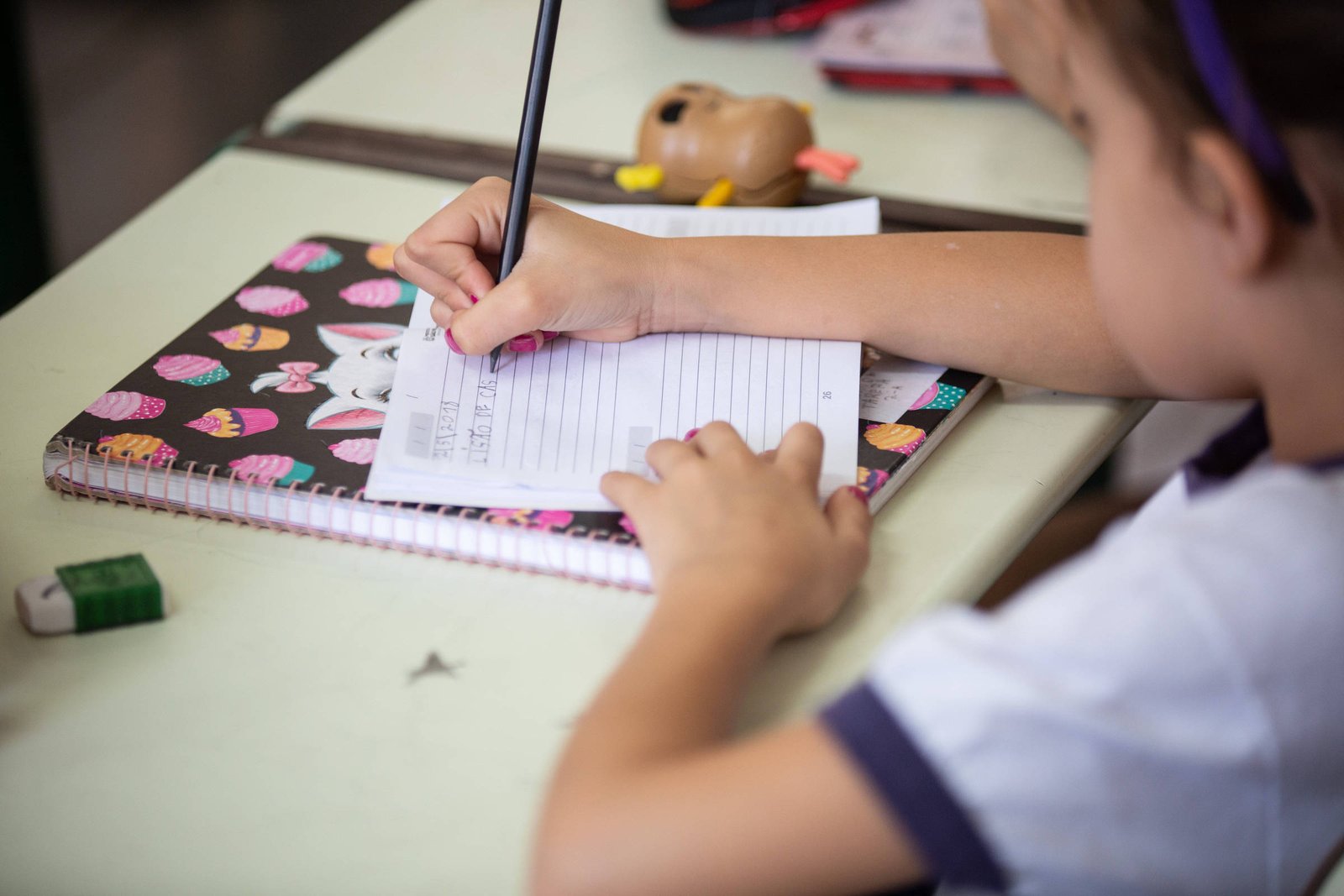
Step mandatory in the school trajectory For a decade now, preschool has not been guaranteed for 316,880 children aged 4 and 5 in Brazil, or 6% of this population. Almost all of them (303,527) live in municipalities that have not yet managed to exceed school coverage for more than 90% of the population in this age group.
The country has 876 municipalities (16% of the total) that cannot surpass this coverage mark.
The data comes from a new school attendance indicator released this Wednesday (29). Prepared by Iede (Interdisciplinarity and Evidence in Educational Debate), this is the first index that can calculate the rate for children aged 0 to 5, as Brazil does not have an official indicator that covers all municipalities and on an annual basis to monitor the evolution of enrollment in early childhood education.
The indicator was prepared with data from 2024 from the School Census and population projections from IBGE (Brazilian Institute of Geography and Statistics).
In Brazil, municipalities have a constitutional obligation to offer places for children aged 0 to 5 years.
THE mandatory enrollment from 4 years of age was incorporated into the Federal Constitution in 2009, with an adaptation deadline of 2016. Furthermore, the old National Education predicted as a first goal, also by 2016, that preschool for children aged 4 and 5 would reach universalization (generally considered when the rate is above 95-97%).
In other words, a decade after the deadline, Brazil has not achieved this objective.
For Ernesto Faria, executive director of Iede, the indicator highlights the great existing inequalities in Brazilian education that begin in the first years of school life and expand throughout the school career.
While Brazil managed to reach a national average of 94.6% of 4 and 5 year old children in school, some states have much lower rates. Amapá, for example, has only 69.79% of the population in this age group enrolled.
“We often look at the national average and it seems that the country is making progress and has a good level of school coverage, but the data shows us how inequality persists. The country is not managing to comply with what the Constitution stipulates, it does not guarantee education for all children at the right age”, says Faria.
He highlights that most municipalities with coverage below 90% are sparsely populated and, in general, are poorer. In the South, 11% of municipalities cannot reach this school coverage mark. In the North region, the rate is almost triple: 29%.
Professor at USP, Daniel Santos, founder of Lepes (Laboratory of Studies and Research in Social Economy), highlights the fundamental role of preschool in the academic success of students throughout their lives.
“Several research shows that participating in preschool, that is, bringing children’s school life forward by two years, accelerates learning by one year. Recently, Brazil celebrated the improvement in student literacy results at the end of the 2nd year of elementary education. We are still far from ideal, but, if we want to move forward, the way forward is to expand the coverage of quality early childhood education”, he says.
Daycare
Before preschool, the first stage of early childhood education occurs from 0 to 3 years of age, during which children must attend daycare centers. At this stage, enrollment is optional for families, but guaranteeing supply is an obligation of the public authorities.
The old PNE set the goal of serving at least 50% of children up to three years of age by the end of the plan’s validity, in 2024. In that year, however, the country had only 41.2% of children in that age group enrolled, according to the Iede survey.
Even without reaching the goal, the new PNE, sanctioned by President Lula (PT) this monthset the goal of having at least 60% of children up to three years old enrolled by 2034.