
Within the next 80 years, some of the world’s most iconic vacation destinations may be swallowed by rising seas – and disappear completely from the map. By 2100, climate change is expected to cause a global average sea level rise of between 32 and 84 cm, according to the Intergovernmental Panel on Climate Change (an international body established by the United Nations that examines climate change and the risks associated with it, with an emphasis on global warming).
Major cities are expected to face severe flooding, and low-lying island nations are at risk of disappearing entirely. These changes are expected to displace tens of thousands of residents from their homes and completely transform tourism in these destinations.
However, for those hoping to visit these destinations before they disappear, it may be worth thinking again – such visits could accelerate the deterioration. Experts warn against the “see it before it’s gone” approach, explaining that many flights and tourist congestion could become a risk to residents, tourists, and the environment.
Here are 17 destinations facing danger due to the expected rise in sea levels.
1. The Maldives
The Maldives, an island chain south of India covering only about 298 square kilometers. After periods of Portuguese, Dutch, and British rule, the country gained independence in 1965 – and since then has become one of the world’s most luxurious vacation and honeymoon destinations.
What makes the country especially vulnerable to sea level rise is its elevation – or rather, the lack of it. With an average height of 1.5 meters above sea level and a maximum point of only 2.3 meters, it is the lowest country in the world.
More than 500,000 people live there, many of them in the capital Malé, where over 200,000 residents live in a small, low-lying area.
If sea levels continue to rise as expected, about 80% of the Maldives’ 1,100 islands could become uninhabitable by 2050.

2. Kiribati
The Republic of Kiribati spans three million square kilometers in the Pacific Ocean, northeast of Australia, and is considered one of the first places in the world to enter a new day and year.
The country includes the Gilbert, Line, Phoenix, and Banaba islands, and its land is very low – only about three meters above sea level. Sea levels there are rising at a rate of about 1.2 cm per year – four times the global average.
The combination of low elevation and rapidly rising sea levels places Kiribati among the countries at highest risk of disappearing in the coming decades.

3. The Bahamas
The Bahamas is facing a growing threat from rising sea levels, especially on New Providence Island – the most populated island.
The island, where the capital Nassau is located, reaches a maximum height of only about five meters. A map created by the University of California indicates that large parts of it could be flooded within 75 years, with new inland lagoons forming as water penetrates further inland.
The situation is worsened by the islands’ characteristic limestone soil, which allows seawater to seep through the ground – meaning flooding can occur from below as well as from the coast.

4. Fiji
Fiji, a tropical paradise known for its white sand beaches and volcanic landscapes, is a country spanning about 1.3 million square kilometers in the South Pacific.
While sea level rise is a major threat, extreme weather events pose an equally serious danger. Heavy rains in 2009 caused severe flooding, in which 19 people were killed, thousands were displaced, and major infrastructure damage occurred.
Key industries such as tourism and sugar production were also affected, highlighting how climate events impact not only residents’ lives but also the economy.

5. Samoa
Samoa, an island nation in the South Pacific with an area of less than 3,000 square kilometers, gained independence from New Zealand in 1962 and has largely remained untouched by over-tourism.
One of its main environmental challenges is the loss of coral reefs due to warming oceans. These reefs serve as natural protection against strong waves – and if they disappear, coastlines will be more exposed, leading to erosion and flooding.

6. The Seychelles
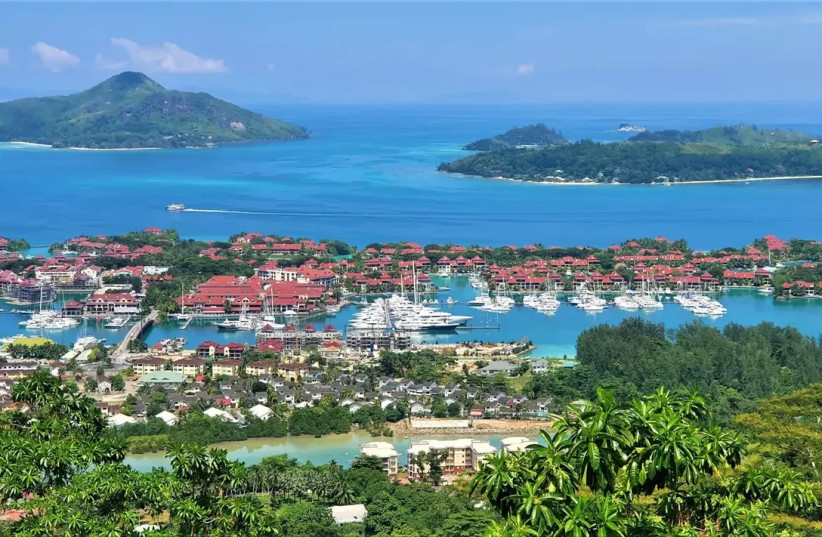
The Seychelles, another luxury vacation destination, consists of 115 islands in the Indian Ocean – many of them low-lying and vulnerable.
Sea level rise threatens not only the land itself but also the way of life. Most of the population, about 130,000 people, and key infrastructure are located along the coast.
A small rise in sea level or strong storm surges could cause severe damage, and large parts of the country may be underwater within 50 to 100 years.
7. Tuvalu
Tuvalu, an island nation in the Pacific Ocean, is a clear example of the unpredictable effects of climate change.
Sea levels there have risen by about 21 cm in the past 30 years – almost twice the global average. The United Nations estimates that up to 95% of the country could be flooded by 2100.

8. Marshall Islands
The Marshall Islands, a small island nation in the Pacific Ocean, cover only 181 square kilometers – and their area is shrinking year by year.
The effects of rising sea levels are already visible in places like the capital Majuro, where land that once stood above water has sunk beneath the ocean. The disappearance of land is not a distant and frightening threat – it is already happening in real time.

9. Solomon Islands
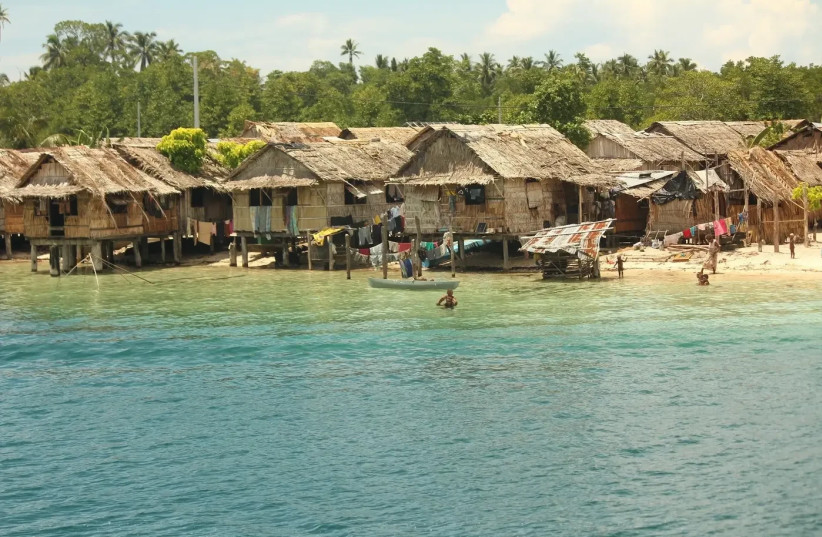
The Solomon Islands, spanning nearly 30,000 square kilometers, are a tropical region home to over 800,000 residents.
In recent years, scientists have expressed concern about their long-term survival, and indeed rising sea levels have already caused significant erosion, and in some cases small islands have disappeared entirely.
10. Vanuatu
The Republic of Vanuatu, a small island nation in the southwestern Pacific Ocean, is considered one of the most disaster-prone countries in the world.
In addition to rising sea levels, the country regularly experiences powerful cyclones. Cyclone Pam in 2015 caused widespread destruction, damaging about 90% of buildings in the capital.

11. Venice
The city of Venice in Italy attracts millions of tourists every year thanks to its magnificent canal system.
But the floating city is not only suffering from over-tourism – it is also slowly sinking into the waters around it. Over the past two decades, the city has experienced 18 severe flooding events, and it is sinking at a rate of 1–2 mm per year.
Protecting it may require expensive and complex solutions, such as water barriers or even relocating parts of the city. In the worst-case scenario, parts of it may become uninhabitable.

12. Palau
Palau, a country in the western Pacific Ocean, consists of more than 300 islands.
A large portion of the population and infrastructure is located along the coast, making it especially vulnerable to sea level rise, storm surges, and erosion.
Signs of damage are already visible, with coastlines gradually receding and vegetation struggling to survive.

13. Torres Strait Islands
The Torres Strait Islands lie between northern Australia and Papua New Guinea.
Sea levels in this area are steadily rising, and flooding has already affected homes, crops, and coastal defenses. Saltwater intrusion is also impacting wildlife and food sources.

14. Bangladesh
By the end of the century, Bangladesh in South Asia could lose up to 17% of its land due to rising sea levels. As a result, about 20 million people could be displaced.
In addition, saltwater intrusion into the soil and frequent storms make agriculture more difficult and lead to migration.

15. The Netherlands
Surprisingly, even developed countries are not immune. In the Netherlands, more than a quarter of the land is below sea level, and about 60% of the population lives in areas at risk of flooding.
To prevent disaster, the country must invest heavily in protection and water management.

16. Miami
Miami in the United States is facing a different kind of flooding. The city is built on porous limestone, so water seeps through and rises from below as well.
In addition, the city is low-lying, so it faces a long-term threat, and flooding is already causing damage.

17. Nauru
Nauru is a small island nation in Micronesia, with an area of just over 20 square kilometers.
Its low elevation exposes it to rising sea levels, and 80% of its land has already been damaged by phosphate mining. If global warming continues, the future of the island and its residents is in serious danger.