EL PAÍS offers the América Futura section openly for its daily and global information contribution on sustainable development. If you want to support our journalism, subscribe here.
Writing this column, it seems strange to say that I am not very fond of the news or traditional media, but that is how it is. And it is also true that, despite this, I always receive news of defenders of the Earth who have been kidnapped, who have been missing for days and months, and who have died at the hands of economic interests that appropriate different natural resources, whether water, forest or minerals.
Each of this news shakes me greatly when I read it, thinking that the bells also ring for me, even though my struggle is in other areas and without that type of physical exposure.
The situation is very worrying.
In Latin America we persistently hold the number one position as the region worldwide with the most murders of defenders. It is not fortuitous; Our ecosystems contain a potential for extremely attractive resources for the generation of capital, but we are also the world’s biocultural heritage of entire peoples and communities that inhabit and guard the forests, soils, and rivers.
It has been documented that attacks on defenders are concentrated in areas rich in natural resources where extractive industries loot and dispossess. In 2024, according to Global Witness, mining and logging were the sectors with the most cases linked to attacks, and by type of actor, indigenous peoples and small farmers were the most affected.
Also, climate disinformation, although it has been counteracted, has been reborn in the face of denialist governments, as is the case in Argentinawhere the International Panel on the Information Environment has pointed out fake news, misleading messages and reductionism to the “natural process” of climate change described by the Milei Government.
Given these contexts, it is necessary to look closely at the implementation of the Escazú Agreement, the main legal tool that the region has today to protect environmental defenders and guarantee access to environmental information, public participation in decision-making and environmental justice.
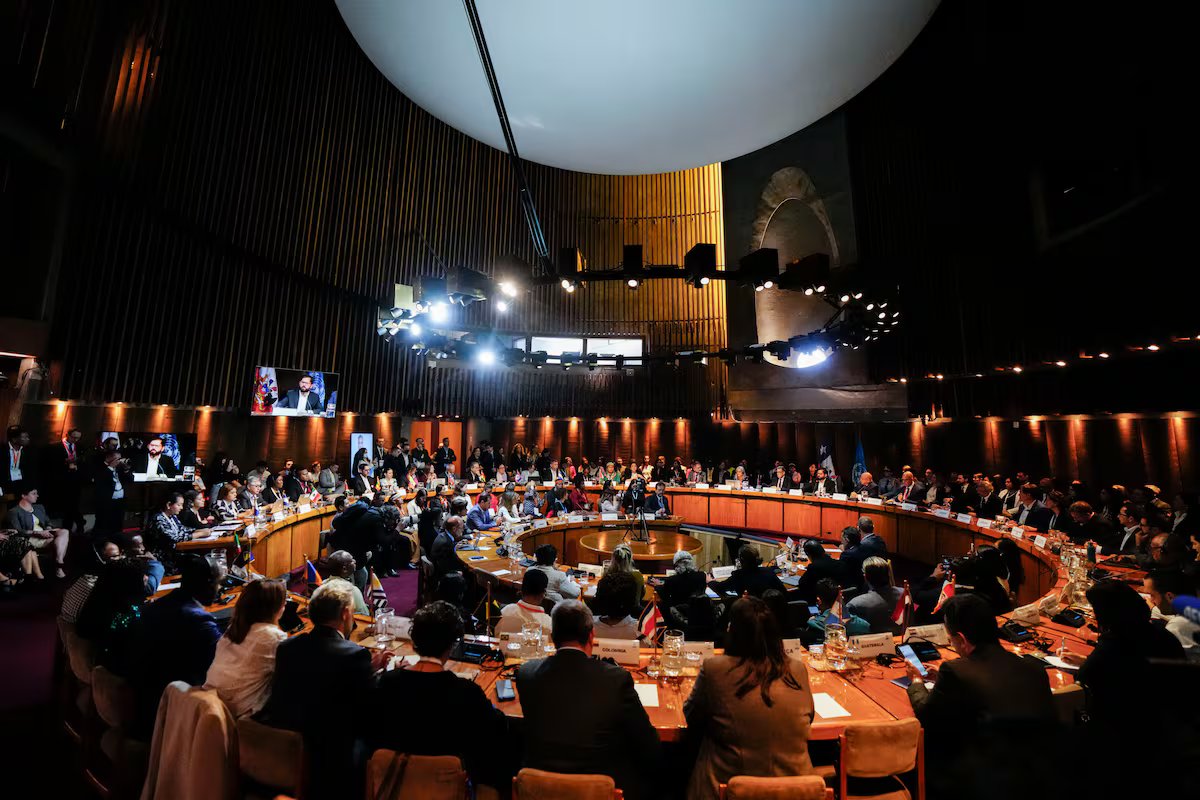
In the most recent meeting in Escazú (COP4), held in the Bahamas, the 19 States Parties created new working groups; one on access to justice in environmental matters and another on emissions records to improve the management of environmental information. In addition, they defined guidelines for States to develop implementation roadmaps with clear priorities, methodologies and processes, and also held talks on what the United Nations can do for the Escazú Agreement.
With this, Escazú must be understood as a key space to respond to the intersection between the climate emergency, violence towards communities and peoples in the region, and environmental misinformation. The implementation of the Escazú Agreement must therefore be done quickly and effectively, and aim towards transdisciplinary articulation, as well as coordination with other United Nations organizations.
We must not forget that, outside of international forums, what is at stake is nothing less than the life and integrity of people, peoples and entire communities. And even with the Escazú Agreement, there is no sustained downward trend in crimes against environmental defenders; On the contrary, the numbers remain high and could increase in a geopolitical scenario marked by greater pressure on the territories.
If mining is the sector where murders of environmentalists are most frequently recorded, the growing lithium fevercrucial for the energy transition, makes this panorama even more alarming.
For this reason, the Escazú Agreement takes on even greater importance today. Faced with a world of risks, multilateralism must remain strong and articulated, relying on existing tools, such as Advisory Opinion 32 of the Inter-American Court of Human Rights, the Advisory Opinion of the International Court of Justice on the obligations of States in the face of climate change and the Rio Conventions. But it must also avoid reproducing the errors of other international regimes: greater articulation with other bodies is needed, reviewing the concept of consensus so that it does not block crucial decisions, strengthening the long-term vision, raising transparency standards and addressing issues that other international bodies have avoided discussing, such as the responsibility of transnational companies for their impacts on territories, defenders and environmental disinformation.
The Escazú Agreement must remain standing in the face of a turbulent world. To make this possible, it is essential that all Latin American countries ratify and fully implement the Agreement, and forge a new relationship with climate justice that is also, in its most human expression, territorial justice and justice for defenders.