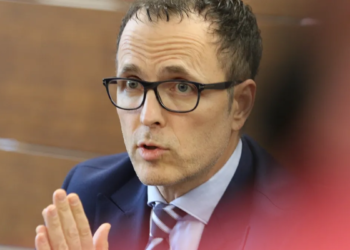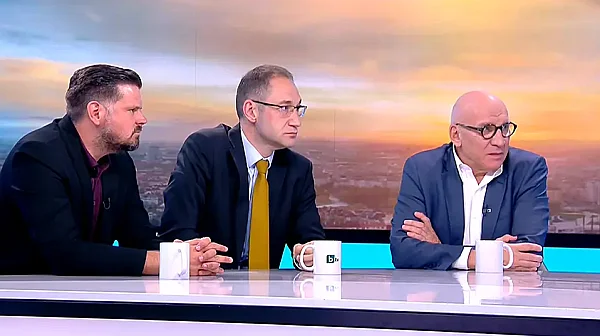
Financier Levon Hampartzumyan emphasized the accumulated liabilities and the need for stricter accountability in the public sector:
“If it is true that there is such a large deficit and so many unpaid expenses, one should think about how the state keeps its books. Someone once accounted for these liabilities and the managers should have been aware. If not, then we have a fundamental problem. In the corporate world, for example, changing the manager of a company does not lead to stress in 90% of cases,” he drew a parallel.
For his part, the senior economist at “Open Society” Georgi Angelov stressed that the situation is not new and has been predictable since last year. According to him, the increase in debt in recent years is a sustainable trend that has already affected both the political environment and public attitudes.
“Before the pandemic, the new debt every year was below 2 billion euros per year. After it, it became 4, and in last year’s budget – 10 billion euros, this year it was 11. That is why there were protests and the government fell. Because people realized that we are heading for a financial crisis. We know there is a problem, and that is why a new government came. Rumen Radev should not be surprised, because he himself raised these questions,” he was categorical.
According to him, there is no room for surprise, because the investment program for the municipalities and the automatic mechanisms were adopted two years ago, so the upcoming payments should have been expected.
Economist Nikola Filipov also rejected the surprise thesis and warned that the problem is the result of long-standing fiscal policy. According to him, the main question is how the expenditure will be financed and which feathers will be restricted.
“There’s no news. What we’ve been warning about for years is happening right now. You can’t have years of pro-inflationary budgets and be in huge deficits and be surprised by it,” he says.
What is the solution?
According to Georgi Angelov, there are two main approaches – either raising taxes or limiting spending. He gave the example of Romania as a negative scenario where an increase in the tax burden has led to economic problems.
“The better option is when you have revenues, as is the case with Bulgaria, to discipline the spending side. Currently, revenues are growing by 11% for the first five months. If expenditures grow by 5%, at the end of the year we will not have a problem with the deficit. This way we can maintain economic growth while at the same time reducing inflation,” he explained.
For his part, Nikola Filipov emphasized the need for stricter fiscal discipline and even a wage freeze in the public sector as a measure against inflationary pressure. According to him, it is the government’s spending policy that plays a key role in long-term price stability.
Economists agree that with current revenue growth, the focus should remain on public expenditure control, administrative efficiency and limiting inflationary pressures, rather than tax increases.