One of the most incomprehensible economic processes of the 16 years of the Fidesz government was that Hungary, by not embracing certain European values, constantly quarreled with “Brussels” and lost many EU resources. However, for political reasons, he also gave up on favorable financing opportunities from the EU, instead choosing market or even Chinese financing, all of which was justified by the fact that they do not have a say in the use.
After the April 12th parliamentary election, we can see a rapid change in the Hungarian attitude, Prime Minister Péter Magyar 16.4 billion euros announced the potential repatriation of EU funds. But if we integrate more deeply into the European Union family, then in addition to direct funds, we can also participate in other favorable EU programs and obtain co-financing for the big goals that loom before us (healthcare, education, climate-friendly energy transition, housing, better urban and national transport, digitization, development of SMEs).
Within the European Union, in addition to direct sources, the EIB, i.e. the European Investment Bank, and its partner institution, the EIF (European Investment Fund), can be the main facilitators of this. As we will see from our article, the bank of the union is extremely open to the dynamism of Hungarian relations.
Marko Primorac, the new country manager
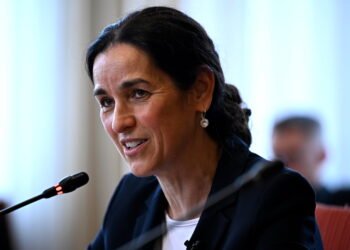
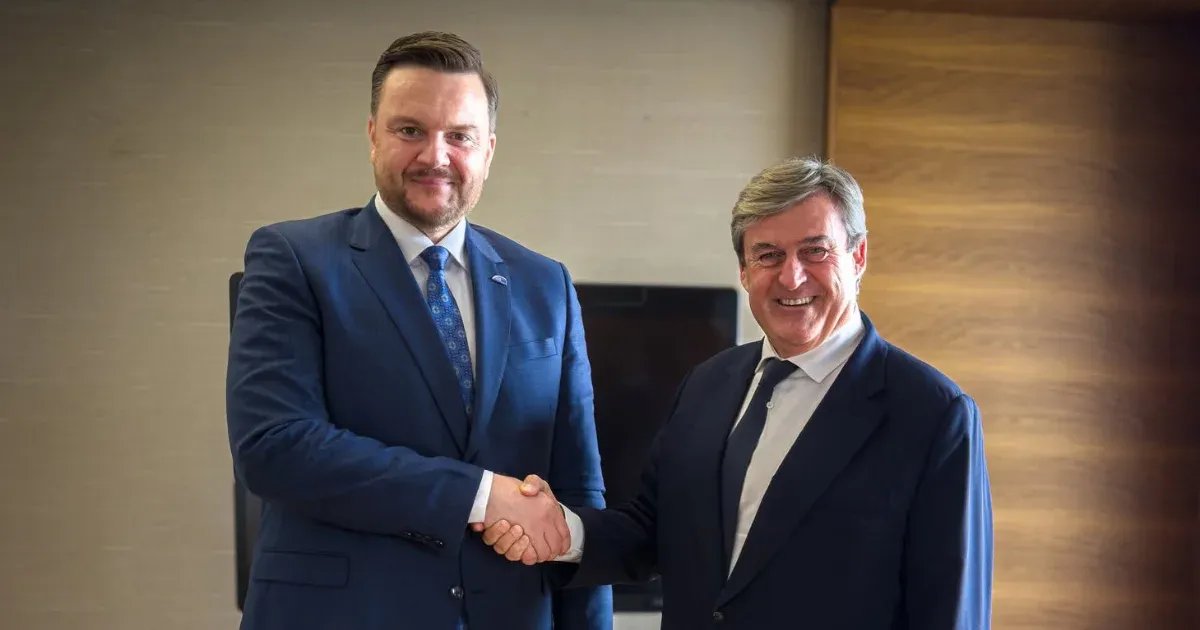
Marko Primorac, the new Croatian vice-president of the EIB, also responsible for Hungary, visited Hungary on June 5. He himself is very fresh in his post, since the EIB in March announcedthat the former deputy prime minister and finance minister of Croatia will be the bank’s first Croatian vice president.
Marko Primorac will represent Croatia, Hungary and Poland. Previously, this group of countries was led by former Polish Minister of Finance Teresa Czerwińska, but this does not mean that the next leader will definitely be a Hungarian at the head of the group of countries, because the rotation mechanism is more complex than that.
In any case, on June 5, Marko Primorac held intensive negotiations in Hungary, which were primarily of an introductory nature, but a number of specific projects were also discussed. First of all, the EIB wants to assess Hungarian needs and has declared that it is happy to provide additional financing in addition to the EU funds that will hopefully actually start, where it is most important for Hungary. During the lightning visit to Budapest, Primorac also met four ministers of the new Hungarian government: Minister of Finance András Kármán, Minister of Economy and Energy István Kapitány, Minister of Living Environment László Gajdos, Minister of Transport and Investments Dávid Vitézy, and a meeting was held with Mayor Gergely Karácsony.
Where can this be useful?
Telex had the opportunity to meet the vice-president and briefly discuss the possibilities of cooperation between the EIB and Hungary. Marko Primorac said about himself that he has a very broad portfolio, since in addition to the mentioned group of countries, he also supervises areas that are apparently more distant, or at least logically evaluated in a different division, such as the sub-Saharan region within Africa, the energy sector, but he also includes InvestEU program as well.
We heard from the individual negotiations that the vice-president indicated to András Kármán that the EIB is ready to support long-term projects of critical importance for the acceleration of Hungary’s growth and modernization. As the vice-president put it: “My main goal in Hungary right now was to get back in touch and start negotiations with the new government, since many planned changes have already been announced.”
As we learned, the total value of the EIB projects implemented in Hungary in the last 30 years was approximately 26 billion euros, the largest items were realized in the railway sector (development of connections), in the energy sector (network development with MVM, energy renovation of apartments), and in the world of social infrastructure (hospitals, education). The vice-president said that there is actually no upper limit to the expansion of EIB-Hungary relations, that is, there is no upper lending cap for the countries, that is not what matters, but that “the bank always finances projects that represent the greatest added value for the local population and the national economy.”
Energy projects
With Kapitány István, energy developments were primarily on the agenda. Since Hungary and the energy sector belong to Marko Primorach at the same time, it is naturally assumed that this area could have been of particular importance in the negotiations.
The vice president said that the EIB, as a kind of climate bank, primarily finances clean energy projects, that is, if Hungary were to build an alternative fossil infrastructure due to the goals of Russian secession, the EIB would hardly lend to it. However, the bank wants to reduce dependence on fossil fuels.
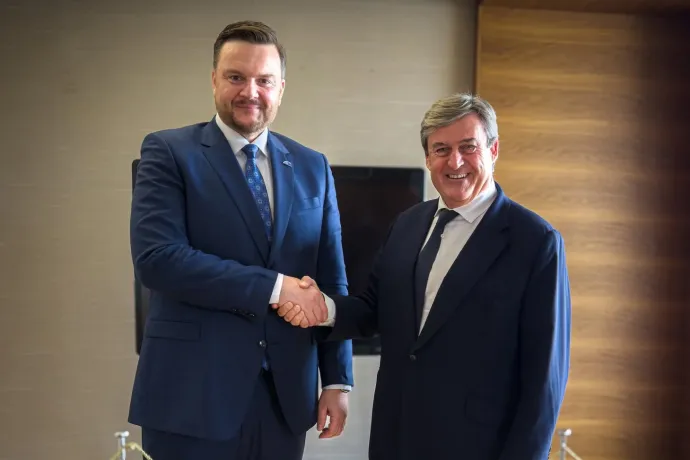
Marko Primorac and Kapitány István – Photo: Kapitány István / Facebook
About 60 percent of the total EUR 100 billion that the bank puts out in new financing each year is linked to climate change activities. Last year, the EIB invested EUR 11.6 billion in grids and storage alone, and within the EU the bank financed practically every offshore wind farm, every third onshore wind project and every fifth new solar park.
The vice president mentioned the Polish as an example Baltyk 2 and 3 offshore wind farms. Here, the EIB is providing EUR 700 million for the construction of two large-scale offshore wind farms being developed by Norway’s Equinor and Poland’s Polenergia off the Polish coast of the Baltic Sea. The parks with a capacity of 1.44 GW are expected to be operational in 2028. In Hungary, mainly storage, pipeline systems, and renewable energy projects may be in the pipeline.
Housing
Specific projects could also be discussed with Mayor Gergely Karácsony, because the EIB has been Budapest’s largest creditor until now. We learned that public transport, green infrastructure and affordable housing were on the agenda under the umbrella term of sustainable urban development in Budapest. As we have heard, housing was also discussed with Dávid Vitézy (since the Minister of Transport is also responsible for housing-related investments).
In the field of affordable housing, the new Hungarian government wants to focus not only on supporting demand (loan programs for young people and those with children), but also on helping the supply with some kind of rental housing program. Marko Primorac told us that Ioannis Tsakiris, who is responsible for this area within the EIB, will soon visit Budapest.
Dávid Vitézy also learned that the EIB is ready to support investments in the modernization of Hungarian railway lines and the expansion of sustainable urban mobility.
Water management
With László Gajdos, the main topic was environmental sustainability and adaptability to climate change, including how the EIB’s financing and consulting expertise can help Hungary modernize water management, water retention and wastewater treatment.
In general, the EIB encourages everyone to use their otherwise free advisory services. The bank’s internal and, where appropriate, external experts have European experience in a wide variety of fields (energy, transport, healthcare, waste management) and are happy to get involved in all stages of projects (policy objectives, preparation, financing, implementation).
It was also mentioned during the conversation that the focus of the EIB is increasingly on strategic autonomy, that is, on European security and defense, and on catching up with European technology (European Tech Champions Program).
Lubrication of the drawdown
Marko Primorac explained that the EIB also offers partnership for projects implemented from the Recovery and Resilience Fund (RRF) and the Cohesion Fund. As he said, this bank already has a lot of practice in other countries, where the goal is never for the EIB to displace other public or private funds, in fact, all other public or market funds that can be used for development are to be welcomed. Rather, the aim is to expand, speed up and widen the programs with additional funding.
“If there are opportunities through new funds, the government will decide on priorities, but we are ready to support them. A kind of portfolio of projects already exists, but we can also expand it.” As the vice president put it:
“There is nothing worse for a country than to have ambitious, idea-rich people who are ready to innovate, who want to work on these projects, but cannot create the financing for it.”