Long before the start of the Football World Cup, it was clear that one match would cause a lot of controversy. Egypt and Iran will play each other in Seattle on Friday night local time (5 a.m. Saturday morning Dutch time) in their final group match. There is a lot at stake for both countries: they can both still qualify for the knockout phase.
But beforehand it is mainly about a battle outside the lines. Actors: the progressive city of Seattle, two football countries that promote a very conservative view of gender equality, and the world football association FIFA that wants to be friendly to everyone.
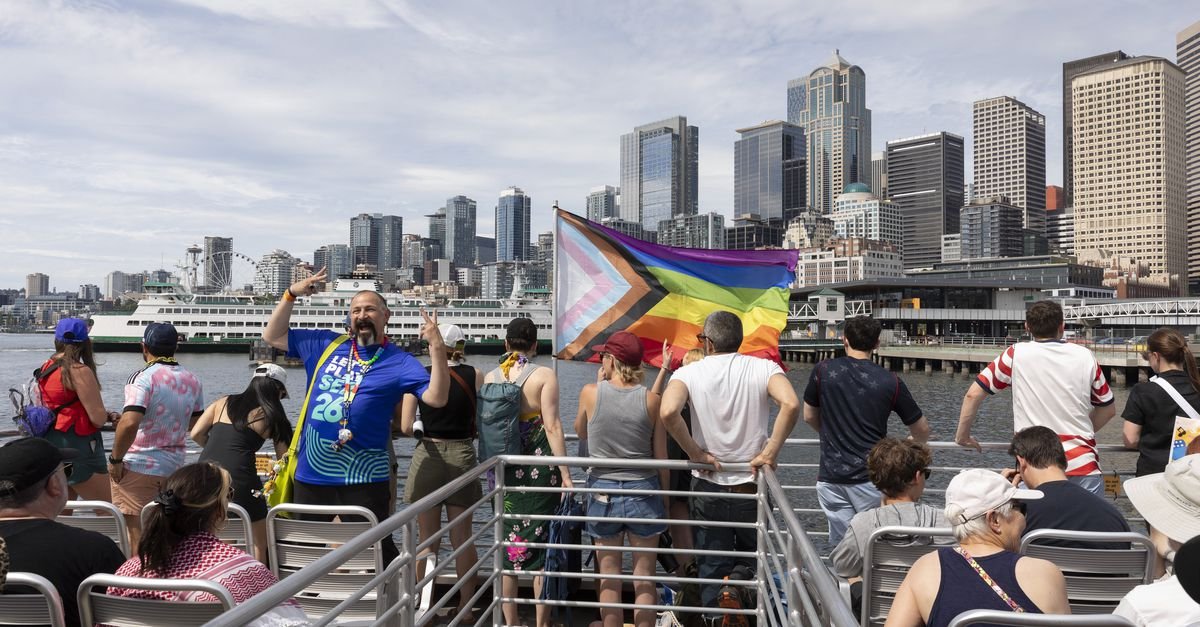
The competition takes place on the final weekend of Seattle Pride; a prelude to the commemoration of the 1969 Stonewall riots in New York. A crowd at the time resisted the eviction of the gay bar by the police. During a celebration of that success a year later, the Pride march was born. It spread worldwide and in Seattle is now spread over numerous initiatives and activities in the month of June.
When it became known that the city on the American west coast could organize six World Cup matches, the local organizing committee of Seattle Pride immediately got to work. “We initially didn’t know which competitions they would be,” says Hedda McLendon of the committee. “But on the last weekend of Seattle Pride, such a mega event cannot take place without attention to the LGBTQ+ community. Pride has been here for over fifty years, the World Cup is here for a few weeks and is leaving again.”
The goal is to welcome the world “with the warmth and respect that defines Seattle,” McLendon said. Many local sports teams organize Pride matches, so why not the World Cup, the biggest global sporting event and showcase? McLendon’s hope is to spread a positive message around Egypt-Iran about Seattle’s acceptance of the LGBTQ+ community.
:format(webp)/s3/static.nrc.nl/wp-content/uploads/2026/06/25104414/250626BUI_2034376578_5.jpg)
:format(webp)/s3/static.nrc.nl/wp-content/uploads/2026/06/25104334/250626BUI_2034376578_4.jpg)
Rainbow flags (l) at ‘Pride night’ during a football match between Los Angeles FC and Seattle Sounders, and a rainbow cap (r) at the football match between the women’s teams of Boston Legacy FC and Seattle Reign.
Photos Getty
Criminalized and prosecuted
Internationally, the competition has so far received mainly negative attention. See the Egyptian and Iranian Football Association nothing in the label for the match. The Egyptian Football Association states that such a match conflicts with the “cultural, religious and social values” of the country. The Iranian association has according to The Athletic informed FIFA that it does not want “activities related to that movement” to take place in the stadium. In both countries, the LGBTQ+ community is criminalized and persecuted.
In the US itself, the federal government is also challenging LGBTIQ+ rights. But Seattle is a politically progressive city that celebrates the LGBTQ+ community. Because of the city council’s opposing political views, President Donald Trump even threatened to have World Cup matches moved from Seattle to another city. It didn’t get that far.
According to FIFA, it is all based on a misunderstanding. The World Football Association is not involved in the Pride designation. FIFA is responsible for everything that happens in the stadium, the local organizing committee is allowed to hang the streamers outside. “There will be events organized by external organizations. But that has nothing to do with the match itself,” FIFA president Gianni Infantino told the Swiss newspaper That Weltwoche.
FIFA uses its own frames. It speaks of “the most inclusive World Cup in history” because of the field of participants that has been expanded from 32 to 48 teams. “Fans of all sexual orientation and gender identity are welcome at matches,” a spokesperson said. In practice the Somali referee was Omar Artan denied entry into the US. Also, many fans, especially from African countries, are not welcome in the United States, the host country where most matches take place.
‘One Love’ captain armband
FIFA itself was not a great advocate of LGBTQ+ symbols during the previous World Cup, four years ago in Qatar. Then the Dutch national team, together with six other (European) countries, wanted to wear the so-called ‘One Love’ captain’s armband. The countries wanted to make a statement against discrimination and racism. At the last minute, FIFA threatened to punish the captains who would wear the armband with a yellow card. All countries subsequently withdrew their intended action.
FIFA is choking on its own hypocrisy, says Jules Boykoff, author of the recently published book Red Card: The 2026 World Cup, Sportswashing, and the FIFA Greed Machine: “In Qatar, FIFA did everything it could to respect ‘local culture’ with the ban on the captaincy. But now that Seattle’s local culture embraces the LGBTQ+ community, FIFA is less interested in that local culture.”
According to Boykoff, this is exemplary of a deeper problem. “FIFA is full of talk in press statements about how important they find non-discrimination and human rights. But when there is some tension involved, they immediately succumb.” Then, according to Boykoff, the organization sacrifices those “so-called values” to “keep the money tap open and not offend their members.”
The local organizing committee in Seattle will not use such words. It has an agreement with FIFA that both parties focus on what they are responsible for: the committee for all activities in the city and FIFA for what happens in the stadium around the match. Rainbow flags are welcome there – not as a political symbol, but as a “sign for human rights”, according to FIFA. Hedda McLendon of the committee hopes that spectators will respond en masse: “We certainly expect that fans will bring rainbow flags to the stadium.”
During the match between Egypt and Iran, the city’s motto will be: leave the (geo)politics at home and enjoy a great World Cup match and everything that surrounds it. And if the ‘Pride match’ on Friday does not bring what Seattle had hoped for, the city will have a new opportunity on Saturday: the Seattle Storm women’s basketball team will also play a Pride match, complete with merchandise.