Tegucigalpa, Honduras
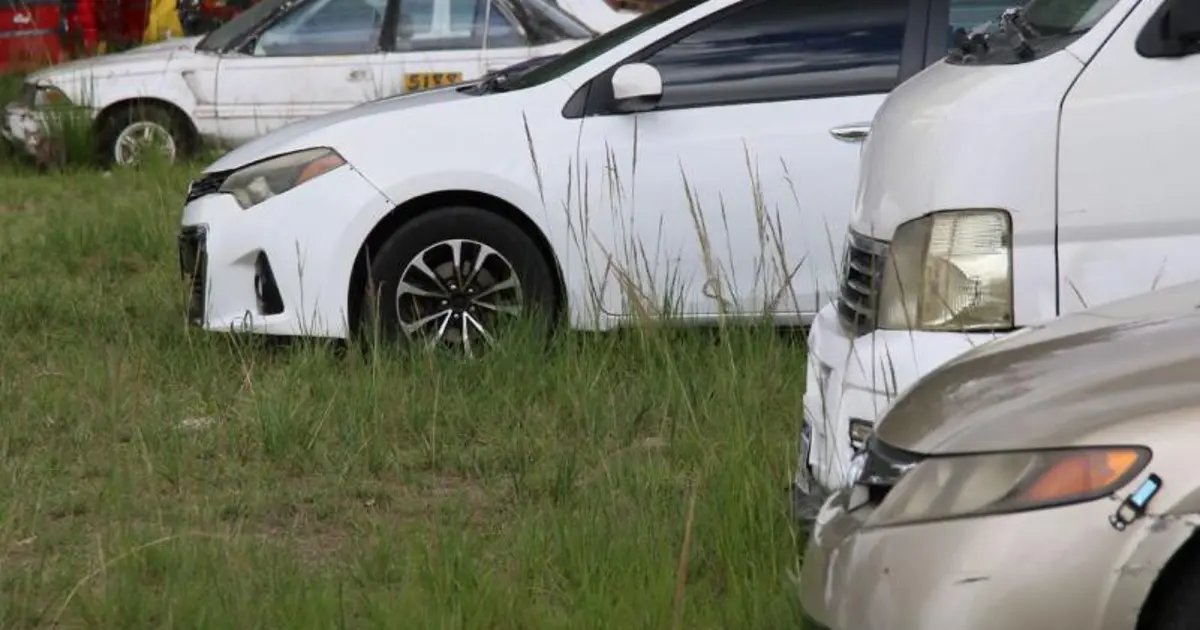
He Honduran Institute of Land Transportation (IHTT) has seized 31 vehicles that operated through platforms such as Uber, InDriver and VIP taxi services between February and June of this year.
According to Juan Carlos Funes, head of Communications at the IHTTthe 31 seizures represent a small part of the actions carried out by the Directorate of Inspections, especially in Tegucigalpa and San Pedro Sula.
“The latest data is 31, which represents 1.38% of all operations carried out by the Directorate of Inspections, of 2,246 vehicles seized in general, for not complying with operating permits and other irregularities,” he explained.
The situation will reach the National Congress this Tuesday, where representatives of the different platforms were summoned to hold a meeting with the Transportation Commission and analyze possible alternatives to regulate the service. The meeting was called by Tomás Zambrano, president of the National Congressand is scheduled for 2:00 pm.
The authorities rejected that there is a campaign directed exclusively against drivers of this type of digital applications.
“The operations are not focused on Uber people, because remember that there are no records. They have been seized because they have found, detected that there are some irregularities in all the vehicles,” said Funes.
The official explained that these platforms currently operate in a regulatory vacuum, since they do not have permits issued by the State nor are they included in the traditional transportation schemes authorized by the Institute.
“They are not even regulated. You cannot say that they are illegal because they are not legalized either. They are not regulated through the State through the Institute,” he said.
They denied versions
According to the IHTT, any passenger transport service must have operating permits similar to those held by collective taxis, sweeping taxis and other authorized modalities.
“They don’t do it because they use platforms that are not currently regulated. They would need an operating permit specifically like normal taxis,” he added.
The authorities also denied versions that recently circulated about alleged tactics used by inspectors during the operations.
“The inspectors who carry out the operations currently do not have any type of instruction to pose as clients to seize these units,” said Funes.
The main cause of the seizures has been the lack of operating permits, an infraction that includes financial penalties and temporary retention of vehicles. “The fine is established in the law, which is 11,000 lempiras. And the confiscation is for six months,” said the IHTT spokesperson.
There is a willingness to dialogue
Marvin Rodríguez, Uber driver in the capitalis one of the people affected by these measures.
“Uber is the safest transportation service, both for the passenger and the driver, and they are trampling us with this fine. They are not extorting Uber; organized crime has not yet entered this application. Customers feel safe,” he said.
Likewise, he criticized that the authorities focus their efforts on confiscations instead of looking for mechanisms to improve working conditions in the sector.
“Why aren’t drivers supported through the app so that they can pay decent rates that are in line with fuel prices? Instead, they make arbitrary decisions against people who just want to bring a living to their home,” he said.
From the IHTT they assure that there is a willingness to dialogue with the drivers and representatives of the digital platforms to find a solution to the problem.
All transportation systems must be legalized.
We firmly believe that citizens deserve safe, modern and reliable mobility alternatives, but always under clear State regulation that guarantees order, security and fair competition.
That’s why,…
— Tommy Zambrano (@TommyZambranoM)
June 7, 2026
“The commissioners are waiting because Tomás Zambrano, president of the National Congress, made the call with a sector of this group of people to see how the issue is discussed. The idea is to seek a rapprochement,” explained Funes.
The official pointed out that the commissioners of the Institute could participate in the conversations to explain the scope of the current legislation and analyze possible reforms.
In addition, he highlighted that countries such as Chile, Mexico and Brazil already have mechanisms to regulate this type of transportation platforms, which is why he considered it important that Honduras also advances in this process.
Meanwhile, thousands of drivers continue to operate under the possibility of being sanctioned by the authorities while there is no specific regulation for these platforms.