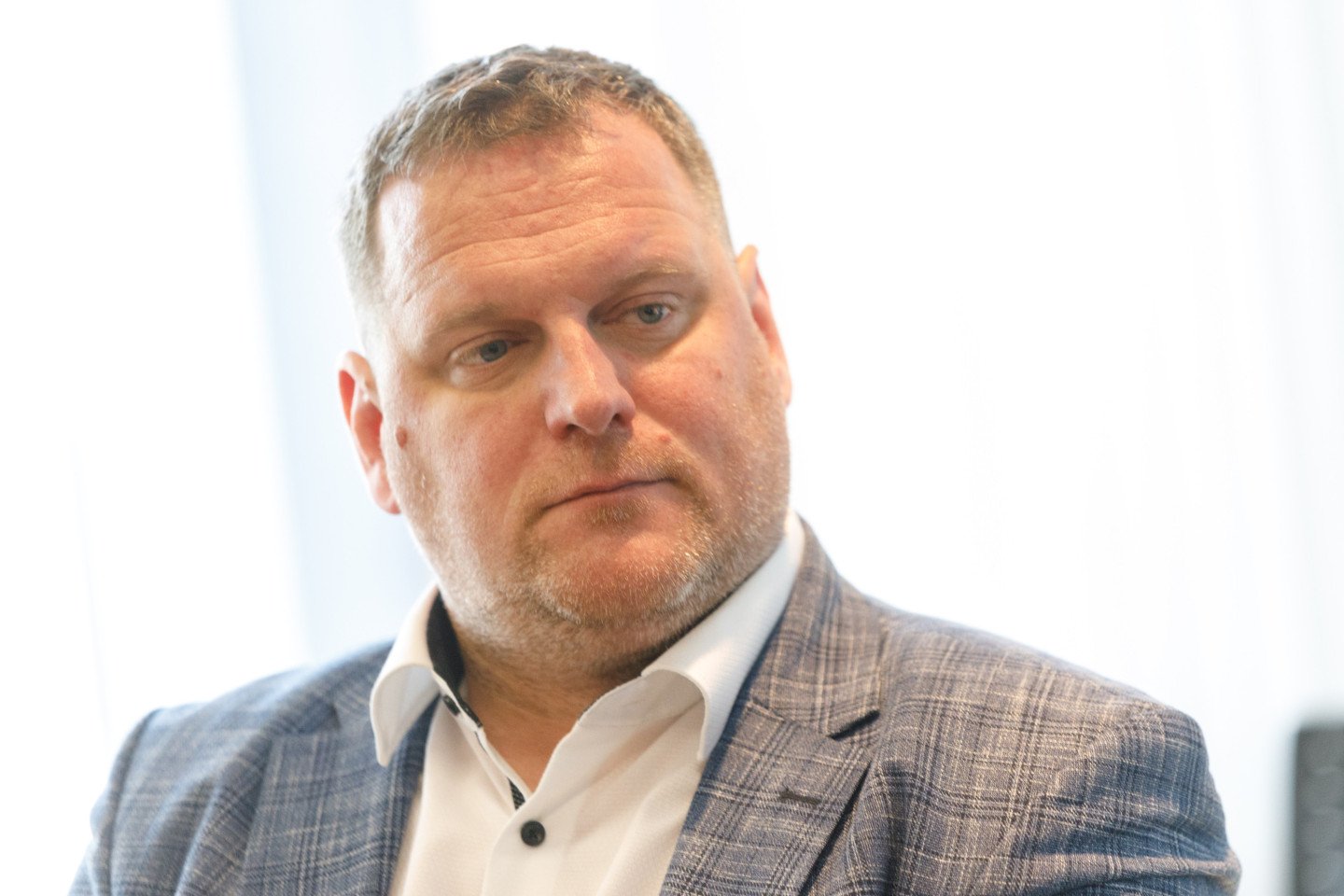
The fact that the mayor of Riga Viesturs Kleinbergs (“Progressives”) has not spoken untruth about the tariffs of “Latvenergo” is now also confirmed by the Public Services Regulatory Commission (PURC).
“Latvenergo” is going to raise the fee for the thermal energy produced by TEC-1 and TEC-2, which is supplied to Riga, TV3 announced on Monday in an interview V. Kleinberg. According to him, such a step could affect the final tariff of the company “Rīgas siltums” for the residents of the capital. The mayor assessed the possible situation as the responsibility of the Ministry of Economy.
After a short while, “Latvenergo” came out with a statement that the company does not have any information that would allow us to conclude about a planned increase in the thermal energy tariff.
The press service of the company “nra.lv” explained that thermal energy tariffs depend on natural gas prices on the market, the changes of which cannot be predicted in advance, and reminded that information on current tariffs is regularly published.
The statements of the mayor of Riga are confusing, because one gets the impression that he knows something that even “Latvenergo” does not know, or that the head of the municipality is talking about one thing, but the energy company is talking about something else. And where is the responsibility of the Ministry of Economy, no matter how V. Kleinbergs wants it.
The tariff has already increased
“Nra.lv” asked to explain the situation to a “third party” – PUK, which monitors the activity of public service providers, market development and ensures that service users receive continuous, safe and high-quality public services at an economically justified price.
When asked if PUK has any information about the fact that “Latvenergo” is going to raise the fee for thermal energy produced by TEC-1 and TEC-2, which is supplied to Riga, Jānis Negribs, director of the Energy Department of PUK, answered that PUK does not have information that “Latvenergo” is going to submit a new tariff project for evaluation, in which all cost items will be reviewed. At the same time “Latvenergo” updates the tariff every month according to the current fuel (natural gas) price. At the end of April, “Latvenergo” announced what the applicable tariff will be in May, and the tariff will not change in June either.
The announced tariff for TEC2 in May is 9.69 EUR/MWh or 13.9% higher than in April – it increases from 69.81 to 79.50 EUR/MWh. On the other hand, the TEC1 tariff was 65.87 EUR/MWh in April, and 75.14 EUR/MWh in May. In June, the tariffs do not change compared to the tariffs in May.
“Therefore, the tariffs of “Latvenergo” have increased by almost 14% in the spring, but this currently has a minimal impact on AS”The warmth of Riga” to the costs included in the tariffs, because when the heating season ends, JSC “Rīgas siltums” fully covers its needs by purchasing heat in the form of an auction. The need for “Latvenergo” tariffed heat may arise only in late autumn. At the moment, we refrain from predicting what the real costs of heat energy production will be in the second half of the year,” said Jānis Negribs.
It is not known what the prices will be in the fall
“Has PUK received any new tariff draft regarding the need to increase the final heating tariffs in Riga?” “nra.lv” asked.
The PUK official replied that JSC “Rīgas siltums” has submitted a new heat energy service tariff draft to the PUC, but the values of the submitted tariffs cannot be commented on before the evaluation.
“Nra.lv” asked if PUK allows the possibility that in the foreseeable future (this year or the first half of next year) new, increased final heat supply tariffs for residents in Riga will have to be approved.
Jānis Negribs explained that the values of the final heat supply tariffs largely depend on several aspects, especially fuel prices, which cannot be predicted at the moment due to geopolitical fluctuations. “However, at the same time, PUK has initiated a number of measures that could have a beneficial effect on the tariff. As early as Monday, June 8, PUK’s council will decide on the public consultation procedure for determining the price ceiling for thermal energy purchased from independent heat producers. In June, it is also planned to conclude work on the methodology for calculating heat supply tariffs, which will ensure a more complete inclusion of the cost efficiency of new fuel technologies in tariffs,” said PUK Director of the Department of Energy.
62 to 79 million euros were blown in the air in Riga
On the morning of May 28, Saeima member Andris Kulbergs (“Joint List”) presented the final report to the parliamentary investigation commission on the reasons for the increase in the price of centralized heat supply in Riga and energy security risks. Andris Kulbergs was the head of this commission. On the same afternoon of May 28, he became the Prime Minister.
The parliamentary investigation commission has concluded that an absurd situation has developed in Riga for a long time – while the usable thermal energy or residual heat produced by the TPP was not used and went into the atmosphere, at the same time more expensive heat was purchased from other producers.
Over several years, approximately 62 to 79 million euros were wasted in this way, according to the commission’s final report.
“The heat supply volume of one city of Liepāja is blown into the air. It’s not like a little, a little bit. It’s the highest level of waste. Waste of resources for what each of us has paid, electricity bills for what each of us has paid in CO2 quotas. It’s blown systematically, and it’s not paid attention to for years, and it’s a jointly cultivated system. It’s not accidental because of unprofessionalism,” Andris Kulbergs expressed from the podium of the Saeima.
Although he did not name specific responsible officials of the Riga municipality, it is clear that the content of the report refers not only to the leaders of the capital in the past, but also to the current convocation of the city council and to the current mayor.
The parliamentary investigation commission sees wastage and possible fraudulent activities as important reasons why Riga residents overpay for heat.
It seems that V. Kleinbergs, together with his associates, cannot figure out how to create a background in order to shift the responsibility for the “possible situation” (higher final tariffs for the residents of Riga) to the Ministry of Economy under the control of political opponents.