

If pineapple on pizza is enough to make Italians cringe, pineapple in kimchi stew may have the same effect on South Koreans.
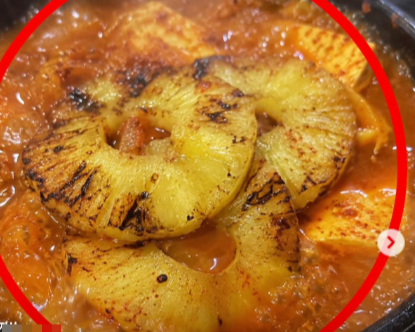
A recent social media video showing a bubbling pot of kimchi jjigae — Korea’s beloved spicy stew — with chunks of pineapple stirred into the broth prompted thousands of reactions from bewildered Korean viewers.
“That’s crossing the line,” one commenter wrote.
“Please don’t make us angry,” another joked.
Others borrowed a famous line from the latet Netflix hit “Teach You a Lession,”: “My kid’s dad is very angry.”
The outrage, however, was mostly tongue-in-cheek. What fascinated many viewers was not simply the unusual ingredient but the realization that Korean food, much like Italian cuisine before it, is beginning to evolve in ways its country of origin never imagined.
The controversial recipe did not come from Korea. It came from Mexico.
Logic behind ‘pineapple kimchi stew’
The dish is known as al pastor pineapple kimchi stew, a name that immediately makes sense to Mexican diners.

Al pastor — one of Mexico’s best-known taco fillings — features marinated pork served with pineapple, onion and cilantro. The sweet acidity of pineapple is a key part of the flavor profile.
Viewed through that lens, adding pineapple to a pork-based kimchi stew isn’t an act of culinary rebellion. It’s a local reinterpretation, combining familiar Mexican flavors with one of Korea’s most recognizable dishes.
Mexican cuisine is already comfortable pairing tropical fruit with spicy heat. Pineapple, mango and watermelon are commonly sprinkled with chili powder and lime, making the jump to kimchi surprisingly natural.
Korean ingredients, local recipes
As Korean cuisine spreads globally, its ingredients are increasingly finding homes in dishes that would have once seemed unimaginable in Korea.
Gochujang has become one of the biggest beneficiaries.

After The New York Times published a recipe for gochujang caramel cookies in 2022, the sweet-and-spicy dessert spread well beyond Korean kitchens, eventually earning a place among the newspaper’s most popular recipes of 2024. Home bakers soon adapted the same flavor combination for brownies and other desserts.
The fermented chili paste has also migrated onto pizza, where “gochujang butter” — made with butter, garlic, honey and cheese — is recommended as a spread for pizza crusts, steaks and pasta across American cooking shows and online forums.
Kimchi is undergoing a similar transformation.
Rather than appearing alongside bowls of rice, it increasingly shows up in salads, sandwiches and burgers. Sweetgreen, the US salad chain, recently introduced a cucumber kimchi crunch salad as Korean flavors continue to enter mainstream restaurant menus.
A sign that K-food has gone mainstream
Food experts say these adaptations are a sign of success, not dilution.
In countries where rice is not a staple, consumers are unlikely to use kimchi and gochujang the same way Koreans do. Instead, they weave Korean ingredients into foods they already eat every day — pizza, fries, cookies, burgers and salads.
“The growing use of Korean flavors in mainstream restaurant menus shows that Korean ingredients are becoming part of everyday dining,” said Lee Young-joo of the Korea Trade-Investment Promotion Agency’s Chicago office.
For decades, globalization often meant reproducing authentic dishes abroad. Today’s version looks different. It is about local cooks making foreign ingredients their own.
To Korean traditionalists, pineapple may never belong in kimchi stew.
Then again, many Italians are still saying the same thing about Hawaiian pizza.
By Herald Business reporter Yook Sung-yeon (gorgeous@heraldcorp.com)
Translated using ChatGPT and edited by Korea Herald staff — Ed.
The original Korean version of this story is available here.
milaya@heraldcorp.com

