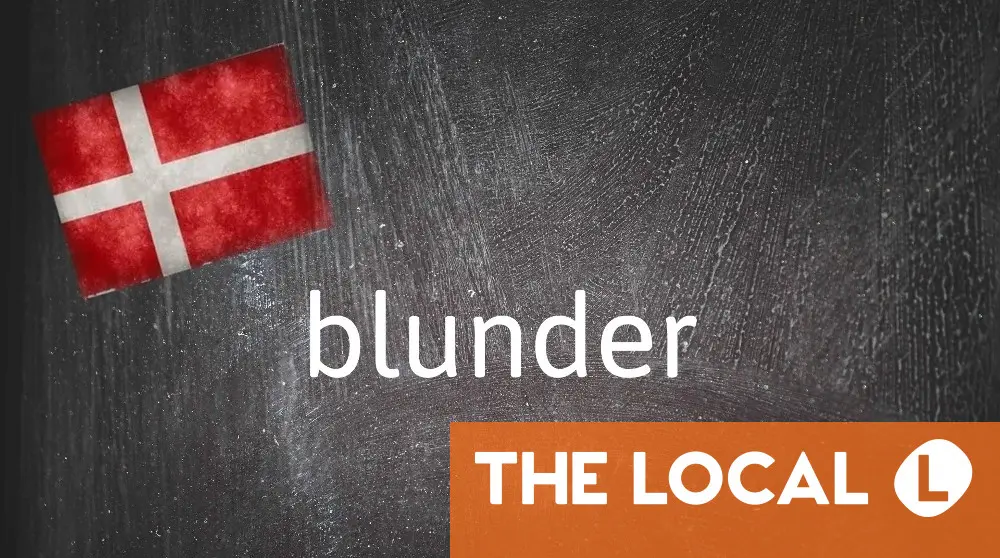
Here’s a Danish word which might have passed you by if you’ve been asleep during lessons.
What is snooze?
The present tense of the verb to doze off meaning “to doze”, to “be half asleep” or “to nap”.
Like the English “nap”, it can also be used as a noun, a blunder, although this is much less common than the most popular word for “a nap” in Danish, a nap. The latter is a word any parent to small children will be very familiar with.
Old Norse had the word blunder, meaning “to shut one’s eyes”, and the word probably shares an origin with the word blind (unable to see), found in Danish, German and English among other northern European languages.
In Swedish, close your eyes still means “to shut one’s eyes” and can be used literally or figuratively, an example of how the definition of a word can shift in different directions in closely related languages over time, which often happens if there are other competing synonyms.
Swedish also has the related word napwhich like the Danish snooze refers to a sleep. You often hear it in the negated sense, as in I have barely slept a nap last night (I barely got a wink of sleep last night).
Why do I need to know snooze?
It appears that snooze is another example of a false friend with the English word “blunder”, which means an error or careless mistake.
While this is essentially true, in some cases snooze can be used in a context which means something close to “blunder” in a figurative sense, although the literal meaning is still to doze off.
For example, a situation in which somebody loses concentration, resulting in them squandering an advantage or position, might be put down to a snooze:
She was about 50 meters in front as the runners approached the finish, but took a blunder and was overtaken in the final stretch.
She was in the lead by around 50 meters as the runners approached the finish, but fell asleep and was overtaken on the final stretch.