The Yamandú Orsi government decided to give reverse and remove from the reform of the Code of Criminal Procedure (CPP) changes to early release that had originally been included, Del Sol’s Aire Rico program reported and confirmed to The Observer sources from the Technical Advisory Group (GAT) that drafted the project and that was already notified of the change.
The government’s decision comes after criticism from the opposition that indicated that the Executive Branch intended to release prisoners. One of the main critics of that passage had been Colorado Senator Pedro Bordaberry during the questioning of Interior Minister Carlos Negro.
Although Negro defended this decision both in the interrogation and in various interviews—and denied that the government was going to release prisoners—now the The Executive Branch decided to go back and eliminate that chapter of the reform.
What was the proposed change?
Yamandú Orsi and Jorge Díaz at a press conference at Torre EFecuiva on February 13, 2026 to announce the termination of the contract with Cardama
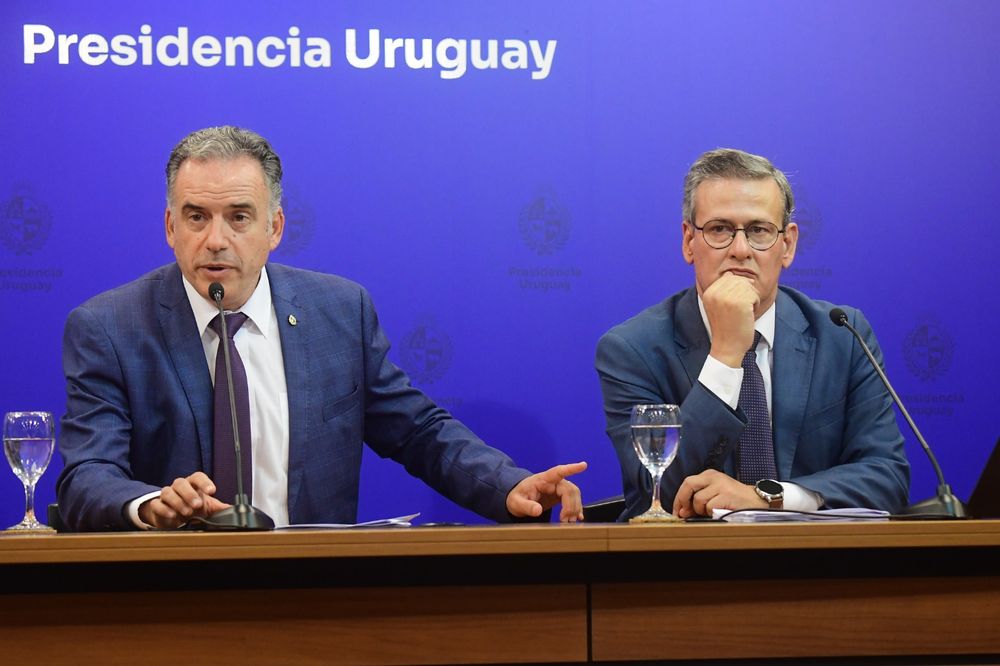
Photo: Dante Fernandez / FocoUy
Current regulations provide for the possibility of requesting early release in some cases, but the government of Luis Lacalle Pou—through the Urgent Consideration Law (LUC) and the Budget Law— added a series of crimes that are excluded of that possibility.
The current Code of Criminal Procedure establishes that early release “is a benefit that may be granted to prisoners who are deprived of libertywhen taking into account your behavior, personality, manner and living conditionsyou can formulate a favorable prognosis for social reintegration”.
The norm adds that people deprived of liberty may request it when they have fulfilled the half the penalty in case of a prison sentence (sentences greater than two years).
The final decision is always a judge and the request must include an updated criminal record form and a “prison conduct report provided by the director or person in charge of the establishment.”
However, there are a series of crimes that are excluded from this possibility:
a) Rape
b) Sexual abuse
c) Especially aggravated sexual abuse
d) Violent indecent assault
e) Sexual abuse without body contact
f) Kidnapping
g) Aggravated homicide
h) Crimes and offenses against humanity
i) Those crimes for which eliminative security measures have been applied to the convicted person
j) Prey
k) Robbery with deprivation of liberty. Coping
l) Extortion
m) Crimes linked to sexual violence against children, adolescents and the disabled
n) Crimes provided for in the narcotics law
The recidivism or repetition of some minor crimes (such as theft, serious injuries when the person’s life is endangered, among others) They are also excluded by current regulations.
Of all these exceptions there are five that were added by the government headed by Lacalle Pou: robbery, robbery with deprivation of liberty (coping), extortion, crimes linked to sexual violence against children, adolescents and incapable persons and crimes provided for in the narcotics law (linked to drugs).
What did the reform promoted by the government propose? It restored the possibility of requesting early release for crimes previously excluded but toughened the requirements with respect to the rest.: it is necessary to have fulfilled three quarters of the sentence imposed.
First-shift Court of Appeals Minister Marcelo Malvar, who was a member of the Technical Advisory Group that drafted the reform, had explained the change as follows: “A middle ground was chosen, neither being too benevolent as in the early days of the code, but nor the harsh position of preventing it.”.
Malvar had exemplified that in a very especially aggravated homicide with a sentence of 30 years, it would be possible to request it at 22 years and 6 months, while in the case of a person convicted of aggravated robbery in case of recidivism, someone who broke the window of a car and stole the coins, if he were sentenced to 2 years in prison he would be able to request it after a year and a half. However, now that has fallen by the wayside.