More than 27 million Peruvians are called to the polls this year Sunday April 12in an unprecedented voting day. With more than 30 political groups in the race, almost 100,000 voting stations both in the country and abroad and, above all, with the most complex ballot in electoral history with five simultaneous elections.
More than 27 million Peruvians are called to the polls this year Sunday April 12in an unprecedented voting day. With more than 30 political groups in the race, almost 100,000 voting stations both in the country and abroad and, above all, with the most complex ballot in electoral history with five simultaneous elections.
LOOK: Peru 2026 Elections: Learn about and compare the government plans of the presidential candidates
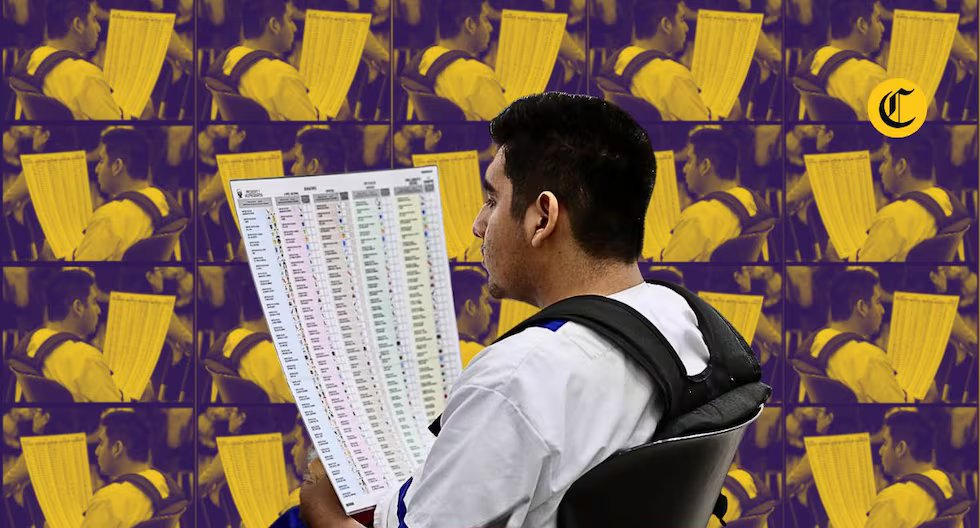
“It is the most difficult electoral process in history. Facing five elections, facing up to seven preferential votes, facing up to 12 brands on a ballot constitutes, with the number of political organizations, an unprecedented, very complex election. But we are sure that it will succeed and it will succeed well”said the head of the National Office of Electoral Processes (ONPE), Piero Corvetto, in an interview with The Commerce on Friday.

In the elections on April 12, voting will be done on the largest and most expensive ballot in history. (Photo: ONPE)
The electoral process itself involves extensive deployment both nationally and internationally. How many Peruvians are authorized to vote? How many tables will be installed? Which locations will concentrate the most voters? What is the most remote voting center? Here we present these and other key data to understand the magnitude of the 2026 General Elections.
Figures and data of the contest
27,325,432 Peruvians are called to the polls: 95.6% in the national territory and 4.4% abroad.
:quality(75)/cloudfront-us-east-1.images.arcpublishing.com/elcomercio/CBDZU32W4RBMNPU4O6ES3NV7MQ.jpg)
92,766 voting stations are planned to be installed in the race.
- San Juan de Lurigancho (Lima): 812 692
- San Martín de Porres (Lima): 531 448
- Ate (Lima): 488 948
- Comas (Lima): 446 127
- Callao (Callao): 393 426
:quality(75)/cloudfront-us-east-1.images.arcpublishing.com/elcomercio/DONOVFR4PBAVBC34H57PYPHOPE.jpg)
1. San José de Ushua (Paucar del Sara Sara, Ayacucho): 172
2. Cajamarquilla (Ocros, Áncash): 181
3. Cochas (Yauyos, Lima): 234
4. Belén (Sucre, Ayacucho): 247
5. San Pedro de Huancayre (Huarochirí, Lima): 247
1. Universidad Nacional Mayor de San Marcos (Lima): 29,131 voters / 100 tables
2. Ricardo Palma University (Surco): 23,472 voters / 80 tables
3. IE 0005 Rosa de Santa María (Breña): 20,470 voters / 70 tables
4. University of San Martín de Porres (Santa Anita): 19,435 voters / 65 tables
5. Emblematic IE Alfonso Ugarte (San Isidro): 19,325 voters / 65 tables
:quality(75)/cloudfront-us-east-1.images.arcpublishing.com/elcomercio/SCB7A5OZSRH4XAQZZ23PHUOHTY.png)
The most distant voting location—in relation to the district capital—is Educational Institution No. 17137, located in the Alto Tuntus native community, Imaza district, Bagua province, Amazonas region.
From the district capital to that location there is an approximate distance of 500 kilometers, a journey that requires about 28 hours of travel by land and river transportation. Starting with this contest, 218 voters of the Awajún people will be able to vote in their own community.
:quality(75)/cloudfront-us-east-1.images.arcpublishing.com/elcomercio/5FGXFWAMSBDXDC5U2BHZFNTOXQ.jpg)
1. New Zealand: 3 tables / 841 voters — Saturday the 11th, 2:00 p.m. (Peruvian time)
2. Australia: 18 tables / 7,077 voters — Saturday the 11th, 4:00 p.m. (Peruvian time)
3. Republic of Korea: 1 table / 379 voters — Saturday the 11th, 5:00 p.m. (Peruvian time)
4. Japan: 81 tables / 37,660 voters — Saturday the 11th, 5:00 p.m. (Peruvian time)
5. Singapore: 1 table / 104 voters — Saturday the 11th, 6:00 p.m. (Peruvian time)
6. China: 4 tables / 833 voters — Saturday the 11th, 6:00 p.m. (Peruvian time)
:quality(75)/cloudfront-us-east-1.images.arcpublishing.com/elcomercio/K35HKWRBNFFZNCCAM2A5SZRIYE.jpg)

From the Decentralized Office of Electoral Processes (ODPE) Bagua, in Amazonas, with the support of law enforcement forces, the deployment of electoral material to the towns of Kunchin, Huantsa, Wayampiak, Yanat, Alto Tuntus, Pampa Entsa, Shain, Kusutnupakaim, Paantam Entsa, Tuwag Entsa was carried out. (Photo: ONPE)
The first polling station to be installed was No. 028982, in Pataz (La Libertad), at 2:23 am on April 11, 2021.
:quality(75)/cloudfront-us-east-1.images.arcpublishing.com/elcomercio/7XV4CAZL5BDKBMOAZ74HUOWS4I.jpg)
The last tables to be installed were located in Lima, in Santiago de Surco and San Borja, at 12:00 pm, the deadline.
The data reveal that each election registers fewer polling station members present. In 2021, only 6 out of 10 members showed up at the opening of their tables.
Percentage of polling station members who showed up at the opening of their voting stations (2006-2021)
2006 → 84.1%
2011 → 74.4%
2016 → 71.9%
2021 → 61.4%
2026 → X
:quality(75)/cloudfront-us-east-1.images.arcpublishing.com/elcomercio/3QWAQJ4C2FHMPCOYKKE3GRWLRU.jpg)
For this election, at the national level, all polling stations had at least one member—regular or alternate—trained as of April 7. However, only seven districts had all their tables with all their table members trained.
Abroad, no polling station had all its members trained until the same date. In Boston and Dallas (USA) there were not even any trained polling station members registered.
The new, the oldest and the most funded
| No. | NAME | AGE | POSITION, REGION AND PARTY |
|---|---|---|---|
| 1 | Raúl Ángelo Solorzano Benancino | 25 years, 3 months and 25 days (2000-12-18) | Candidate for deputy — Ucayali — Good Government Party |
| 2 | Jackeline Rossy Gutiérrez Gonzales | 25 years, 4 months and 15 days (2000-11-28) | Candidate for deputy — Ucayali — Strength and Freedom |
| 3 | Sara María Anne Contreras Alarcón | 25 years and 5 months (2000-11-12) | Candidate for deputy — Lima Provinces — Strength and Freedom |
| No. | NAME | AGE | POSITION AND PARTY |
|---|---|---|---|
| 1 | Isaac Humala Núñez | 94 years (1931-07-02) | Candidate for national senator — Together for Peru |
| 2 | Moisés Tambini del Valle | 91 years (1934-11-25) | Candidate for national senator — Peruvian Aprista Party |
| 3 | Emilio José Salcedo Rubio | 90 years (1935-03-22) | Candidate for national senator — SíCreo |
| No. | NAME | POSITION AND GROUP | INCOME |
|---|---|---|---|
| 1 | Valer Pinto Hector | Candidate for national senator — Somos Perú | S/408,769.70 |
| 2 | Sevillian Enrique Kennedy Campaign | Candidate for deputy for Cajamarca — Alianza Venceremos | S/337,360.00 |
| 3 | Torres Morales Miguel Ángel | Candidate for national senator — Fuerza Popular | S/264,000.99 |
| No. | NAME | PRESIDENTIAL CANDIDATE | INCOME |
|---|---|---|---|
| 1 | Alliance for Progress | César Acuña Peralta | S/7,196,365.60 |
| 2 | Popular Freedom | Rafael Belaunde Llosa | S/1,264,370.00 |
| 3 | We are Peru | George Forsyth Summer | S/1,022,663.77 |
Source: Claridad Portal – ONPE, electoral campaign financial information as of 04/10/2026 (first report).