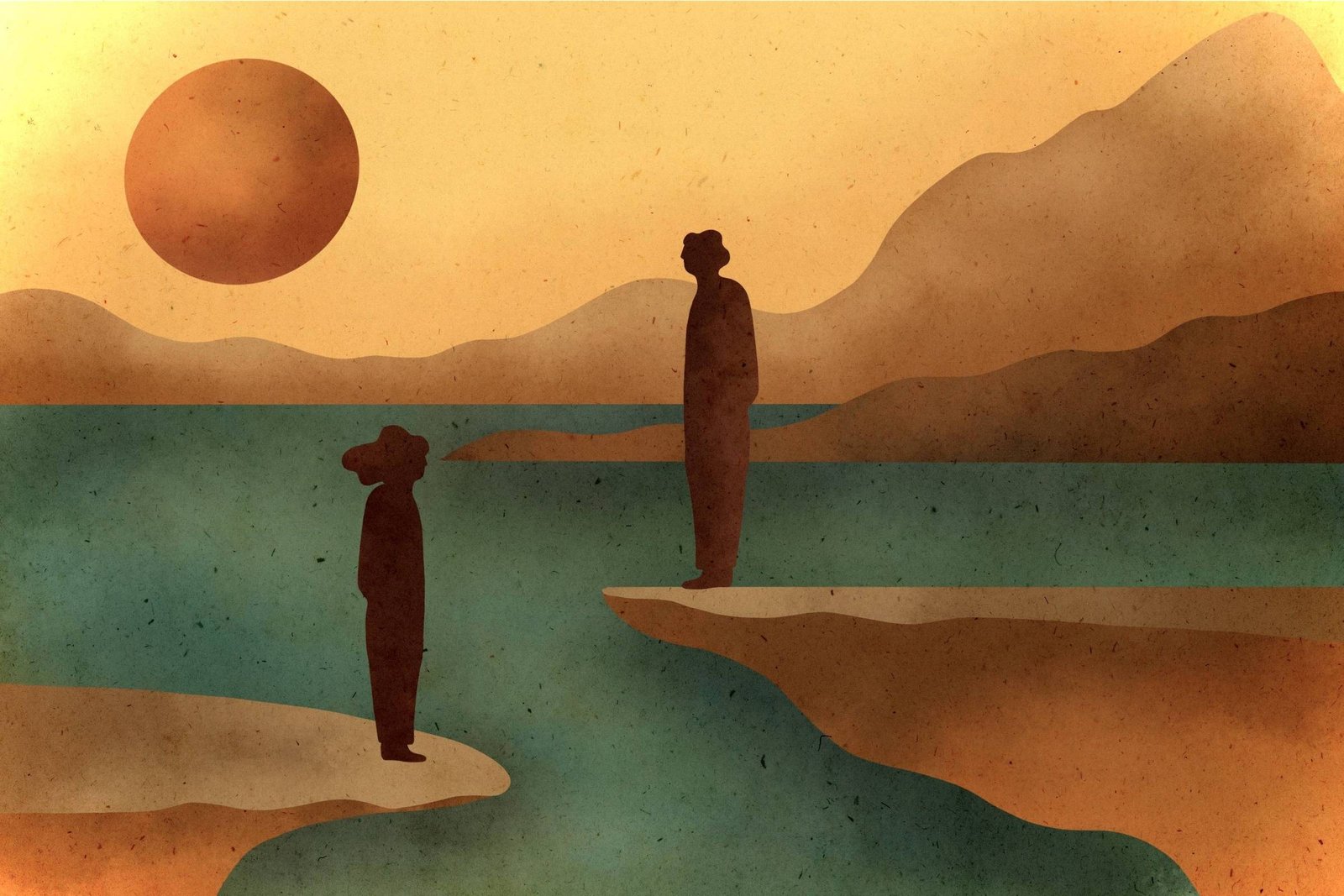
We live in an age that celebrates freedom as an unquestionable dogma. Happiness is sold as a product, an individual achievement, a destination to be reached. However, beneath the superficial gloss of this promise, a cruel, individualistic and competitive social machine operates, which produces not fulfillment, but subtle and widespread misery. This text is an invitation to an introspective journey, a provocation to question the invisible grids that we build and call life.
True freedom, in its deepest essence, is perhaps not the absence of limits, but the ability to consciously embrace one’s limits. It is the courage to choose one’s own yoke, to find meaning and even strange fulfillment within the walls that surround us.
Contemporary society, in its fierce competition, offers us an infinite number of golden cells. Careers that consume the soul in exchange for status, consumption that fills voids with objects, identities constructed to please algorithms.
We call this “choice” and “success.” We feel good, useful, fulfilled within these systems. But this feeling of well-being is not proof of freedom. It is often the symptom of a profound adaptation to the prison itself. The ego, in its search for security and control, literalizes the world, transforming the complexity of existence into unilateral goals: winning, accumulating, standing out. This reduction is a powerful illusion, a social pathology that makes us confuse the cell with the horizon.
And so we get to the heart of the fantasy. The contemporary search for happiness and freedom is, to a large extent, an illusion created by the ego itself, which fears chaos, ambiguity, doubt and true contact with others. In a society that rewards individualism and selfishness, being “free” often means isolating yourself, competing, and protecting what is “yours.”
The security we so desire turns into a fortress of anxiety. The control we exercise over our image, our career, our life generates not peace, but constant exhaustion. The pathologies that arise from this, such as burnout, depression and loneliness in the digital crowd are not personal failures, but symptoms of a sick system. We are miserable not because of a lack of achievements, but because we exchanged the richness of authentic relationships and shared dreams for the poverty of illusory autonomy.
Now, stop and reflect. What is the shape of your cell? Which corridors of the competition do you run in thinking you are free? What security do you seek that, deep down, only imprisons your fear?
The language of the ego is subtle. It convinces us that we are in control, that our view of the world is the only correct one, and that our happiness is a solitary project. This is the big trap. Questioning this is the first act of genuine rebellion. It’s looking into the mirror of a cruel society and seeing your own reflection participating in it. It is recognizing that the desire for security can be the current itself and that the unilateral definition of success can be the fence that separates us from others and from ourselves.
But giving up on dreams and sinking into cynicism would be just another form of prison. Total renunciation of utopia is the final capitulation of the spirit. The path is not in abandoning the dream, but in transforming it.
Moving from the egoic dream of possession and dominance to the dialectical dream of connection and transformation. Dreaming, then, stops being an escape and becomes an act of resistance. Resistance to the cruel literalization of the world, the one-sidedness of competitive thinking and the thoughtless adaptation to the normosis of consumption and debt.
So the final provocation remains: is your freedom real or is it a comfortable fantasy? Is your happiness a state of being or a goal to be achieved in the next competition?
Society molds us to desire specific cells and rewards us when we settle into them. Escaping does not necessarily mean tearing down the walls, but first recognizing them, touching them, and then deciding if it is within them that we want to find our meaning. True self-reflection begins when we stop decorating our cell and start questioning who designed its bars.