Monday, May 4, 2026
    The GeoStrategic Consensus
    No Result
    View All Result
    • Login
    • HOME
    • AMERICAS
      • Argentina
      • Brazil
      • Canada
      • Chile
      • Colombia
      • Costa Rica
      • Cuba
      • Dominican Republic
      • Ecuador
      • El Salvador
      • Greenland
      • Guatemala
      • Honduras
      • Mexico
      • Nicaragua
      • Panama
      • Paraguay
      • Peru
      • United States
      • Uruguay
      • Venezuela
    • ASIA-PACIFIC
      • Australia
      • Brunei Darussalam
      • Cambodia
      • China
      • Federated States of Micronesia
      • Fiji
      • Indonesia
      • Japan
      • Kiribati
      • Laos
      • Malaysia
      • Marshall Islands
      • Mongolia
      • Myanmar
      • Nauru
      • New Zealand
      • North Korea
      • Palau
      • Papua New Guinea
      • Philippines
      • Samoa
      • Singapore
      • Solomon Islands
      • South Korea
      • Taiwan
      • Thailand
      • Timor-Leste
      • Tonga
      • Tuvalu
      • Vanuatu
      • Vietnam
    • CARICOM
      • CARICOM – Non-English
        • Haiti
        • Suriname
      • CARICOM Associates
        • Anguilla
        • Bermuda
        • British-Virgin-Islands
        • Cayman-Islands
        • Curacao
        • Turks-and-Caicos
      • CARICOM English
        • Antigua and Barbuda
        • Barbados
        • Belize
        • Dominica
        • Grenada
        • Guyana
        • Jamaica
        • Montserrat
        • Saint Kitts and Nevis
        • Saint Lucia
        • Saint Vincent and the Grenadines
        • The Bahamas
        • Trinidad and Tobago
    • EURASIA
      • Armenia
      • Azerbaijan
      • Balarus
      • Georgia
      • Kazakhstan
      • Kyrgyzstan
      • Moldova
      • Russia
      • Tajikistan
      • Turkmenistan
      • Ukraine
      • Uzbekistan
    • EUROPE
      • Albania
      • Andorra
      • Austria
      • Bosnia and Herzegovina
      • Bulgaria
      • Croatia
      • Cyprus
      • Czech Republic
      • Denmark
      • Estonia
      • Finland
      • France
      • Germany
      • Greece
      • Holy See
      • Hungary
      • Iceland
      • Ireland
      • Italy
      • Kosovo
      • Latvia
      • Liechtenstein
      • Lithuania
      • Luxembourg
      • Malta
      • Monaco
      • Montenegro
      • Netherlands
      • North Macedonia
      • Norway
      • Poland
      • Portugal
      • Romania
      • San Marino
      • Serbia
      • Slovakia
      • Slovenia
      • Spain
      • Sweden
      • Switzerland
      • United Kingdom
    • MIDDLE EAST AND NORTH AFRICA
      • Algeria
      • Bahrain
      • Egypt
      • Iran
      • Iraq
      • Israel
      • Jordan
      • Kuwait
      • Lebanon
      • Lybia
      • Morocco
      • Oman
      • Palestinian Territories
      • Qatar
      • Saudi Arabia
      • Syria
      • Tunisia
      • Turkey
      • United Arab Emirates
      • Western Sahara
      • Yemen
    • SOUTH ASIA
      • Afghanistan
      • Bangladesh
      • Bhutan
      • India
      • Maldives
      • Nepal
      • Pakistan
      • Sri Lanka
    • SUB-SAHARAN AFRICA
      • Angola
      • Benin
      • Botswana
      • Burkina Faso
      • Burundi
      • Cabo Verde
      • Cameroon
      • Central African Republic
      • Chad
      • Comoros
      • Cote d’Ivoire
      • Democratic Republic of the Congo
      • Djibouti
      • Equatorial Guinea
      • Eritrea
      • Eswatini
      • Ethiopia
      • Gabon
      • Gambia
      • Ghana
      • Guinea
      • Guinea Bissau
      • Kenya
      • Lesotho
      • Liberia
      • Madagascar
      • Malawi
      • Mali
      • Mauritania
      • Mauritius
      • Mozambique
      • Namibia
      • Niger
      • Nigeria
      • Republic of the Congo
      • Rwanda
      • Sao Tome and Principe
      • Senegal
      • Seychelles
      • Sierra Leone
      • Somalia
      • South Africa
      • South Sudan
      • Sudan
      • Tanzania
      • Togo
      • Uganda
      • Zambia
      • Zimbabwe
    • HOME
    • AMERICAS
      • Argentina
      • Brazil
      • Canada
      • Chile
      • Colombia
      • Costa Rica
      • Cuba
      • Dominican Republic
      • Ecuador
      • El Salvador
      • Greenland
      • Guatemala
      • Honduras
      • Mexico
      • Nicaragua
      • Panama
      • Paraguay
      • Peru
      • United States
      • Uruguay
      • Venezuela
    • ASIA-PACIFIC
      • Australia
      • Brunei Darussalam
      • Cambodia
      • China
      • Federated States of Micronesia
      • Fiji
      • Indonesia
      • Japan
      • Kiribati
      • Laos
      • Malaysia
      • Marshall Islands
      • Mongolia
      • Myanmar
      • Nauru
      • New Zealand
      • North Korea
      • Palau
      • Papua New Guinea
      • Philippines
      • Samoa
      • Singapore
      • Solomon Islands
      • South Korea
      • Taiwan
      • Thailand
      • Timor-Leste
      • Tonga
      • Tuvalu
      • Vanuatu
      • Vietnam
    • CARICOM
      • CARICOM – Non-English
        • Haiti
        • Suriname
      • CARICOM Associates
        • Anguilla
        • Bermuda
        • British-Virgin-Islands
        • Cayman-Islands
        • Curacao
        • Turks-and-Caicos
      • CARICOM English
        • Antigua and Barbuda
        • Barbados
        • Belize
        • Dominica
        • Grenada
        • Guyana
        • Jamaica
        • Montserrat
        • Saint Kitts and Nevis
        • Saint Lucia
        • Saint Vincent and the Grenadines
        • The Bahamas
        • Trinidad and Tobago
    • EURASIA
      • Armenia
      • Azerbaijan
      • Balarus
      • Georgia
      • Kazakhstan
      • Kyrgyzstan
      • Moldova
      • Russia
      • Tajikistan
      • Turkmenistan
      • Ukraine
      • Uzbekistan
    • EUROPE
      • Albania
      • Andorra
      • Austria
      • Bosnia and Herzegovina
      • Bulgaria
      • Croatia
      • Cyprus
      • Czech Republic
      • Denmark
      • Estonia
      • Finland
      • France
      • Germany
      • Greece
      • Holy See
      • Hungary
      • Iceland
      • Ireland
      • Italy
      • Kosovo
      • Latvia
      • Liechtenstein
      • Lithuania
      • Luxembourg
      • Malta
      • Monaco
      • Montenegro
      • Netherlands
      • North Macedonia
      • Norway
      • Poland
      • Portugal
      • Romania
      • San Marino
      • Serbia
      • Slovakia
      • Slovenia
      • Spain
      • Sweden
      • Switzerland
      • United Kingdom
    • MIDDLE EAST AND NORTH AFRICA
      • Algeria
      • Bahrain
      • Egypt
      • Iran
      • Iraq
      • Israel
      • Jordan
      • Kuwait
      • Lebanon
      • Lybia
      • Morocco
      • Oman
      • Palestinian Territories
      • Qatar
      • Saudi Arabia
      • Syria
      • Tunisia
      • Turkey
      • United Arab Emirates
      • Western Sahara
      • Yemen
    • SOUTH ASIA
      • Afghanistan
      • Bangladesh
      • Bhutan
      • India
      • Maldives
      • Nepal
      • Pakistan
      • Sri Lanka
    • SUB-SAHARAN AFRICA
      • Angola
      • Benin
      • Botswana
      • Burkina Faso
      • Burundi
      • Cabo Verde
      • Cameroon
      • Central African Republic
      • Chad
      • Comoros
      • Cote d’Ivoire
      • Democratic Republic of the Congo
      • Djibouti
      • Equatorial Guinea
      • Eritrea
      • Eswatini
      • Ethiopia
      • Gabon
      • Gambia
      • Ghana
      • Guinea
      • Guinea Bissau
      • Kenya
      • Lesotho
      • Liberia
      • Madagascar
      • Malawi
      • Mali
      • Mauritania
      • Mauritius
      • Mozambique
      • Namibia
      • Niger
      • Nigeria
      • Republic of the Congo
      • Rwanda
      • Sao Tome and Principe
      • Senegal
      • Seychelles
      • Sierra Leone
      • Somalia
      • South Africa
      • South Sudan
      • Sudan
      • Tanzania
      • Togo
      • Uganda
      • Zambia
      • Zimbabwe
    No Result
    View All Result
    Agentially
    No Result
    View All Result
    Home AMERICAS United States

    Takeways from Artemis II moon mission

    The Analyst by The Analyst
    April 11, 2026
    in United States
    Takeways from Artemis II moon mission


    After months of anticipation, the monumental 10-day Artemis II mission, which sent four astronauts on a record-breaking flyby of the moon, has concluded. It’s a “mission well accomplished,” said NASA Administrator Jared Isaacman just after splashdown.

    READ ALSO

    Supreme Court Temporarily Restores Access to Abortion Pill by Mail

    Wild parrots copy their friends when deciding whether to try new foods, study finds

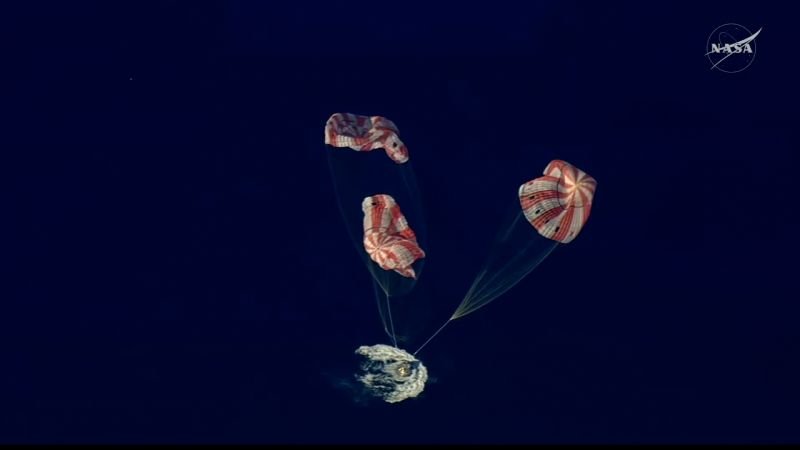
    The Orion spacecraft, carrying NASA’s Reid Wiseman, Victor Glover and Christina Koch and the Canadian Space Agency’s Jeremy Hansen, splashed down in the Pacific Ocean off the coast of California at 8:07 p.m. ET Friday.

    The mission has provided unprecedented images of the moon and a special solar eclipse from space — and afforded unique windows into what it’s like to live inside a campervan-size capsule for a week and a half with three of your closest friends.

    The crewmates have shared plenty of live views from inside Orion while working out and enjoying their meals, as well as candid thoughts on what they might bring next time, such as warmer sleeping bags and a spare computer (since one of theirs hasn’t been working properly).

    The Artemis II crew (clockwise from left), Mission Specialist Christina Koch, Mission Specialist Jeremy Hansen, Commander Reid Wiseman, and Pilot Victor Glover, takes time out for a group hug inside the Orion spacecraft on their way home.

    Eloquent words of wisdom, as well as “moon joy,” moments of silliness and extreme poignancy, such as naming a lunar crater after Wiseman’s late wife, Carroll, have also drawn people around the world to connect with this spaceflight in a way that just feels different than any other mission.

    As the astronauts often repeated, this was a test flight, and everything they did was an experiment to prepare for future missions. As NASA reviews the data and sets its sights toward Artemis III, here are five takeaways from the 10-day journey that carried Wiseman, Glover, Koch and Hansen farther into space than any other human before.

    As would be expected, this test flight turned up several issues that need to be addressed — including the unserious and the potentially detrimental.

    The toilet has been one sticking point that’s left the astronauts dismayed. Issues getting wastewater to fully vent outside the capsule plagued this mission, and it occasionally left the toilet unusable when the storage tank filled up. The backup option is unglamorous, involving the use of plastic bags.

    CSA astronaut Jeremy Hansen and his Artemis II crewmates will use Orion’s toilet, which is called the Universal Waste Management System.

    It’s not yet clear what caused the toilet woes, but NASA has said it plans to amend the issue before the next Orion flight.

    Throughout the mission, Orion also set off some warning messages because of faulty sensors. However, mission controllers have said that’s not too big of a concern.

    Perhaps more concerning is an issue with Orion’s service module, which is the cylindrical attachment at the base of the crew capsule that provides oxygen, power supplies and propulsion throughout the flight.

    The problem stems from a leak in the service module’s propulsion system, which affects the pressurization of propellant tanks.

    NASA knew there might be leaks even before Artemis II took flight, though mission controllers were confident the problem was limited and would not hamper the mission. And it didn’t. But the leak appeared to get worse when the service module fired its main engine for the translunar injection burn on Day 2 of the flight, according to Amit Kshatriya, NASA’s associate administrator.

    While there were no major concerns for this mission, Kshatriya said the service module will need to be fixed for future flights.

    It will likely require an “extensive redesign” of the valve system that’s causing the issue, he noted, because the leak grew by “an order of magnitude” during the flight versus what was expected.

    Thanks to an array of 32 cameras and devices, 15 of which were mounted on the capsule itself, and 17 of which were handheld and operated by the crew, the public was able to witness quite a few facets of life on board the Orion capsule — many of which proved to be irresistibly quirky.

    Glover had a viral moment on social media when, after an exercise session, he took his shirt off to “shower” with wipes. While no actual showers were possible, each astronaut had a personal kit including no-rinse shampoo, baby wipes, toothbrushes and shaving accessories.

    NASA cut the feed at first, but when the astronauts said they were OK with it being broadcast, the livestream from inside the capsule, including a shirtless Glover, continued.

    orion_crew_shower.jpg

    Astronaut’s space ‘shower’ prompts question from mission control

    orion_crew_shower.jpg

    Astronaut’s space ‘shower’ prompts question from mission control

    1:02

    Proving that some things never change whether you’re on Earth or in space, on the first day of the mission the crew encountered technical problems with the personal computing devices or PCD, prompting Wiseman to utter a quote that has become a meme: “I have two Microsoft Outlooks and neither one is working,” he said.

    Later in the mission, it was Koch’s turn to experience IT drama. “No joy seeing the device in the list of available devices when I attempt to repair it after doing the Bluetooth forget,” she said.

    The Orion spacecraft, which the crew nicknamed “Integrity,” is 60% more spacious than the Apollo Command Module was and offered about two minivans’ worth of space and amenities such as a toilet and exercise machine. However, it was still relatively cramped and cluttered, leading the crew to bump into each other frequently.

    With no discernible up or down in space, the astronauts strapped into sleeping bags hanging from the walls each night. “Christina has been sleeping heads down in the middle of the vehicle, kind of like a bat suspended from our docking tunnel,” Wiseman said on April 2. “Victor has a nice little nook wedged in there. And then Jeremy has been stretched out on seat one, and I’ve been sleeping under the displays, just in case anything goes wrong. Every time I was dozing off last night, I had that image that I was tripping off a curb and I was waking myself up. So my body is getting reacclimated.”

    While Orion lacked a fridge, space food experts had worked with the Artemis II astronauts to provide a tasty variety of shelf-stable meals that powered them through the 10-day mission, including a whopping 189 menu options that needed to be rehydrated.

    That food supply provided another viral moment, when a jar of Nutella spread was seen floating through the cabin during the live feed.

    118629_NutellaSpace thumb cln.png

    Nutella goes viral in deep space

    118629_NutellaSpace thumb cln.png

    Nutella goes viral in deep space

    0:26

    And following a tradition that dates back to the Apollo program, the crew was awakened each day by a different song, picked from a list that the astronauts had selected beforehand. Among the wake-up songs were “Sleepyhead” by Young & Sick, “Under Pressure” by Queen and David Bowie, and “Free” by the Zac Brown Band, which was followed by a recorded message from the musicians.

    “We hope that piece of our song ‘Free’ helps start your day with the right kind of lift,” Brown said. “We just want to say how proud we are of you. It takes courage, grit and freedom to chase the unknown. It’s the purest kind of American spirit. Millions back home are looking up and feeling more inspired because of you. Keep flying strong. Keep flying safe. We can’t wait to welcome you home. Come see us on the road.”

    The Apollo program revealed new insights into the moon’s origin and composition, while also revealing enduring mysteries — ones that could be solved using observations taken during Artemis II and subsequent missions.

    On the sixth day of the mission, the astronauts embarked on a seven-hour flyby, seeing features on the moon that had never been glimpsed by human eyes. The crew also traveled by the far side of the moon, which always faces away from Earth and contains some of scientists’ biggest remaining questions that await answers.

    This photo taken by the Artemis II crew on April 6, shows the moon eclipsing the sun, a view few in human history have ever witnessed

    The crew experienced a solar eclipse, including 54 minutes of totality where the sun’s light was blocked by Earth, spied planets, photographed the Milky Way and even witnessed flashes of light as space rocks slammed into the moon.

    Working in pairs, the astronauts captured photos and verbally described what they saw, both of which brought immense surprise, delight and satisfaction to scientists at Johnson Space Center in Houston.

    “Getting the data back was unreal,” said Amber Alexis Turner, lunar scientist and member of the Artemis II crew training team. “The first image I saw was the famous eclipse image, and that blew me away, especially at three in the morning.”

    Turner designed the Artemis II Lunar Science Passport, which the crew referenced to help them identify features on the lunar surface, and helped train them on lunar science ahead of launch. The crew’s feedback from this mission is already informing how crews for Artemis III and beyond will train and prepare, she said.

    “Something that I want people to know about this crew is they go above and beyond with the science,” Turner said. “We definitely will learn more about how the human eye perceives color. We’ve learned a lot about how the crew reads our science plan and executes it.”

    NASA astronaut Christina Koch peers out of one of the Orion spacecraft's windows, looking back at Earth.

    Throughout the mission, the astronauts often looked at Earth and reflected with awe, longing and a seemingly new appreciation for our home planet.

    It’s called the “overview effect,” a term coined by science author and philosopher Frank White in 1987, and something many astronauts report experiencing after witnessing Earth surrounded by the vastness of space.
    Many feel inspired to protect our planet after seeing how fragile its thin atmosphere looks, as well as acknowledging that it’s the only known world that sustains and provides humanity with everything required.

    NASA astronaut Reid Wiseman, Artemis II commander is assisted off the flight deck after arriving aboard USS John P. Murtha on Friday.

    “The perspective I launched with was that we live on a fragile planet in the vacuum and the void of space,” Hansen said. “We know this from science, we’re very fortunate to live on planet Earth. And the other perspective that I’ve sort of learned from others through life is that our purpose on the planet as humans is to find joy, to find the joy and lifting each other up by creating solutions together instead of destroying. And when you see it from out here, it doesn’t change it. It just absolutely reaffirms that.”

    The astronauts have also talked about how Earth looks like one united place, rather than a globe marked by lines demarcating countries or other divisions.

    “The first thing I would say is, trust us, you look amazing. You look beautiful,” Glover said of Earth on April 2. “And from up here, you also look like one thing. Homo sapiens is all of us, no matter where you’re from or what you look like. We’re all one people.”

    President Donald Trump and Congress — which controls NASA’s funding levels — have made clear that NASA’s Artemis program is a top priority amid a space race with China. Both federal lawmakers and the White House have signaled a desire to give the lunar exploration program a funding boost.

    But the president’s budget request, released last week, includes a proposal to cut NASA’s science budget by nearly 50%. Overall, the budget proposal would cut the agency’s top line by $5.6 billion, or 23%.

    Earth sets behind the moon on April 6, during the lunar flyby of the Artemis II mission.

    Though the budget request would put more money toward Artemis, critics are openly wondering how NASA will achieve the ambitious goals it has set out for itself while also slashing costs.

    The cuts to science would also affect programs that support human spaceflight, such as heliophysics, a division that helps reaserchers understand the deadly in-space radiation that is a top concern for astronauts.

    It’s the second year Trump has floated cuts of this magnitude, eliciting widespread pushback from various pockets of the space community. And Congress soundly rejected them in its latest budget.

    And this year’s round of proposed rollbacks is garnering similar feedback with one official from the nonprofit Planetary Society calling the proposal “embarassing” and “a budget of surrender.”

    NASA Administrator Isaacman, defended the White House request during an appearance on CNN’s State of the Union on Sunday: “NASA’s science budget is greater than every other space agency combined across the world.”

    “NASA doesn’t have a top-line problem,” Isaacman said.

    Still, it remains to be seen whether NASA can absorb such steep budget cuts while still keeping its programs on track. The Artemis program has a daunting timeline ahead, put forward by Isaacman earlier this year.

    Isaacman says that Artemis III, a test flight to low-Earth orbit that will evaluate how the Orion spacecraft can dock with a lunar lander, is slated to take off next year. A mission to land astronauts back on the moon — a crucial objective in the space race — is also scheduled for 2028.

    Sign up for CNN’s Wonder Theory science newsletter. Explore the universe with news on fascinating discoveries, scientific advancements and more.

    Source link

    Related Posts

    Supreme Court Temporarily Restores Access to Abortion Pill by Mail
    United States

    Supreme Court Temporarily Restores Access to Abortion Pill by Mail

    May 4, 2026
    Wild parrots copy their friends when deciding whether to try new foods, study finds
    United States

    Wild parrots copy their friends when deciding whether to try new foods, study finds

    May 4, 2026
    What passengers need to know about Spirit Airlines
    United States

    What passengers need to know about Spirit Airlines

    May 4, 2026
    Rubio to Visit Rome, Vatican Says, After Trump’s Feud With Pope and Meloni
    United States

    Rubio to Visit Rome, Vatican Says, After Trump’s Feud With Pope and Meloni

    May 4, 2026
    Americans Will Do Anything to Get Indian Mangoes
    United States

    Americans Will Do Anything to Get Indian Mangoes

    May 4, 2026
    How Republicans came to embrace psychedelic drugs
    United States

    How Republicans came to embrace psychedelic drugs

    May 4, 2026
    Next Post
    Tremor in Colombia TODAY LIVE Saturday, April 11: exact time, epicenter and magnitude of the latest earthquakes via the SGC | Colombian Geological Survey | Santander | Co | lbposting

    Tremor in Colombia TODAY LIVE Saturday, April 11: exact time, epicenter and magnitude of the latest earthquakes via the SGC | Colombian Geological Survey | Santander | Co | lbposting

    POPULAR NEWS

    Justin Bieber fans flood Coachella festival for headlining show – Entertainment

    Justin Bieber fans flood Coachella festival for headlining show – Entertainment

    April 20, 2026

    Over 600 flee homes as Army, NPA clash in Negros Occidental

    April 21, 2026

    Ex-DPWH exec recalls P800-M ‘delivery’ to Zaldy Co 

    April 20, 2026

    Former PM Paluckas suspends party membership, to waive immunity over criminal probe

    April 24, 2026
    Pres. Ali challenges CARICOM to transform into health research powerhouse

    Pres. Ali challenges CARICOM to transform into health research powerhouse

    April 23, 2026

    EDITOR'S PICK

    A resident of Nookat asked Sadyr Japarov to simplify obtaining loans for tourism projects – Tazabek

    A resident of Nookat asked Sadyr Japarov to simplify obtaining loans for tourism projects – Tazabek

    April 22, 2026
    Opinion | Can Any War Live Up to the Idea of Justice?

    Opinion | Can Any War Live Up to the Idea of Justice?

    April 9, 2026
    NVB and politics

    NVB and politics

    April 14, 2026
    NZDF assists Bougainville in destruction of WW2-era bombs

    NZDF assists Bougainville in destruction of WW2-era bombs

    May 2, 2026

    Recent Posts

    • Former municipal manager was convicted of fraud
    • Naleraq suggests a three-month summer vacation during the hunting and trapping season
    • Rains and possible hail fall put 10 CDMX municipalities on alert this May 3
    • The end of an era: what toilet paper will be replaced with in homes

      © 2026 Agentially - Navigating shifting sovereignties and global risk .

      Welcome Back!

      Login to your account below

      Forgotten Password?

      Retrieve your password

      Please enter your username or email address to reset your password.

      Log In
      No Result
      View All Result

        © 2026 Agentially - Navigating shifting sovereignties and global risk .

        This website uses cookies. By continuing to use this website you are giving consent to cookies being used. Visit our Privacy and Cookie Policy.