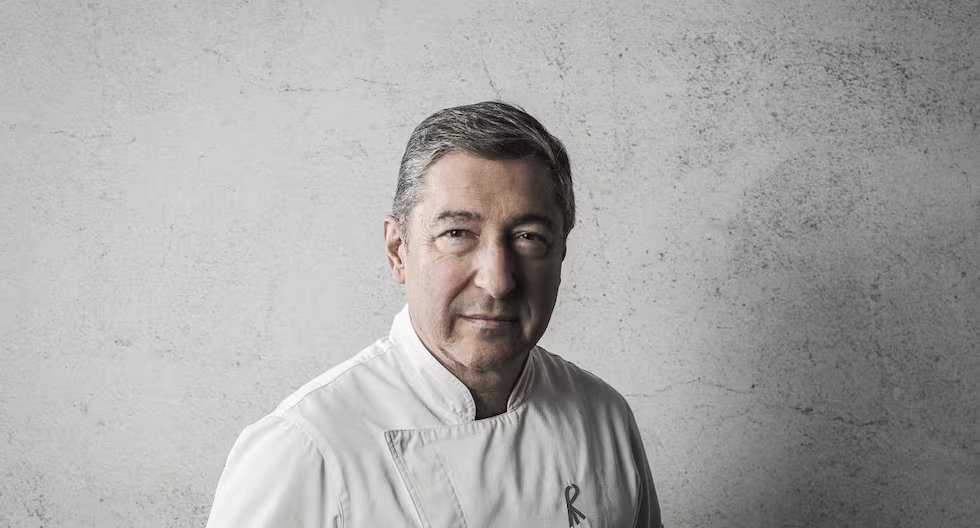
Joan Roca He is one of the best chefs in the world. His restaurant, El Celler de Can Roca – which he leads together with his also very famous brothers Josep (sommelier) and Jordi (pastry chef) – has three Michelin stars and is Best of the Best after having won twice as the best in the world according to The World’s 50 Best Restaurants. To his awards, which are many, is added a deep family history in Girona, where he was born and this gastronomic adventure began 40 years ago.

Celler de can Roca
/ El Celler de Can Roca
LOOK: The best ally against asthma and allergies in children: the benefits of swimming
-In your travels through Peru you have had the opportunity to learn about the gastronomic tradition. What is your relationship with our country?
I’ve been going for many years. The first time was for a Mistura. I was shocked to realize the peculiarity that exists in Peruvian cuisine, so different from other cuisines in Latin America. It has a lot of personality, with that identity the result of that mixture of other cultures that came to your country and created a very exciting cuisine known throughout the world thanks to Gastón Acurio. But also thanks to all the chefs who are leading this popular cuisine to excellence and the internationalization of its emblematic dishes.
-Peru is experiencing a moment in which cuisine is closely linked to identity and pride; What other factors do you think should be taken into account to lead the cuisine of a region?
Probably, you have to have a very good primary sector; That is to say, that good products are produced in the area and that, from agriculture, livestock, fishing, there is an activity committed to doing things well and excellence. But also that idea that gastronomy is a national pride. It’s practically a matter of state here.
-How?
I remember the first time I went to Lima, the taxi driver who took me from the airport to the hotel – without knowing who I was – told me about the importance of Peruvian cuisine, the pride he felt in being Peruvian, how good the food was and that it was better than anywhere in the world. It was being told to me by someone on the street who felt like something of his own and that shocked me because it doesn’t usually happen. Then other factors are that there is a popular culture linked to gastronomy, a high-level primary sector and, then, that there is talent, as Peru has.

During the 2012 edition of Mistura, chef Joan Roca has visited Peru on several occasions, where he explored national inputs and products, as well as cooking techniques.
-In diverse cuisines and in world-winning talents.
In Peru it has happened that talent has accumulated in the kitchens, headed by Gastón Acurio, but then by everyone else. Another determining and objective factor is that two Lima and Peruvian restaurants have been named the best restaurant in the world. This is objective, unquestionable data; everything else is subjective. It has happened in Peru and not in other places.
-It is incredible how our ceviche has crossed borders and is entering the world’s menus.
It is becoming a traditional cuisine within other cuisines. This is fascinating because of the way in which Peruvian culture contributes to generating, in my opinion, one of the most valuable phenomena of current gastronomy: transmitting that cuisine unites cultures, countries and people. Seeing it naturally is encouraging and suggests that even in times of conflict, there is room for hope. Cooking connects us, and seeing it is simply extraordinary.
-Do you have Peruvian ingredients or techniques learned here in your restaurant?
We have begun to grow pepper varieties that we did not have, chili peppers and hot peppers in our garden. And, above all, how to apply the techniques to our fish, cooking in the same way as they cook their wonderful soles, preparations such as rice with duck, the Lima cause. For a long time, we made a dessert inspired by the Lima-style sigh. This way of traveling, of cooking with an open heart and an open mind gives us learnings.
-Something interesting is that gastronomic tourism is getting stronger every day. Why are people traveling to restaurants as destinations in themselves, just as they travel to the Egyptian pyramids or the Louvre Museum?
It happens and I think it will happen more because today the material is not as important as living experiences that are authentic. Material things will continue to be important—luxury objects, anyway—but perhaps less so. And what is giving the most value to people is living something that they carry in their memory, that lived experience, and the more authentic, the better. This is why many gastronomic tourists seek to go to Mil (in Cusco) and experience something truly extraordinary and exclusive. Why do people come to Girona to eat expressly from any city in the world? They want to live an experience of a restaurant that has positioned itself, that has proven quality solvency, and they want to live it because it is beginning to be something aspirational.

In the garden they are growing Peruvian chili peppers, as well as peppers and hot peppers that become inputs in the dishes at El Celler de Can Roca. The Peruvian flavor does not escape the memory of Joan Roca.
/ El Celler de Can Roca
-What are you looking for from El Celler?
They want to know what we produce, what we cook and what was cooked before in Girona, in the Ampurdán area, in the western Mediterranean area, which is different from what is cooked and eaten in Galicia. This search for identity and difference, to be able to be authentic, has more and more to do with a look by chefs towards that authenticity that we all seek. In some ways it is the same thing that Pía León, Virgilio Martínez, ‘Micha’ and Gastón Acurio are doing. We all seek to feed something different from what is offered in other areas of the planet. //
Besides…
Origin and sustainability
The family restaurant El Celler de Can Roca was born in Girona in 1986, but its history goes back to Can Roca, the establishment that his parents ran and where all the brothers’ passion for cooking was born. There they grew up, between their mother’s stews and the idea of their own adventure based on their region, the honesty of the ingredients and their identity that now goes around the world. Sustainability is key to their business and their philosophy is about avoiding waste, working with the garden and local products, and optimizing water use. They seek, in turn, emotional sustainability with the well-being of the team (they have an emotional management psychologist) and economic sustainability.
Joan Roca will be at the Westin hotel in San Isidro on March 24 as a guest of the III BBVA Sustainability Summit. His exhibition is titled “Water as a universal language of gastronomy.” Those interested can register at https://bit.ly/4sJG2dI.