Friday, May 8, 2026
    The GeoStrategic Consensus
    No Result
    View All Result
    • Login
    • HOME
    • AMERICAS
      • Argentina
      • Brazil
      • Canada
      • Chile
      • Colombia
      • Costa Rica
      • Cuba
      • Dominican Republic
      • Ecuador
      • El Salvador
      • Greenland
      • Guatemala
      • Honduras
      • Mexico
      • Nicaragua
      • Panama
      • Paraguay
      • Peru
      • United States
      • Uruguay
      • Venezuela
    • ASIA-PACIFIC
      • Australia
      • Brunei Darussalam
      • Cambodia
      • China
      • Federated States of Micronesia
      • Fiji
      • Indonesia
      • Japan
      • Kiribati
      • Laos
      • Malaysia
      • Marshall Islands
      • Mongolia
      • Myanmar
      • Nauru
      • New Zealand
      • North Korea
      • Palau
      • Papua New Guinea
      • Philippines
      • Samoa
      • Singapore
      • Solomon Islands
      • South Korea
      • Taiwan
      • Thailand
      • Timor-Leste
      • Tonga
      • Tuvalu
      • Vanuatu
      • Vietnam
    • CARICOM
      • CARICOM – Non-English
        • Haiti
        • Suriname
      • CARICOM Associates
        • Anguilla
        • Bermuda
        • British-Virgin-Islands
        • Cayman-Islands
        • Curacao
        • Turks-and-Caicos
      • CARICOM English
        • Antigua and Barbuda
        • Barbados
        • Belize
        • Dominica
        • Grenada
        • Guyana
        • Jamaica
        • Montserrat
        • Saint Kitts and Nevis
        • Saint Lucia
        • Saint Vincent and the Grenadines
        • The Bahamas
        • Trinidad and Tobago
    • EURASIA
      • Armenia
      • Azerbaijan
      • Balarus
      • Georgia
      • Kazakhstan
      • Kyrgyzstan
      • Moldova
      • Russia
      • Tajikistan
      • Turkmenistan
      • Ukraine
      • Uzbekistan
    • EUROPE
      • Albania
      • Andorra
      • Austria
      • Bosnia and Herzegovina
      • Bulgaria
      • Croatia
      • Cyprus
      • Czech Republic
      • Denmark
      • Estonia
      • Finland
      • France
      • Germany
      • Greece
      • Holy See
      • Hungary
      • Iceland
      • Ireland
      • Italy
      • Kosovo
      • Latvia
      • Liechtenstein
      • Lithuania
      • Luxembourg
      • Malta
      • Monaco
      • Montenegro
      • Netherlands
      • North Macedonia
      • Norway
      • Poland
      • Portugal
      • Romania
      • San Marino
      • Serbia
      • Slovakia
      • Slovenia
      • Spain
      • Sweden
      • Switzerland
      • United Kingdom
    • MIDDLE EAST AND NORTH AFRICA
      • Algeria
      • Bahrain
      • Egypt
      • Iran
      • Iraq
      • Israel
      • Jordan
      • Kuwait
      • Lebanon
      • Lybia
      • Morocco
      • Oman
      • Palestinian Territories
      • Qatar
      • Saudi Arabia
      • Syria
      • Tunisia
      • Turkey
      • United Arab Emirates
      • Western Sahara
      • Yemen
    • SOUTH ASIA
      • Afghanistan
      • Bangladesh
      • Bhutan
      • India
      • Maldives
      • Nepal
      • Pakistan
      • Sri Lanka
    • SUB-SAHARAN AFRICA
      • Angola
      • Benin
      • Botswana
      • Burkina Faso
      • Burundi
      • Cabo Verde
      • Cameroon
      • Central African Republic
      • Chad
      • Comoros
      • Cote d’Ivoire
      • Democratic Republic of the Congo
      • Djibouti
      • Equatorial Guinea
      • Eritrea
      • Eswatini
      • Ethiopia
      • Gabon
      • Gambia
      • Ghana
      • Guinea
      • Guinea Bissau
      • Kenya
      • Lesotho
      • Liberia
      • Madagascar
      • Malawi
      • Mali
      • Mauritania
      • Mauritius
      • Mozambique
      • Namibia
      • Niger
      • Nigeria
      • Republic of the Congo
      • Rwanda
      • Sao Tome and Principe
      • Senegal
      • Seychelles
      • Sierra Leone
      • Somalia
      • South Africa
      • South Sudan
      • Sudan
      • Tanzania
      • Togo
      • Uganda
      • Zambia
      • Zimbabwe
    • HOME
    • AMERICAS
      • Argentina
      • Brazil
      • Canada
      • Chile
      • Colombia
      • Costa Rica
      • Cuba
      • Dominican Republic
      • Ecuador
      • El Salvador
      • Greenland
      • Guatemala
      • Honduras
      • Mexico
      • Nicaragua
      • Panama
      • Paraguay
      • Peru
      • United States
      • Uruguay
      • Venezuela
    • ASIA-PACIFIC
      • Australia
      • Brunei Darussalam
      • Cambodia
      • China
      • Federated States of Micronesia
      • Fiji
      • Indonesia
      • Japan
      • Kiribati
      • Laos
      • Malaysia
      • Marshall Islands
      • Mongolia
      • Myanmar
      • Nauru
      • New Zealand
      • North Korea
      • Palau
      • Papua New Guinea
      • Philippines
      • Samoa
      • Singapore
      • Solomon Islands
      • South Korea
      • Taiwan
      • Thailand
      • Timor-Leste
      • Tonga
      • Tuvalu
      • Vanuatu
      • Vietnam
    • CARICOM
      • CARICOM – Non-English
        • Haiti
        • Suriname
      • CARICOM Associates
        • Anguilla
        • Bermuda
        • British-Virgin-Islands
        • Cayman-Islands
        • Curacao
        • Turks-and-Caicos
      • CARICOM English
        • Antigua and Barbuda
        • Barbados
        • Belize
        • Dominica
        • Grenada
        • Guyana
        • Jamaica
        • Montserrat
        • Saint Kitts and Nevis
        • Saint Lucia
        • Saint Vincent and the Grenadines
        • The Bahamas
        • Trinidad and Tobago
    • EURASIA
      • Armenia
      • Azerbaijan
      • Balarus
      • Georgia
      • Kazakhstan
      • Kyrgyzstan
      • Moldova
      • Russia
      • Tajikistan
      • Turkmenistan
      • Ukraine
      • Uzbekistan
    • EUROPE
      • Albania
      • Andorra
      • Austria
      • Bosnia and Herzegovina
      • Bulgaria
      • Croatia
      • Cyprus
      • Czech Republic
      • Denmark
      • Estonia
      • Finland
      • France
      • Germany
      • Greece
      • Holy See
      • Hungary
      • Iceland
      • Ireland
      • Italy
      • Kosovo
      • Latvia
      • Liechtenstein
      • Lithuania
      • Luxembourg
      • Malta
      • Monaco
      • Montenegro
      • Netherlands
      • North Macedonia
      • Norway
      • Poland
      • Portugal
      • Romania
      • San Marino
      • Serbia
      • Slovakia
      • Slovenia
      • Spain
      • Sweden
      • Switzerland
      • United Kingdom
    • MIDDLE EAST AND NORTH AFRICA
      • Algeria
      • Bahrain
      • Egypt
      • Iran
      • Iraq
      • Israel
      • Jordan
      • Kuwait
      • Lebanon
      • Lybia
      • Morocco
      • Oman
      • Palestinian Territories
      • Qatar
      • Saudi Arabia
      • Syria
      • Tunisia
      • Turkey
      • United Arab Emirates
      • Western Sahara
      • Yemen
    • SOUTH ASIA
      • Afghanistan
      • Bangladesh
      • Bhutan
      • India
      • Maldives
      • Nepal
      • Pakistan
      • Sri Lanka
    • SUB-SAHARAN AFRICA
      • Angola
      • Benin
      • Botswana
      • Burkina Faso
      • Burundi
      • Cabo Verde
      • Cameroon
      • Central African Republic
      • Chad
      • Comoros
      • Cote d’Ivoire
      • Democratic Republic of the Congo
      • Djibouti
      • Equatorial Guinea
      • Eritrea
      • Eswatini
      • Ethiopia
      • Gabon
      • Gambia
      • Ghana
      • Guinea
      • Guinea Bissau
      • Kenya
      • Lesotho
      • Liberia
      • Madagascar
      • Malawi
      • Mali
      • Mauritania
      • Mauritius
      • Mozambique
      • Namibia
      • Niger
      • Nigeria
      • Republic of the Congo
      • Rwanda
      • Sao Tome and Principe
      • Senegal
      • Seychelles
      • Sierra Leone
      • Somalia
      • South Africa
      • South Sudan
      • Sudan
      • Tanzania
      • Togo
      • Uganda
      • Zambia
      • Zimbabwe
    No Result
    View All Result
    Agentially
    No Result
    View All Result
    Home ASIA-PACIFIC Tonga

    What is the English Language Bill and what would it actually do?

    The Analyst by The Analyst
    May 8, 2026
    in Tonga
    What is the English Language Bill and what would it actually do?


    By Nik Dirga of RNZ and is republished with permission

    READ ALSO

    Mother’s Day preparations marred by deadly shooting in Vava‘u

    Sika calls for calm after guilty verdict, faces possible fine or unseating at sentencing

    You’re reading this in English right now – but should English be an official language? Parliament is soon set to decide.
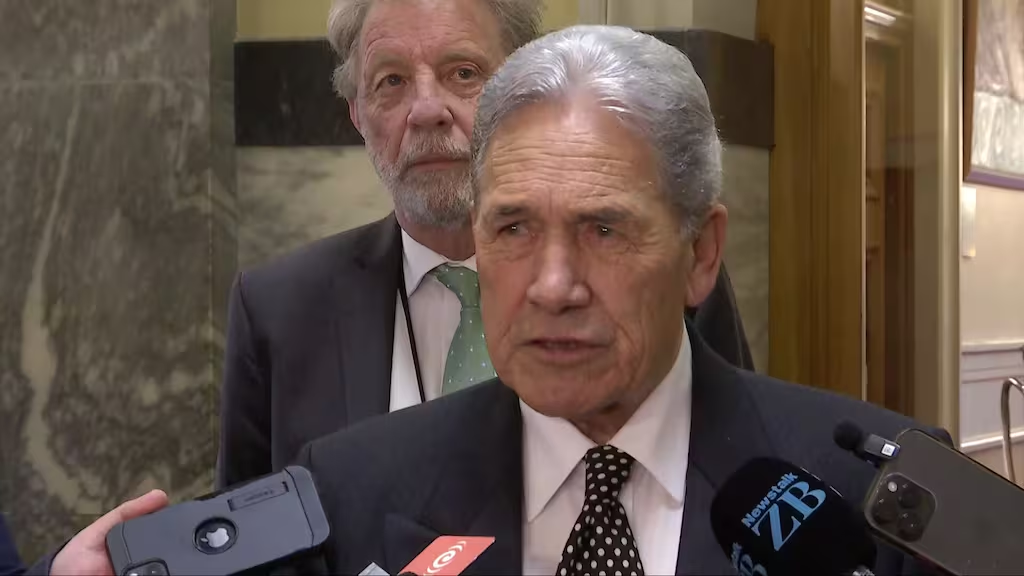
    Winston Peters (file image). (Source: 1News)

    A long-running debate on the status of the most commonly spoken language in New Zealand is nearing its climax in Parliament, as the English Language Act works its way through the House.

    During a fiery debate in Parliament back in February at the first reading, New Zealand First leader Winston Peters made his case for the bill while many opposition MPs firmly denounced it.

    Peters called it a “common sense idea” and has said it fills an anomaly where Māori and New Zealand Sign Language are already both codified as official languages in New Zealand, but English is not specifically.

    Others disagree. “Language is being used as a political football here,” said Dr Sharon Harvey, an associate professor specialising in applied linguistics at Auckland University of Technology.

    The bill is currently before select committee with a report due to be presented on September 3. The next step is a second reading of the bill and it’s likely it would come to a final vote before November’s election.

    But what would the bill actually do? Here’s what you need to know.

    What does the bill say?

    Bills are often pretty darned long, but this one can actually be summed up right here – it’s only five lines.

    It calls for Parliament to enact the English Language Act 2025, and says, “The purpose of this Act is to provide legislative recognition of the status of English as an official language of New Zealand” and that the Act would bind the Crown.

    That’s it.

    What would the bill actually do?

    “The bill is so short because it doesn’t actually have any legal effect that needs spelt out in detail,” University of Otago law professor Andrew Geddis said. “It will have literally no practical consequences at all.

    “That isn’t an exaggeration – it will change absolutely no aspect of Aotearoa New Zealand’s current legal rules, practices or procedures. It’s the linguistic equivalent of passing an Act of Parliament that says: ‘The official colour of the New Zealand Rugby Team’s home jersey is black.’”

    The bill doesn’t lay out any instructions, punishments or restrictions on other languages. It would add English as an official language alongside Te Reo Māori – which was designated in the Māori Language Act in 1987 – and sign language, designated in the New Zealand Sign Language Act of 2006.

    “While the bill is pretty slim in terms of its content it does serve symbolically at least to cast in legislation the pre-eminence of the already dominant and majoritarian language of NZ: English,” Harvey said.

    Legislatively, it would not affect Māori and NZSL, Geddis said, as they have “separately guaranteed (but limited) rights to use those languages”.

    “Legislative language recognition was hard won for both Māori and the Deaf community and so the English Language Bill also minimises the historical and contemporaneous importance of those difficult and long language struggles,” Harvey said.

    As written, the bill wouldn’t even affect, for instance, signs that include Chinese language at some popular tourist spots, Geddis said.

    “That legislative recognition does not add anything to English’s existing legal role and usage. You can use English for any official, public business now. If this bill passes, you will continue to be able to do so. Nothing will have changed.”

    If nothing will change, why was this bill introduced?

    Making English an official language was part of the coalition agreement between National, NZ First and ACT back in 2023.

    Former NZ First MP Clayton Mitchell put forth a similar member’s bill in 2018 but it was never drawn from the ballot.

    New Zealand First has pushed for such recognition for some time.

    In introducing the current bill, Peters said that it’s correcting an “anomaly” that English is not included with the other two official languages.

    “It has never been formally recognised in statute as an official language. This bill seeks to correct that anomaly, providing consistency in legal framework and clarifying the status of all three official languages in legislation.

    “The bill does not diminish the status of other official languages, te reo Māori and New Zealand Sign Language, but rather complements them, acknowledging the linguistic reality of our nation.”

    Peters said the bill is “affirming the value of English as a shared means of communication used by the mass majority of the population – I’ll say it again quietly: Used by the mass majority of the population”.

    Although his name is actually on the bill as the MP in charge, Justice Minister Paul Goldsmith previously told RNZ that it wasn’t a top priority for National and did not speak at the first reading.

    “It wouldn’t be the top priority for us, absolutely not. But it’s something in the coalition and it’s getting done.”

    Peters has said that the rise in te reo Māori “has created situations that encourage misunderstanding and confusion for all, and all for the purpose to push a narrative”.

    “We have some very real situations now where communications and names of important services are using te reo as primary names and language, and the room for confusion and miscommunication is huge.”

    He cited the possibility of confusion where places have had primary names in Māori.

    “First responders, on their vehicles and in communications, being unable to get to places because they don’t know where they’re going; transport services with important road signs – they have all announced that.”

    Harvey disagreed, saying the dynamic of Māori and English is what makes New Zealand special.

    “Te reo Māori only exists in Aotearoa NZ and so, if it does not survive and flourish here, it will not survive.”

    “Most of us would recognise that Te Whatu Ora means health especially if it’s heading a letter with health information or is signage on a public hospital,” she said.

    “There is no ‘danger’ to English now or in the future. Apart from anything else it is the pre-eminent global language.

    “It would be so much better for NZ if we could all gain high proficiency in te reo Māori (as well as English) and if schools could be proactive in supporting students’ home languages, as well as teaching a variety of languages.”

    Is English language use becoming a ‘culture war’ issue?

    Well, people on both sides of the debate of the current bill have accused the other of “virtue signalling”.

    In Parliament, Peters said, “This bill won’t solve the push of this virtue signalling narrative completely, but it is the first step towards ensuring logic and common sense prevails when the vast majority of New Zealanders communicate in English and understand English in a country that should use English as its primary and official language”.

    “The [bill] is virtue signalling to a small, monolingual in English, sector of the voting public by NZ First,” Harvey said. “It’s a waste of public money and time and should never have been agreed to as part of the National-NZ First coalition agreement.”

    Debate at the first reading was equally heated.

    “The English language is not under threat,” said Green Party co-leader Chlöe Swarbrick. “We are literally speaking it and debating in it right now. This is a bill which is an answer to a problem that does not exist.”

    “The Government wants to stoke a fight between te iwi Māori and Pākehā, and they want that fight to be the focus of this election,” she claimed.

    Chlöe Swarbrick speaks in Parliament (file image).
    Chlöe Swarbrick speaks in Parliament (file image). (Source: 1News)

    At the debate, National MP Rima Nakhle called for calmer temperatures.

    “We’re only making English official. It’s not the end of the world.”

    Geddis said “the bill seems to be motivated by an odd form of linguistic jealousy – something akin to ‘it’s not fair that those languages get called official in a statute, but English doesn’t’.”

    New Zealand First’s 2023 coalition agreement with National also stipulated that public service departments have their primary name in English and be required to communicate “primarily in English” except for entities specifically related to Māori. It has been seen in changes to how agencies such as the New Zealand Transport Agency or Health New Zealand are referred to.

    Peters has also been vocal about the use of “Aotearoa” to refer to New Zealand by other MPs.

    Other countries like Australia and the United Kingdom do not have any official laws on the books declaring English an official language, although it has de facto official status in government, courts and education.

    In America, Donald Trump signed an executive order last year “designating English as an official language of the United States”. But as the decision was not passed by Congress and is an executive order, it doesn’t have the power to change existing federal laws and statutes. Around 30 US states also have proclaimed English the official language.

    Will the English Language Act pass?

    It’s unclear. It is part of the coalition agreement so National and ACT may be obliged to support it.

    “Being that we are an English-speaking country, it is bizarre that we have to do this, but this is how far this extremism has taken our country,” Peters said in 2023 before the last election as he pledged to pass the bill that may finally be law soon.

    “The bill very well may be rushed into law during the inevitable end-of-term use of urgency in the House,” Geddis said.

    “Given current frosty relations between National and NZ First, there could well be some coalition partner reluctance to give NZ First time in Parliament to proceed with what really is nothing more than a form of legislative virtue signalling to its support base.”

    Harvey said while National “have publicly said they’re not concerned whether the bill passes or not, I think there is every chance it will pass which will be a great shame for NZ”.

    “It’s a waste of the Government’s time and considerably sets back New Zealand’s progress in righting the wrongs of our violent, colonial past,” he said.



    Source link

    Related Posts

    Mother’s Day preparations marred by deadly shooting in Vava‘u
    Tonga

    Mother’s Day preparations marred by deadly shooting in Vava‘u

    May 7, 2026
    Sika calls for calm after guilty verdict, faces possible fine or unseating at sentencing
    Tonga

    Sika calls for calm after guilty verdict, faces possible fine or unseating at sentencing

    May 7, 2026
    Pasifika unemployment rate remains highest in New Zealand
    Tonga

    Pasifika unemployment rate remains highest in New Zealand

    May 7, 2026
    ‘Aisiena Taumoepeau appointed to Tonga Rugby Union board
    Tonga

    ‘Aisiena Taumoepeau appointed to Tonga Rugby Union board

    May 7, 2026
    Grand Tonga Hotel aims to raise hospitality standards in Tonga
    Tonga

    Grand Tonga Hotel aims to raise hospitality standards in Tonga

    May 7, 2026
    Two arrested in Police drug operation in Te’ekiu
    Tonga

    Two arrested in Police drug operation in Te’ekiu

    May 6, 2026
    Next Post
    Credit Corp renews backing for High School Boys 15s rugby

    Credit Corp renews backing for High School Boys 15s rugby

    POPULAR NEWS

    Justin Bieber fans flood Coachella festival for headlining show – Entertainment

    Justin Bieber fans flood Coachella festival for headlining show – Entertainment

    April 20, 2026

    Over 600 flee homes as Army, NPA clash in Negros Occidental

    April 21, 2026

    Ex-DPWH exec recalls P800-M ‘delivery’ to Zaldy Co 

    April 20, 2026

    Former PM Paluckas suspends party membership, to waive immunity over criminal probe

    April 24, 2026
    Pres. Ali challenges CARICOM to transform into health research powerhouse

    Pres. Ali challenges CARICOM to transform into health research powerhouse

    April 23, 2026

    EDITOR'S PICK

    Jeanine Pirro’s Prosecutors Make Surprise Visit to Fed Headquarters

    Jeanine Pirro’s Prosecutors Make Surprise Visit to Fed Headquarters

    April 14, 2026
    Ram calls Govt. investment offer illegal

    Ram calls Govt. investment offer illegal

    May 3, 2026
    Indoor Air Quality Standard Adopted to Protect Children’s Health

    Indoor Air Quality Standard Adopted to Protect Children’s Health

    April 27, 2026
    Chris Donatelli, whose real estate projects reshaped D.C., dies at 58

    Chris Donatelli, whose real estate projects reshaped D.C., dies at 58

    May 4, 2026

    Recent Posts

    • Romania plunges back into political chaos after Social Democrats and far right pass no-confidence motion
    • PODCAST: France’s new anti-mosquito measures and where the French go for good food
    • Emirates to Resume Daily Flights between Budapest and Dubai
    • Pupils evacuated: Two fire alarms intentionally triggered at Atert-Lycée in Redange

      © 2026 Agentially - Navigating shifting sovereignties and global risk .

      Welcome Back!

      Login to your account below

      Forgotten Password?

      Retrieve your password

      Please enter your username or email address to reset your password.

      Log In
      No Result
      View All Result

        © 2026 Agentially - Navigating shifting sovereignties and global risk .

        This website uses cookies. By continuing to use this website you are giving consent to cookies being used. Visit our Privacy and Cookie Policy.