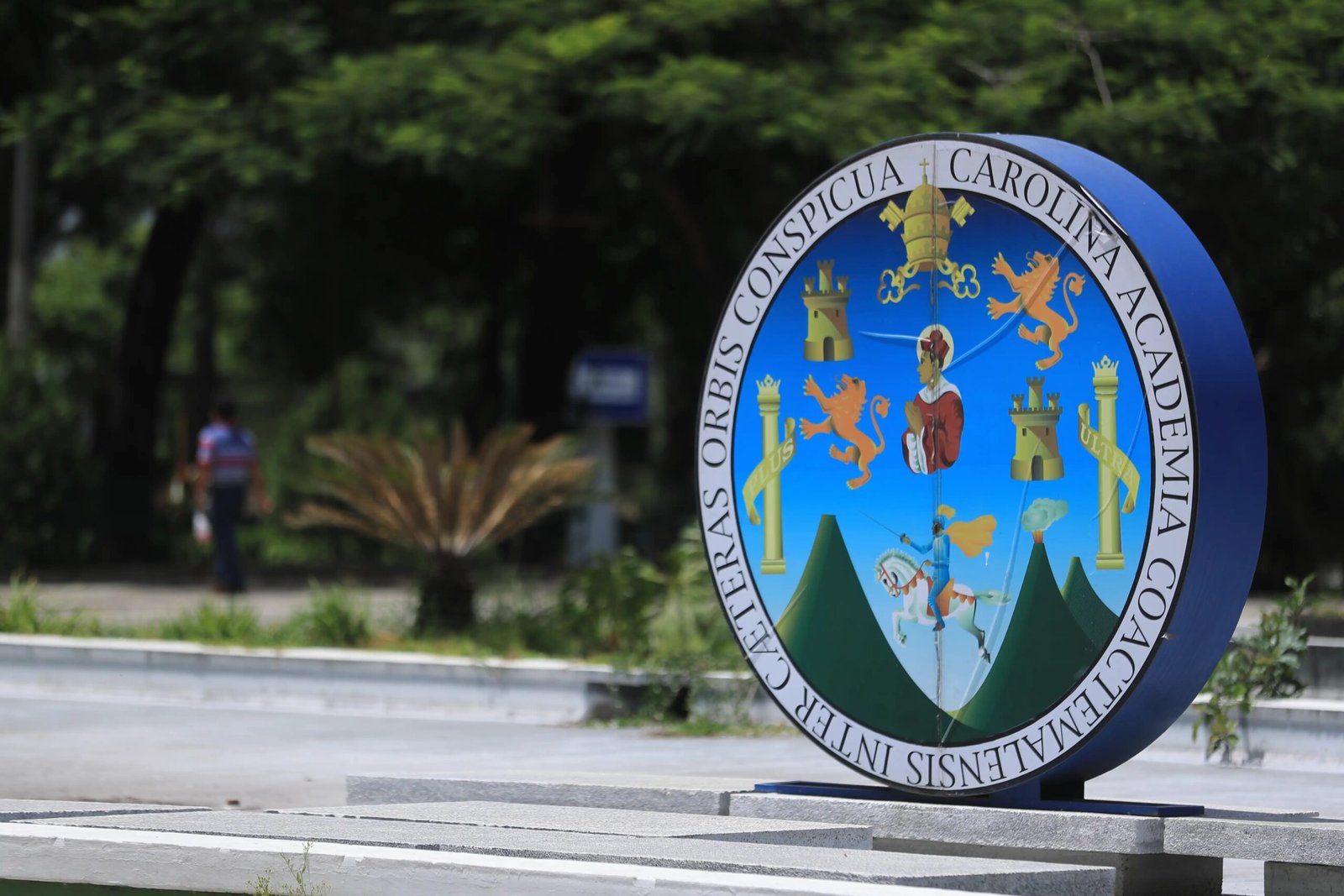
Last Wednesday the re-election of Walter Mazariegos as rector of the University of San Carlos de Guatemala (Usac) for the period 2026-2030, amidst allegations of “opacity and fraud” by university students, professionals and deputies graduated from said house of higher education, who were present in the colonial city to reject this process.
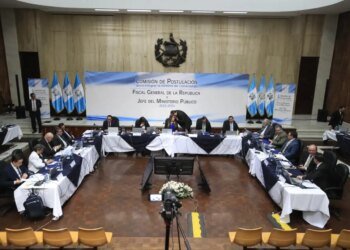
The University of San Carlos plays an important role in the country, not only in the academic field, being the only public university, but also at the political level, as is the case of the nomination committees for attorney general, the Supreme Electoral Tribunal (TSE), the Constitutional Court (CC), comptroller general of Accounts, as well as the Supreme Court of Justice (CSJ) and the Court of Appeals.
Besides, has representation in important spaces for decision-making, such as the board of directors of the Guatemalan Social Security Institute (Igss), the National Council of Urban and Rural Development (Conadur), the governing body of the Bank of Guatemala for national economic policy, as well as the Board of Directors of the Superintendency of Tax Administration, among others.
From this account, the level of influence and power that Usac exercises has become attractive to different groups, According to experts consulted about the implications of the re-election of Walter Mazariegos as head of the state university.
New political influence
According to the political scientist Renzo Rosal, with the “fraudulent” way in which Mazariegos was once again elected as rector of the USAC, A series of scenarios opens up for different actors, such as those who seek to maintain control in different entities, such as the Public Ministry (MP).where he states that this re-election “gives a dose of gasoline” to the actors who seek to maintain control of the institution, directly influencing the election of the attorney general, which is already about to take place.
“It affects the processes that are to come, especially the next attorney general, because the actors who want to maintain the logic of control in the Public Ministry feel, today, with a dose of gasoline, with a dose of support, of encouragement, due to the election of Mazariegos, so there is also an important influence on the processes that are ahead, especially MP,” he stated.
Rosal believes that, despite the resources and legal actions, as well as the complaints that may be filed against the process, these will not prosper, which is reinforced by the silence that various sectors have maintained regarding the re-election.
But, beyond the election of the next attorney general, The expert considers that the reelection places Mazariegos as a political actor important and with great influence with a view to the electoral process that will take place next year, since “it was evident” that he is a character who has great influence and “an important political flow”, which can be of benefit to some sectors.
“He—Mazariegos—now becomes an actor in which political parties, candidates for both the presidency of the Republic and other popularly elected positions are going to seek to approach him, or have already sought him, because they know that he has political capital, that he also has economic capital, because all this that has been done, whether with public or other resources, indicates that he is an actor who is also managing capital, is managing alliances,” he explained.
Law Initiative
In addition to this situation, Rosal affirms that, In addition to the loss of credibility, there are other additional dangers for the USAC, due to the constitutional benefits it has, such as the granting of public resources and autonomy, which have been misused and interpreted. Likewise, see as an important aspect the power to initiate legislation that it has.
“It has a law initiative, and that at the time was seen as a strength, but now I see it as a risk, because the level of impact that it may have with Mazariegos again as rector, is that that capacity of law initiative can be used for adverse purposes, for undemocratic purposes, for perverse purposes, and we must not forget another dimension, and that is that the University of San Carlos manages a quantity of economic resources,” he recalled.
Without measuring the power it exercises
Former constituent Roberto Alejos stated that, at the time of writing the Political Constitution of the Republic of 1985, The constituents never took into account the scope and power that the University of San Carlos could exercise, turning it into an entity used by “groups interested in maintaining the co-option of the State.”
“We constituents never thought, it never crossed our minds that by giving that power that we gave to the academy through the only state university, it would become such a politically and economically powerful entity in the country. And then within the co-option of the State that is being talked about, the University of San Carlos is now included,” he assured.
Alejos commented that Among the constitutional powers that have been misused are the budgetary issue, as well as the autonomy it enjoys.
“It has a budget like few or probably no universities in the world, which is a huge budget, but it is also in the Constitution, which obliges any government to maintain it, even if it is doing good or bad work. By leaving it as the only state university and giving it autonomy, there are authorities that have not even let the Comptroller General of Accounts in to be accountable and then it turned out that autonomy became a very powerful weapon for the issue of corruption,” he highlighted.
Power to authorize private universities
But not only these aspects give power to the University of San Carlos, since they also has the power to authorize the opening of private universities, which in turn affects the nomination committees for different positionsAlejos recalled.
“He directs and is in charge of this entity that authorizes the opening of private universities and each university has representatives on the application commissions and this gives him impressive power,” he says.
The former constituent added that, in addition to these aspects, The power of the USAC grows with the power to initiate legislation that it possesses and with its representation in different spaces of impact and decision-making. in the health, economic, political and social sector, which is why “there are people interested in maintaining these shares of power.”
Alejos emphasized that A “thorough” analysis and legal study must be carried out to find a solution to this situation that the public university is going through.
“I believe that without a doubt we must find a legal way to intervene at the University of San Carlos and stop this issue, because a disastrous precedent is being presented in the country’s institutions,” he concluded.
Executive does not mark distance
Regarding the accusations made against President Bernardo Arévalo regarding a possible agreement with Walter Mazariegos to continue as rector of Usac, Rosal believes that the president has not known how to respond adequately, since “if he had nothing to do with it,” he should have distanced himself from these accusations.
“In any case, I do believe that the Executive has been very lukewarm, it has had a very distant, very lukewarm, very insipid, very inconsequential attitude towards this fact that evidently affects the country. It does not affect the government as it is, it affects the country, especially due to the impact that it has – the USAC – and which it abuses in many public spaces. And that perception of complicity seems to me to be risky, and it does not make sense, because if the Executive does not say otherwise, it is beginning to permeate public opinion the idea that it probably did have something to do with it, like that famous phrase ‘he who remains silent grants,'” he noted.
Regarding the process carried out in Usac, the Secretariat of Social Communication of the Presidency (SCSP), shared the following message on election day: “For President Bernardo Arévalo there is not a change of principles, but of responsibilities. In 2022, in his capacity as a deputy and with individual responsibility, he expressed his concern about a process that he considered lacking the standards of legality and legitimacy at the University of San Carlos of Guatemala.”
“Today, as President of the Republic, it is your responsibility to guarantee that institutions function within the constitutional framework, respecting university autonomy and due process. At this time, it is up to the courts to determine, in accordance with the law, the legality of the process. The commitment remains the same: the defense of democracy, institutionality and respect for the law,” he added.