For years the world has tried solve two major problems separately: climate change and the accelerated loss of biodiversity. Two different crises, two different agendas, two conversations that rarely crossed paths. This fragmentation has not been accidental; It responds to the way in which public policies, institutional frameworks and even international cooperation have been built.
However, this separation is beginning to show its limits. In practice, both phenomena are deeply interconnected and addressing them in isolation has proven to be, at best, insufficient.
In this context, Costa Rica is beginning to consider a different route. The update of your Nationally Determined Contribution (NDC) 2025–2035 is not only a technical instrument to reduce emissions. It is, above all, a proposal to reorganize the development model, where nature stops being seen as a restriction and becomes consolidate as a strategic asset.
This shift in focus doesn’t come out of nowhere. The country had already traveled a significant path in terms of conservation. For decades, it managed to reverse deforestation processes and recover forest cover, positioning itself as a global benchmark. But that success opened a new question, less obvious but just as relevant: what comes after conserving? The answer that is beginning to take shape is clear, although it requires a deeper transformation: integrate nature into the core of the economy.
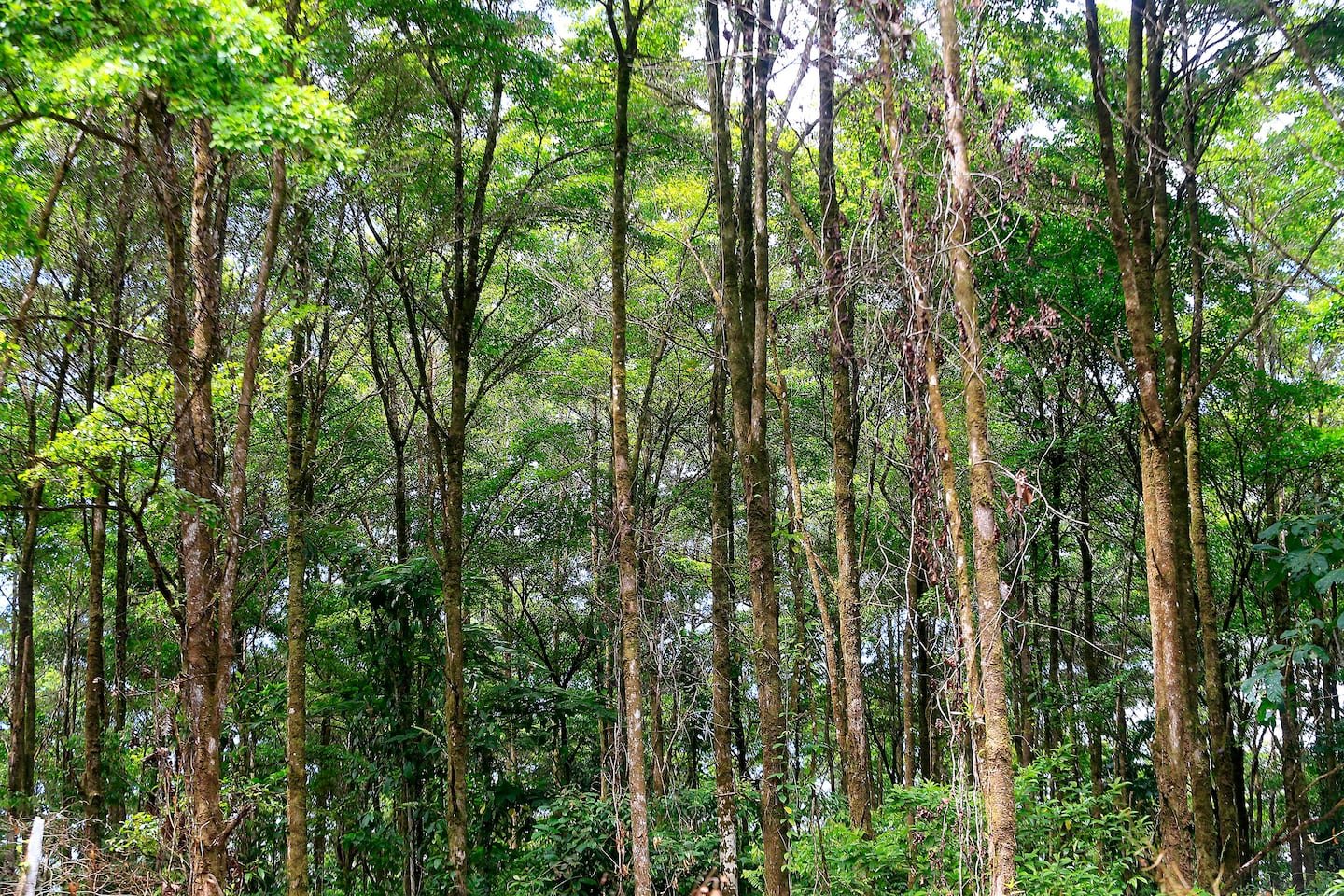
Under this logic, ecosystems are no longer passive elements within public policy. A forest is no longer just a space that is protected for its intrinsic value; is a system that captures carbon, regulates the water cycle, protects soils and sustains productive activities. A mangrove ceases to be just a coastal ecosystem and becomes a natural infrastructure that protects communities, supports local economies and contributes significantly to climate mitigation. This new reading is not minor: redefines the role of nature within development.
From there, the solutions also change. For a long time, responses to environmental problems were designed on a sectoral basis, as specific interventions that attempted to correct specific failures. Today, the evidence pushes towards a different approach. Reducing emissions, for example, not only contributes to stabilizing the climate, it also reduces pressures on ecosystems. At the same time, conserving and restoring nature strengthens the territory’s ability to adapt to extreme events. The relationship is bidirectional and, well managed, can generate cumulative benefits.
However, one of the most relevant changes is not in the technique, but in the way to understand people within this equation. The Costa Rican NDC recognizes that there is no effective environmental action if it does not translate into concrete improvements in the quality of life. This implies going beyond traditional environmental indicators and incorporating variables such as access to water, resilience of productive systems, urban planning and social cohesion. The inclusion of indigenous peoples, women and youth does not respond only to equity criteria, but to a broader understanding of what it means to build sustainable solutions over time.
This comprehensive approach, however, faces a structural challenge that transcends Costa Rica and is repeated in practically all countries: the financing. Protecting and restoring nature requires significant resources, and these compete with multiple priorities in limited fiscal contexts.
At this point, the country has begun to rehearse a pragmatic response. If nature generates value, then that value must be able to be recognized and channeled into investment. The combination of public financing, private capital, international cooperation and innovative mechanisms such as carbon markets points in that direction.
Still, the process is far from complete. Important gaps persist that must be addressed seriously. Among them, the need to define more specific biodiversity goals, strengthen the integration of information systems and address complex challenges such as invasive species. These gaps are not minor, but they do not invalidate the approach either. Rather, they reflect that it is a model under construction, advancing based on evidence, learning and continuous adaptation.
And it is precisely in that condition where one of its main strengths lies.
Costa Rica is not proposing a perfect solution or exporting a finished model. It is building a viable route in the midst of a global context marked by urgency and uncertainty. A route that questions one of the most deeply rooted premises in public discussion: the idea that economic development, climate action and biodiversity conservation are competing objectives.
The accumulated evidence points in the opposite direction. Without healthy ecosystems, there is no climate resilience possible. Without climate action, biodiversity loses its basic conditions for survival. And without both dimensions, any development strategy ends up being, at best, incomplete and, at worst, unsustainable.
In this sense, the NDC 2025–2035 transcends its technical nature and is positioned as a political signal about the type of decisions that will be necessary in the coming years. It is not only about fulfilling international commitments, but about redefining the bases on which development is built.
What is at stake is no small matter. It is not just about reducing emissions or conserving species, but about ensuring minimum conditions of well-being and stability for present and future generations. In a global scenario where partial solutions have proven to be insufficient, The integration of agendas stops being a theoretical option and becomes a practical necessity.
Costa Rica, with its progress and its challenges, is showing that this path is possible. And in a world that seeks quick but also sustainable answers, this commitment to integrating instead of fragmenting may be, more than an alternative, one of the few truly viable routes to the future.
Lenin Corrales Chaves is an environmental analyst and was president of the Scientific Council on Climate Change of Costa Rica.