Today’s word of the day is closely connected to an event back in 1945.
What is liberation?
Liberation is the noun formed from the verb to liberate which means to set free from captivity, suppression, restraint or similar.
It can also have the more abstract meaning of easing a burden, sense of discomfort or difficulty. For example, liberating laughter is laughter that helps you forget about your worries.
The -else suffix is common in nouns that have been formed from verbs: management (“leadership”, pious to lead), preparation (“preparation”, pious to prepare), etc message (“message”, from to announce to inform) to name a few examples.
Although it can be used in different contexts as set out above, the most common use of liberation is to mean “liberation”.
READ ALSO: Why do Danes place candles in their windows on May 4th?
Why do I need to know liberation?
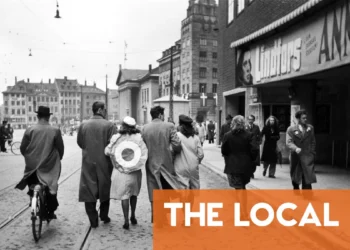
May 5th is Liberation of Denmark (the liberation of Denmark) or liberation day (Liberation Day), the anniversary of the day German occupation of the country during World War II ended. One part of Denmark, the Baltic Sea island Bornholm, remained occupied after this date, with Soviet troops taking over from the German army and remaining until April 1946.
For the rest of the country, however, the day brought celebrations following the surrender of the German army to Allied troops advancing through the Netherlands and northern Germany.
- Don’t miss any of our Danish words and expressions of the day by downloading The Local’s app (available on Apple spirit Android) and then selecting the Danish Word of the Day in your Notification options via the User button
The main custom associated with the liberation (the liberation) in Denmark, when Danes place candles in their windows, actually takes place on May 4th, rather than the 5th. This is because the German surrender was announced on the evening of the 4th but did not take effect until the following day. The May 4th, 1945 radio message transmitted to Denmark by the BBC announcing the surrender, the message of liberation (“the liberation announcement”) is an important moment in Danish 20th century history.
Example sentences:
My grandmother always said that she experienced the liberation as a great relief, and many people took to the streets to celebrate it.
My grandmother always said the liberation felt like a huge relief, and many people went out on the streets to celebrate.
After I handed in my thesis I went home and slept all day. It was a kind of liberation.
After I handed in my MA thesis I went home and slept all day. It felt like being seen free.