Monday, May 4, 2026
    The GeoStrategic Consensus
    No Result
    View All Result
    • Login
    • HOME
    • AMERICAS
      • Argentina
      • Brazil
      • Canada
      • Chile
      • Colombia
      • Costa Rica
      • Cuba
      • Dominican Republic
      • Ecuador
      • El Salvador
      • Greenland
      • Guatemala
      • Honduras
      • Mexico
      • Nicaragua
      • Panama
      • Paraguay
      • Peru
      • United States
      • Uruguay
      • Venezuela
    • ASIA-PACIFIC
      • Australia
      • Brunei Darussalam
      • Cambodia
      • China
      • Federated States of Micronesia
      • Fiji
      • Indonesia
      • Japan
      • Kiribati
      • Laos
      • Malaysia
      • Marshall Islands
      • Mongolia
      • Myanmar
      • Nauru
      • New Zealand
      • North Korea
      • Palau
      • Papua New Guinea
      • Philippines
      • Samoa
      • Singapore
      • Solomon Islands
      • South Korea
      • Taiwan
      • Thailand
      • Timor-Leste
      • Tonga
      • Tuvalu
      • Vanuatu
      • Vietnam
    • CARICOM
      • CARICOM – Non-English
        • Haiti
        • Suriname
      • CARICOM Associates
        • Anguilla
        • Bermuda
        • British-Virgin-Islands
        • Cayman-Islands
        • Curacao
        • Turks-and-Caicos
      • CARICOM English
        • Antigua and Barbuda
        • Barbados
        • Belize
        • Dominica
        • Grenada
        • Guyana
        • Jamaica
        • Montserrat
        • Saint Kitts and Nevis
        • Saint Lucia
        • Saint Vincent and the Grenadines
        • The Bahamas
        • Trinidad and Tobago
    • EURASIA
      • Armenia
      • Azerbaijan
      • Balarus
      • Georgia
      • Kazakhstan
      • Kyrgyzstan
      • Moldova
      • Russia
      • Tajikistan
      • Turkmenistan
      • Ukraine
      • Uzbekistan
    • EUROPE
      • Albania
      • Andorra
      • Austria
      • Bosnia and Herzegovina
      • Bulgaria
      • Croatia
      • Cyprus
      • Czech Republic
      • Denmark
      • Estonia
      • Finland
      • France
      • Germany
      • Greece
      • Holy See
      • Hungary
      • Iceland
      • Ireland
      • Italy
      • Kosovo
      • Latvia
      • Liechtenstein
      • Lithuania
      • Luxembourg
      • Malta
      • Monaco
      • Montenegro
      • Netherlands
      • North Macedonia
      • Norway
      • Poland
      • Portugal
      • Romania
      • San Marino
      • Serbia
      • Slovakia
      • Slovenia
      • Spain
      • Sweden
      • Switzerland
      • United Kingdom
    • MIDDLE EAST AND NORTH AFRICA
      • Algeria
      • Bahrain
      • Egypt
      • Iran
      • Iraq
      • Israel
      • Jordan
      • Kuwait
      • Lebanon
      • Lybia
      • Morocco
      • Oman
      • Palestinian Territories
      • Qatar
      • Saudi Arabia
      • Syria
      • Tunisia
      • Turkey
      • United Arab Emirates
      • Western Sahara
      • Yemen
    • SOUTH ASIA
      • Afghanistan
      • Bangladesh
      • Bhutan
      • India
      • Maldives
      • Nepal
      • Pakistan
      • Sri Lanka
    • SUB-SAHARAN AFRICA
      • Angola
      • Benin
      • Botswana
      • Burkina Faso
      • Burundi
      • Cabo Verde
      • Cameroon
      • Central African Republic
      • Chad
      • Comoros
      • Cote d’Ivoire
      • Democratic Republic of the Congo
      • Djibouti
      • Equatorial Guinea
      • Eritrea
      • Eswatini
      • Ethiopia
      • Gabon
      • Gambia
      • Ghana
      • Guinea
      • Guinea Bissau
      • Kenya
      • Lesotho
      • Liberia
      • Madagascar
      • Malawi
      • Mali
      • Mauritania
      • Mauritius
      • Mozambique
      • Namibia
      • Niger
      • Nigeria
      • Republic of the Congo
      • Rwanda
      • Sao Tome and Principe
      • Senegal
      • Seychelles
      • Sierra Leone
      • Somalia
      • South Africa
      • South Sudan
      • Sudan
      • Tanzania
      • Togo
      • Uganda
      • Zambia
      • Zimbabwe
    • HOME
    • AMERICAS
      • Argentina
      • Brazil
      • Canada
      • Chile
      • Colombia
      • Costa Rica
      • Cuba
      • Dominican Republic
      • Ecuador
      • El Salvador
      • Greenland
      • Guatemala
      • Honduras
      • Mexico
      • Nicaragua
      • Panama
      • Paraguay
      • Peru
      • United States
      • Uruguay
      • Venezuela
    • ASIA-PACIFIC
      • Australia
      • Brunei Darussalam
      • Cambodia
      • China
      • Federated States of Micronesia
      • Fiji
      • Indonesia
      • Japan
      • Kiribati
      • Laos
      • Malaysia
      • Marshall Islands
      • Mongolia
      • Myanmar
      • Nauru
      • New Zealand
      • North Korea
      • Palau
      • Papua New Guinea
      • Philippines
      • Samoa
      • Singapore
      • Solomon Islands
      • South Korea
      • Taiwan
      • Thailand
      • Timor-Leste
      • Tonga
      • Tuvalu
      • Vanuatu
      • Vietnam
    • CARICOM
      • CARICOM – Non-English
        • Haiti
        • Suriname
      • CARICOM Associates
        • Anguilla
        • Bermuda
        • British-Virgin-Islands
        • Cayman-Islands
        • Curacao
        • Turks-and-Caicos
      • CARICOM English
        • Antigua and Barbuda
        • Barbados
        • Belize
        • Dominica
        • Grenada
        • Guyana
        • Jamaica
        • Montserrat
        • Saint Kitts and Nevis
        • Saint Lucia
        • Saint Vincent and the Grenadines
        • The Bahamas
        • Trinidad and Tobago
    • EURASIA
      • Armenia
      • Azerbaijan
      • Balarus
      • Georgia
      • Kazakhstan
      • Kyrgyzstan
      • Moldova
      • Russia
      • Tajikistan
      • Turkmenistan
      • Ukraine
      • Uzbekistan
    • EUROPE
      • Albania
      • Andorra
      • Austria
      • Bosnia and Herzegovina
      • Bulgaria
      • Croatia
      • Cyprus
      • Czech Republic
      • Denmark
      • Estonia
      • Finland
      • France
      • Germany
      • Greece
      • Holy See
      • Hungary
      • Iceland
      • Ireland
      • Italy
      • Kosovo
      • Latvia
      • Liechtenstein
      • Lithuania
      • Luxembourg
      • Malta
      • Monaco
      • Montenegro
      • Netherlands
      • North Macedonia
      • Norway
      • Poland
      • Portugal
      • Romania
      • San Marino
      • Serbia
      • Slovakia
      • Slovenia
      • Spain
      • Sweden
      • Switzerland
      • United Kingdom
    • MIDDLE EAST AND NORTH AFRICA
      • Algeria
      • Bahrain
      • Egypt
      • Iran
      • Iraq
      • Israel
      • Jordan
      • Kuwait
      • Lebanon
      • Lybia
      • Morocco
      • Oman
      • Palestinian Territories
      • Qatar
      • Saudi Arabia
      • Syria
      • Tunisia
      • Turkey
      • United Arab Emirates
      • Western Sahara
      • Yemen
    • SOUTH ASIA
      • Afghanistan
      • Bangladesh
      • Bhutan
      • India
      • Maldives
      • Nepal
      • Pakistan
      • Sri Lanka
    • SUB-SAHARAN AFRICA
      • Angola
      • Benin
      • Botswana
      • Burkina Faso
      • Burundi
      • Cabo Verde
      • Cameroon
      • Central African Republic
      • Chad
      • Comoros
      • Cote d’Ivoire
      • Democratic Republic of the Congo
      • Djibouti
      • Equatorial Guinea
      • Eritrea
      • Eswatini
      • Ethiopia
      • Gabon
      • Gambia
      • Ghana
      • Guinea
      • Guinea Bissau
      • Kenya
      • Lesotho
      • Liberia
      • Madagascar
      • Malawi
      • Mali
      • Mauritania
      • Mauritius
      • Mozambique
      • Namibia
      • Niger
      • Nigeria
      • Republic of the Congo
      • Rwanda
      • Sao Tome and Principe
      • Senegal
      • Seychelles
      • Sierra Leone
      • Somalia
      • South Africa
      • South Sudan
      • Sudan
      • Tanzania
      • Togo
      • Uganda
      • Zambia
      • Zimbabwe
    No Result
    View All Result
    Agentially
    No Result
    View All Result
    Home ASIA-PACIFIC Papua New Guinea

    Culture of a village shapes lives

    The Analyst by The Analyst
    May 4, 2026
    in Papua New Guinea
    Culture of a village shapes lives


    CULTURE

    A GOOD village impacts the lives of the inhabitants in a big way.

    And, that includes the children.

    READ ALSO

    How has the Portuguese language influenced PNG?

    Tribe finds peace after seven years

    I appreciated the village I grew up in. I appreciated it even more as I moved to other locations and interacted with people from different cultures, and even beyond our international borders to countries such as Nauru, New Caledonia and Fiji, among others.

    I am of the view that we, in Papua New Guinea, have very unique and practical ways of doing things, some of which are needed these days, and could be adopted by our neighbours.

    Values laid the foundation

    Many Melanesian values and norms were part of why the Founding Fathers like Sir Michael Somare, Sir Albert Maori Kiki and Sir Paul Lapun, with others, fought for self-rule.

    Melanesians do not want to live under the umbrella of a colonizer, even though the arrangement provides benefits. Melanesians want to rule themselves. That maybe the reason why we have too many language groups and ethnicities.

    When a faction in a bigger tribe dislikes the administration tactics of a chief or village elders, they move out and start new communities. This is my own view after reflecting on this Melanesian trait: We want to rule ourselves, not living under the shade provided by a coloniser or superpower.

    A village trains

    You may have heard this statement: “It takes a village to train a child.” I usually tell people that I grew up in such a village.  Even without the presence of a father or mother, there are uncles and aunties and many older cousins who would step in and provide foster care.

    It was the norm. That is who we are. Our people step in to care for our extended relatives when their immediate senior members are not on the ground.

    The kitchen of a mother provided for more than just her children. She made it her responsibility to take care of another niece, nephew or older uncle or aunt. That was the village I grew up in.

    I am sure that was also the case for many of the readers who grew up in villages, and they would relate to that as well.

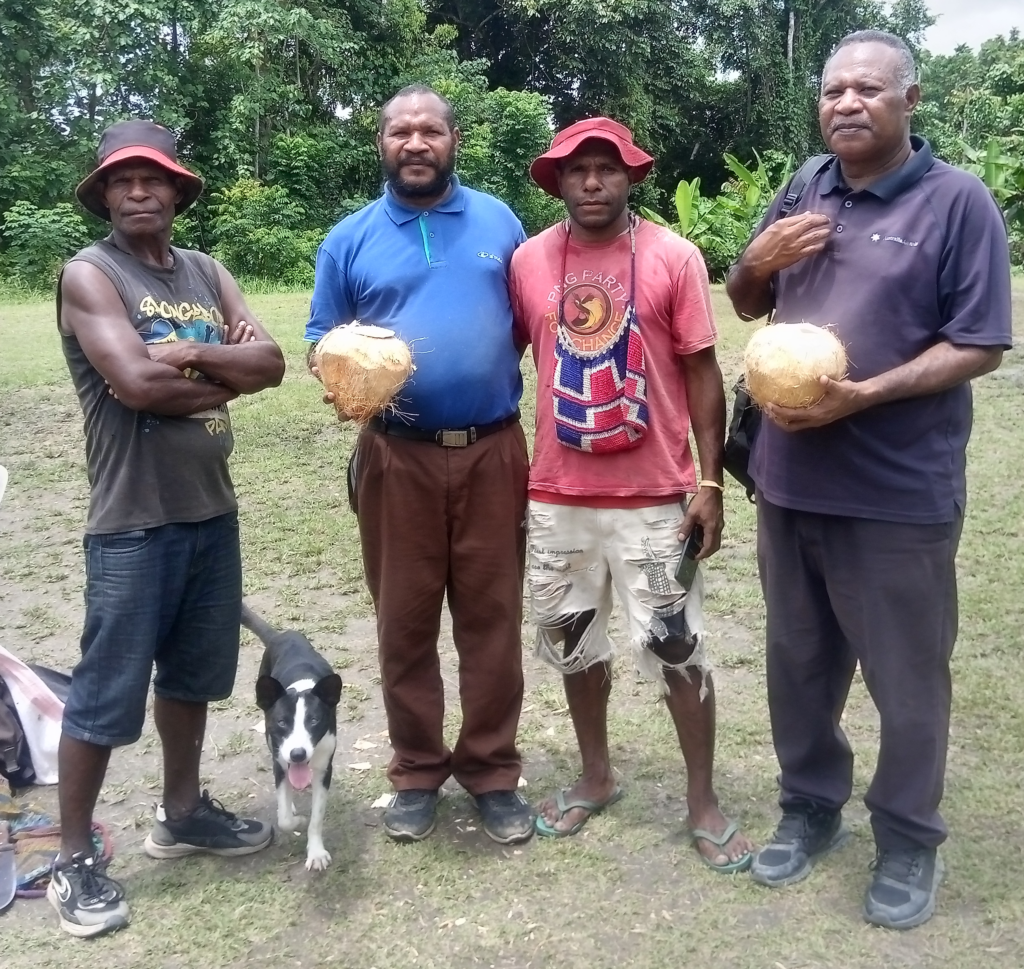
    Respect and unity are promoted by our culture and this is shown in this group of relatives who were involved in organisng a school sports programme in Haniak village in Kubalia, East Sepik, in September 2025.

    Settling of highway people

    For convenience, let me give a name to the village I grew up in.

    I shall call it Wia. The word “wia” in the Duo language of East Sepik means village, or place. You will hear the word mentioned by many Sepik Highway people and the mainland Wewak folks.

    The village I grew up in was actually situated in the Wewak local area, just outside the perimeters of Wewak town. A Short History of Wewak, a book by Lorna Fleetwood, said many Kubalia people came to Wewak and settled in different parts of Wewak. They lived there after making arrangements with the local people, whether at Kreer, Kremending or Saure, to the west.

    Paul Yauwiga, the World War II hero, settled in Kreer with his people from Kusaun and other neighbouring villages. It was Yauwiga’s aim to start a school and make changes in the communities there after the war, around 1953 and onwards.

    Similarly, the Haniak people settled along the Saure Road, going past Tangugo Pastoral Centre. Other people from Numoigum and Nongori settled nearby.

    The Sassoya people also settled near Menga, as stated by Fleetwood. That was from the late 1940s and onwards.

    The layout of Wia

    Wia is situated on a gentle ridge that rises to join a larger one that eventually joins the main range that runs parallel to the coastline of Wewak.

    It is a beautiful village with a creek that flows by the ridge, along its eastern side. The land is fertile and has supported crops like breadfruit and sago, and when the inhabitants planted betel nut and coconuts, they grew well there.

    Some families literally lived off selling betel nut and coconuts. In their family gardens, people planted banana, taro, greens of different sorts and yams.

    Near their homes, they planted mango and Malaysian apple (laulau) and cherry trees. Back in the 1970s and 1980s, it was clear that no one could go hungry there. You would have something to eat from the garden or from the trees near the river.

    Later, some of the villagers planted cocoa and coffee and benefited from those cash crops.

    Going to the village

    I had lived in the modern setting from birth until the age of eight. We always had running water and electricity at home.

    In 1979, we set up camp at Wia. My father had resigned from his lecturer’s post and decided to try his hand in the private sector. His first job in the business world was as a manager of a printing firm along the Waigani Drive, just opposite the current Theodist mega shop.

    We lived in Port Moresby for a few months but we got word that our grandfather, Lucas Yawilomo Wohuinangu, was on his sickbed. So, our father made the decision to resign again and we all headed back to Wia, the village that our relatives called home, in the Wewak rural area. Sadly, our grandfather passed on and we remained in the village until our father found another job with a firm a few months later.

    Those months were tough. We lived on the land and benefited from our grandparents’ gardens and cash crops.

    The cash in crops

    From birth until the age of nine, I lived off my parents’ earnings. Whatever coins I got came from their pay packets.

    However, it was while in the village that I learned that if you helped an aunt or grandmother to climb a betel nut or coconut tree, and she takes the nuts to sell at the market, you will be rewarded with some coins before sunset.

    It was in Wia that I realised that your sweat, as a 10-year-old child, can earn you some coins, whether it was 50t or 60t. The buying power of 50t was huge in those days. You could buy a good-sized sun cake and a bottle of soft drink for 10t each, and you would have leftover coins.

    And, grandmother’s cocoa trees were even better. You helped her climb the trees and gather the pods. She chops them up and packs the wet beans into a plastic bag and you help her carry it to the roadside for the buyer. Before sunset you would be rich. Those are precious lessons learned in Wia.

    The layout of Wia

    A village is planned. People do not just place their houses anywhere. The main road is in the south, and runs in the east-west direction. You would have to drive up from the main road – to the south – before you reach the first houses.

    You would first pass the toilets on the western side of the ridge, about 15 metres in. If you progress for another 15 metres on, you will pass Family 1’s house on the left side and Family 2’s house on the right side. You move another five metres and you will cross the hawo, the village playground or the main arena where meetings or gatherings are often conducted. It is a respected area but can also serve as a playing ground for children.

    To the east of the hawo is a haus boi (house boy), where young boys can go there to do things that mattered to them. Just next to the house boy is a shelter where a few slit drums (garamut drums) are kept.

    To the east of Family 1’s house, there is a songo (house for women), where women go there to spend a few days when they have their period. To the east of the hawo, there is Family 3’s house, and further to its south is Family 4’s house. Family 5’s house is on the other side of a track that separates it from Family 4’s house. Then Family 6’s house is further to the east of Family 3’s house.

    There is a Family 7’s house if you go past Family 5’s house by following the track that runs along the ridge that rises further up. There is another hamlet on another ridge to the west, but I will not include that in this discussion.

    The common places

    I was fascinated by the house boy. For the first time, I realised that boys can spend nights away from their parents in a small house reserved only for boys. They can indeed spend nights away from their parents as long as they have food.

    In the house boy, they can play their card games there, repair a tyre of a bicycle, cook their own food or just tell stories. Their stories could be about legends, movies, ghosts and maienduo (the local sorcerers), who are a threat to the peace and livelihood of any village.

    Similarly, the women had songo, a special house that mothers and young women can go to. Boys and men were banned from the area where that house was located. And, while a woman was in songo, she should not be disturbed.

    Those were part of my people’s culture. And, I am sure, psychologically it taught everyone the importance of respecting the privacy of the other gender, depending on the times and circumstances. That is part of our Melanesian culture.

    Seeing other cultures

    In the many decades of my life on earth, I was privileged to have entered homes of families, mostly in urban settings, but I am amazed by some of their values of being kind and welcoming to people. I have been in the home of a Papuan mother and have seen valuable practices in their culture and history as well.

    As a part islander, I also lived with my mother’s people on an island for about four months as a child and noticed how different they are from the inland people of East Sepik.

    While I was teaching in Fiji, not too long ago, our strand leader invited me to their home for a Christmas lunch in 2024. It was a good time to learn some ways of our island brothers and sisters there.

    My Polynesian experience is restricted to Wallis and Futuna, a French territory, where I spent three weeks with another senior sports manager to set up camp for the PNG contingent travelling there for the 2013 Mini Pacific Games.

    I am happy to say that I have learned from those people as well, and made friends with a family. It is part of us being Pacific people. We are unique, but we can be friends. We must respect one another and help one another.

    And, we must also be brave enough to learn from each other and change what needs to be changed to help us be stronger and resilient as distinct people with the common goal of doing the best for our people as we move towards uncharted waters ahead.

    Last words

    Those things impacted the way we think and do things. They have taught some of us to be focused and be respectful.

    Sadly, some of those practices are no longer in existence. Other foreign cultures, not necessarily from abroad, have taken over the people.

    And, sadly, most people have not realised that the life they are now living is not patterned according to the ways of old.

    That is, the older people who shaped the village have passed on and their children have not maintained those practices.

    Maybe it is time to re-introduce the best of the old ways to regain respect and peace in our communities. It will take some effort and resources, but it may be necessary.

    We have to decide for the best for our communities and make the effort.


    Source link

    Related Posts

    How has the Portuguese language influenced PNG?
    Papua New Guinea

    How has the Portuguese language influenced PNG?

    May 4, 2026
    Papua New Guinea

    Tribe finds peace after seven years

    May 4, 2026
    Papua New Guinea

    Kainantu sets a record at uni

    May 3, 2026
    Committees are there to scrutitinise government
    Papua New Guinea

    Committees are there to scrutitinise government

    May 3, 2026
    That there be peace in Aiyura Valley
    Papua New Guinea

    That there be peace in Aiyura Valley

    May 3, 2026
    Papua New Guinea

    PM defends Hunt approach | The National

    May 3, 2026
    Next Post
    Qereqeretabua opposes ‘Christian State’ proposal

    Qereqeretabua opposes ‘Christian State’ proposal

    POPULAR NEWS

    Justin Bieber fans flood Coachella festival for headlining show – Entertainment

    Justin Bieber fans flood Coachella festival for headlining show – Entertainment

    April 20, 2026

    Over 600 flee homes as Army, NPA clash in Negros Occidental

    April 21, 2026

    Ex-DPWH exec recalls P800-M ‘delivery’ to Zaldy Co 

    April 20, 2026

    Former PM Paluckas suspends party membership, to waive immunity over criminal probe

    April 24, 2026
    Pres. Ali challenges CARICOM to transform into health research powerhouse

    Pres. Ali challenges CARICOM to transform into health research powerhouse

    April 23, 2026

    EDITOR'S PICK

    Pride rout Scorpions to stay in playoff hunt

    Pride rout Scorpions to stay in playoff hunt

    April 28, 2026
    ANALYTICAL ENGLISH 解析英語(常春藤)
                        
                            
                                                        It seems like every year, new foods or drinks start trending and suddenly show up everywhere. A decade ago, avocado __1__ restaurant menus, while oat milk became the must-have addition to your coffee in cafes around five years back. The latest trend to hit this list is the pistachio. This flavorful

    ANALYTICAL ENGLISH 解析英語(常春藤) It seems like every year, new foods or drinks start trending and suddenly show up everywhere. A decade ago, avocado __1__ restaurant menus, while oat milk became the must-have addition to your coffee in cafes around five years back. The latest trend to hit this list is the pistachio. This flavorful

    May 2, 2026
    Prof. Vatsov: They mixed radioactive milk with “pure” to enter the…

    Prof. Vatsov: They mixed radioactive milk with “pure” to enter the…

    April 28, 2026
    In Moldova, about 150 thousand lei are spent annually on the maintenance of one prisoner, while only every fifth one works

    In Moldova, about 150 thousand lei are spent annually on the maintenance of one prisoner, while only every fifth one works

    May 1, 2026

    Recent Posts

    • At the airport gates, companies call on the State for help
    • Ketwan Hamilton Faces Murder Charge in Lime Kiln Case
    • SLTA touts benefits from IShowSpeed’s visit
    • Milei adopts policy against irregular migrants and generates fear – 05/02/2026 – World

      © 2026 Agentially - Navigating shifting sovereignties and global risk .

      Welcome Back!

      Login to your account below

      Forgotten Password?

      Retrieve your password

      Please enter your username or email address to reset your password.

      Log In
      No Result
      View All Result

        © 2026 Agentially - Navigating shifting sovereignties and global risk .

        This website uses cookies. By continuing to use this website you are giving consent to cookies being used. Visit our Privacy and Cookie Policy.