After the announcement of the first shot on March 9, work on the construction of the Pantoja Municipal Hospital, in Santo Domingo Oeste, begins to progress.
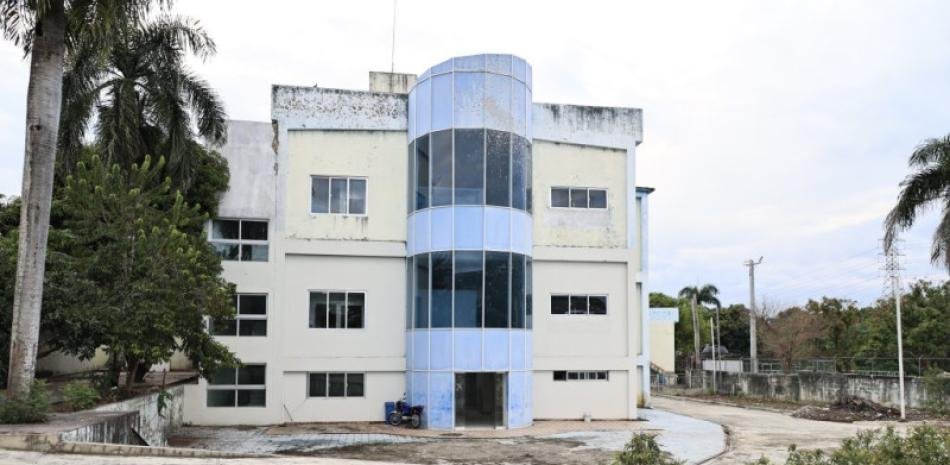
The 4,000 square meter property, located on La Isabela Highway, where the hospital will operate, is a blue and white building, with notable signs of deterioration in its construction. Around this, the workers of the private company working on this project are digging holes on the outskirts of the structure.
At the time of the visit, although entry to the land was not allowed, one of the engineers explained that the work began immediately after the first blow was hit.
The work will have a total investment of RD$323,065,760.94 and an estimated execution time of 18 months. Of this amount, RD$287,518,957.68 corresponds to infrastructure and RD$35,546,803.26 to equipment.
“We hope that this hospital is built quickly because the community of Pantoja needs a medical center to go to; they had us without a decent space to care for us,” said Leonela Martínez, a resident who was passing through the area.
According to the residents of the area, they have been requesting for years the construction of a center that provides various health services to the community and they do not have to go to distant hospitals.
“One had to go to another place and sometimes they are crowded by the same people from the area; imagine us also filling it, but I am very happy that we will have our own hospital. What we hope is that they do not stop the construction and they do continue moving forward,” said Inocencio Perdomo.
Details of the work
The Pantoja Municipal Hospital is a project that will benefit more than 50,000 inhabitants, as reported by the former director of the National Health Service (SNS), Mario Lama.
According to the design presented by the SNS management, the emergency area will be set up on the first floor of the building with four medication stations, as well as four observation stations and the nursing station.
It will have a medical imaging area with x-rays, sonography and mammography. In addition, six offices will be installed on that same level, of which three will be multipurpose, one pediatric, one gynecological and one dental. It will also have a check-in area, waiting room, sample collection, morgue, kitchen, food storage, laundry, reception and bathrooms.
On the second floor of the center, spaces for confinement will be established with 15 rooms and 30 beds, bathrooms, two nursing and rest stations.
While on the third floor the surgical block will be installed with its neonatal areas, delivery room, two operating rooms, sterilization, six beds, three for recovery, three for preparation, laboratory, medical rest and administrative area.