Speakers of Swedish and foreign languages had higher fertility rates than Finnish-speaking women.

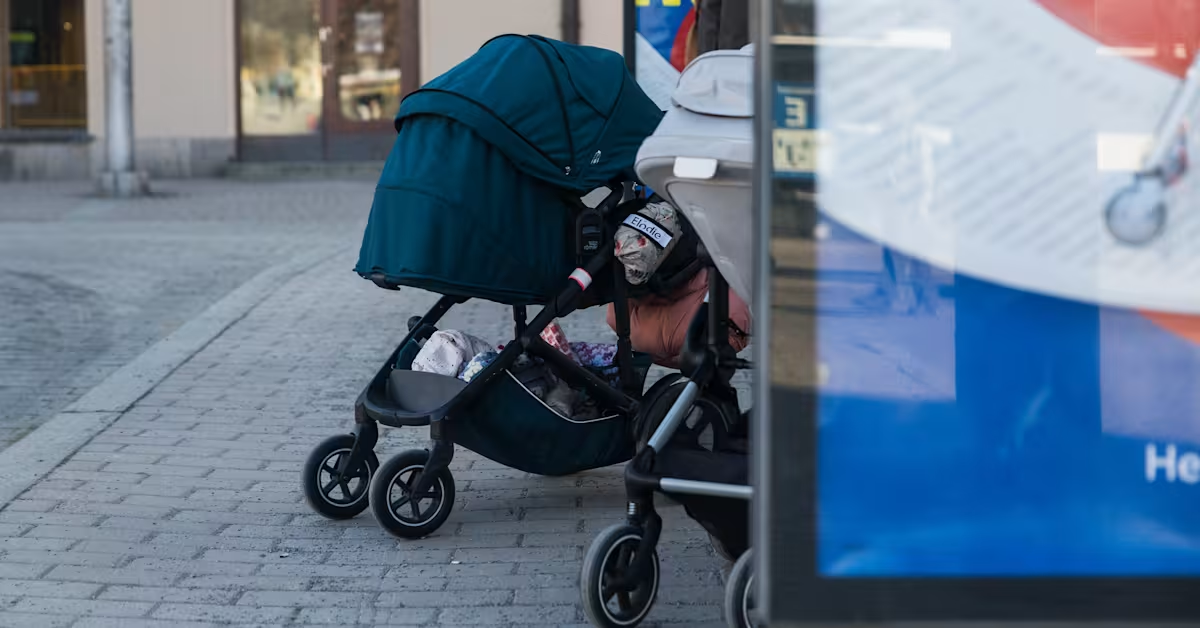
Finland’s birth rate rose slightly last year compared to 2024’s record low.
In 2025, women’s total fertility rate rose to 1.30 children, up from 1.25 the previous year, Statistics Finland reported on Friday. The total fertility rate (TFR) of a population is the average number of children that are born to a woman over her lifetime.
The 2024 figure was the lowest in statistical history, at 1.25.
The birth rate rose last year in all regions except Päijät-Häme and Central Ostrobothnia, where the level remained unchanged.
The biggest increases in the birth rate were in the autonomous Åland islands as well as the eastern regions of South Savo, Kymenlaakso and Kainuu. The birth rate remained highest in Åland and the four Ostrobothnian regions of western Finland.
Over the past few years, the TFR has stayed low in major cities. In 2022-25, it was lowest in Turku and Tampere (both averaging 1.03 children per woman) and Helsinki (1.08).
Higher rates among Russian and Arabic-speaking mothers
Finnish-speaking women had a lower TFR (1.29) than native speakers of the other main national language, Swedish (1.51), and foreign-language speakers (1.37). Swedish is predominant in Åland and parts of Ostrobothnia.
Eighteen percent of last year’s babies were born to foreign-language speaking mothers. The largest foreign-language groups were Russian (778 babies), Arabic (772), Somali (523) and English speakers (466). Meanwhile, just 18 children were born to native speakers of the Sámi indigenous languages, mostly in northern Finland.
While births were up marginally, immigration declined last year, Statistics Finland said recently.