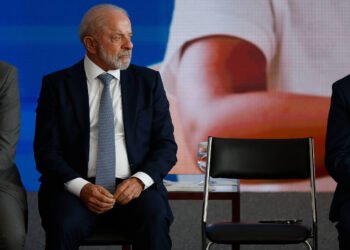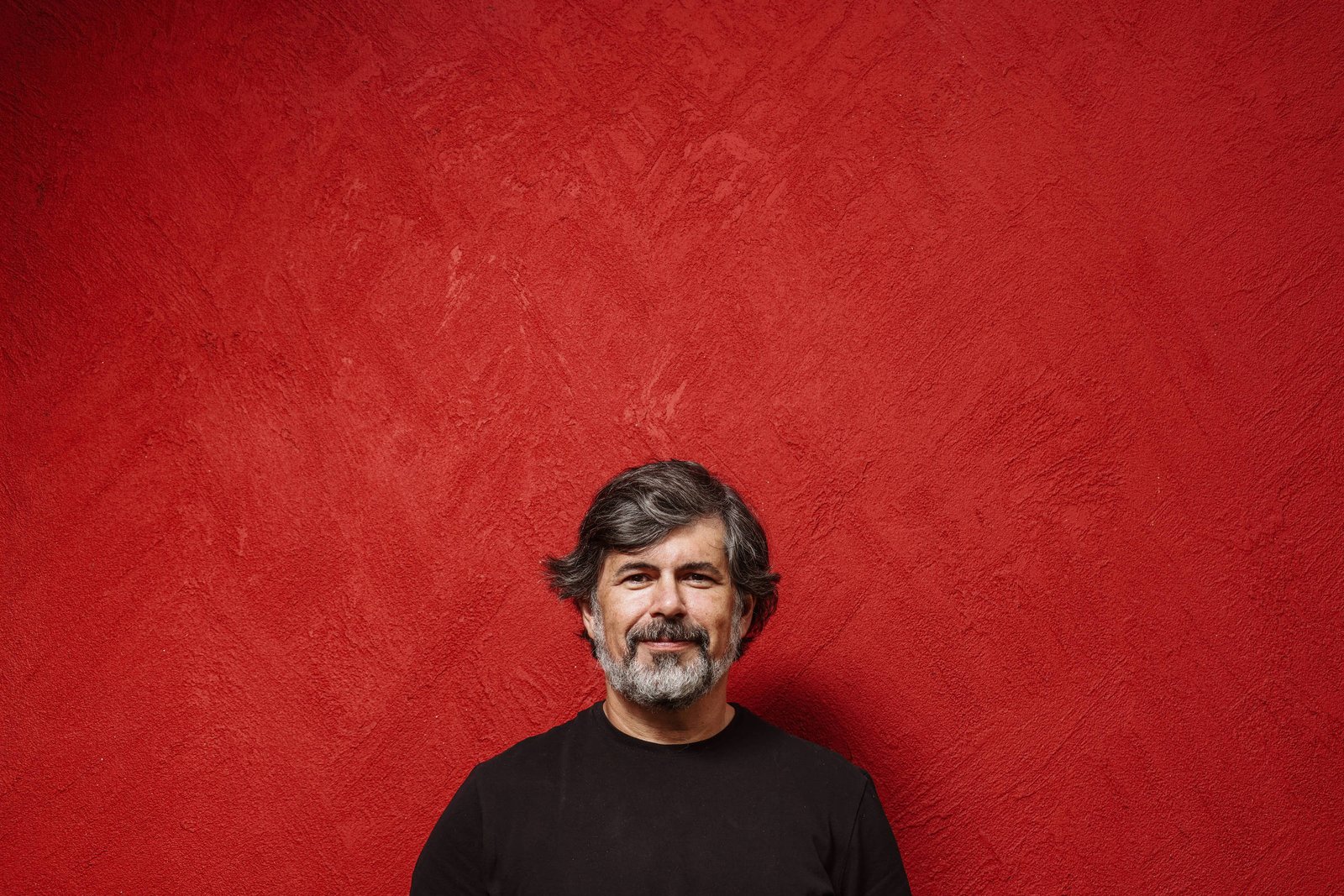
CEO of the developer G.D8, Daniel Ribeiro is a businessman who moves away from the classic biotype of executives who operate in the real estate market from São Paulo luxuryalways surrounded by lots of hype. More reserved, he prefers to show off the library of ultra-rare books from past centuries that he mines on trips around the world, in addition to talking about the birds that fly around the houses that he helps bring to life in the upscale area of São Paulo.
Today, G.D8 is one of the highlights in the super-luxury segment, with homes sold in the R$10 million range. Far beyond the good location that marks the interest of this type of client, the idea is to focus on the details that can make them have a better quality of life, combining leisure, contact with nature, optimization of resources and innovative architecture.
THE artificial intelligence became his right-hand man. It helps discover new things, review processes and, of course, save money.
“I don’t see AI as a tool that replaces us, but it is a tool that gives us powers beyond what we had”, says Ribeiro, who in his spare time runs the Instituto Caça Fome, to help people in vulnerable situations.
What difficulties do you see in the market today?
Artificial intelligence is very disruptive for everyone. AI can be a much greater threat to large companies than to small and medium-sized ones. Today, with the right tools you can produce as much as a large company.
Inside the office, we had a whole change in our workflow because of AI. In the past, the project was born in architecture, today it is born in marketing and goes to architecture. It’s a completely opposite path, because with these tools you can transform the product into a tangible thing. Before you tried to make it sellable.
Did this make the process cheaper?
Quite a lot. It took me a year to create a product. Today, at the same time, we make four products from the same land to find out which is the best option. When you do a lot of external product imaging, for example, until you receive the first shot of the images and correct them, it’s a process that will take almost six months. Today, the architect makes a drawing and, on the same day, you can have your first image. Until you optimize this, it’s a process of a week, a month at most. Now, we create a product in three days. Of course, it’s not definitive, but you’ve already seen it, you can sit down and negotiate the terrain.
How do you apply AI to new ideas?
In the past, when you created a product, you took references from things that existed. AI gave an image to many ideas that had no image. I don’t see AI as a tool that replaces us, but it is a tool that gives us powers beyond what we had.
How did you enter the development market?
I graduated in engineering and had a bit of this business side. Engineering and business is a bit the result of incorporation, because pure engineering is construction, you go there and build it. Engineering and business you build something to sell to someone.
I started at a time when the market had big IPOs, there was a flood of money in the market. Land was no longer being negotiated, they needed to make PSV (general sales value), they needed to spend that money.
With this difficulty in the development part, I ended up directing the focus outside of São Paulo, on the north coast, which is where our residential condominium part began. It’s one of the aspects of the company that I most enjoy doing, as we create unique residences for people. We see something that can be replicable and focus on doing that.
Even if it is in the popular segment?
Popular is harder to replicate because you have the cost limitation. At the highest standard you have much greater freedom to create, you can add much more value. In home condominiums I can deliver a lot of value. In buildings, not so much because you have a physical limitation.
The building I am finishing in Pinheiros, BioSquare, is already an office with a different conception. It has floors surrounding it with plenty of green space, it is a unique building. It has plenty of natural ventilation. Today it is the largest corporate building in Rebouças. It has 27 floors with a margin of 2,300 m².
It is the market’s dream to have a space of this size in that region.
It’s very difficult to form these areas. The ‘greenfield’ today, which is a building that comes from scratch, is very difficult to achieve in prime areas. There is the difficulty of forming an area and there is also the deadline. It took almost eight years for you to build a building like this. It is an investment of eight years of continuous cash, which you only put money into. You receive absolutely nothing.
And that could eventually cause a problem at the end…
In the process of creating this building, Covid came. Everyone returning the office and me creating 40 thousand m² of office. It wasn’t easy. But on the other hand, I think I had already prepared myself.
For me, working from home was a lot of noise, so much so that everyone is returning to the office. Human beings cannot evolve inside a cave, they need human contact to advance.
It was considered taking these 40 thousand m², transforming it into residential and such. But if I turned it into a residential one, I would be hearing the noise. This concept of looking and identifying what is noise and what is a signal is very important for the survival of any business. Today you can’t create the same office as before, you have to create better offices to attract this employee back.
At the office we have a pet. Which is a conceptualization that you have a pet at home, but at the office there is a pet that belongs to everyone.
And it’s a…?
A chicken (laughs). She has a very tragic, almost Shakespearean story. Magali died (at the beginning of March), she was attacked by a cat. She left a widowed rooster, Fernando, who is her husband. She laid six eggs that are hatched, we transferred them to the incubator.
This story shows how bonds are created with people in the office. Everyone followed and was upset. It’s the same thing as if it were your pet. You arrive at the office in the morning, go to the brooder to see if the chicks have hatched.
And where did the chicken come from?
It came about from a hobby I have, which is learning planting techniques and making eggs hatch. I bought a brooder and she was born. I have a dog at home, the dog would eat her. So she went to live there in the office. The objective was to show this theory of taking home to work.
Today we have a regulatory standard, from the Ministry of Labor, which talks about mental health. When you create more of these environments, you make everything lighter. It’s a game changer, removing the noise and absorbing the signals that were the home office.
Process development was improved with this advancement in technology during the pandemic or do you need to have everyone in the office?
There is a very intense creative process, everyone needs to be together, people need to understand how we create, understand the company’s reasoning. In the home office you cannot convey this philosophy.
Do you live in the projects you develop?
My mission is to create another evolution of the product every seven years and test it. I’m creating the next differentiated one. I don’t create all the ventures, I only create the disruptive ones. And then the team takes the one I created and then makes more products like this, with smaller sizes, to make it easier to sell.
This idea of seven years, is there any technical issue?
That’s about the time it takes me to do the project and live, at least, about five years. So I can feel and have time to create things. I’m not always going to be creating this quickly.
Another thing you will see is a lot of green. Here (at One Haus, one of the company’s creations), I have 58% garden to 42% house. In the next launch, Ayvu Porã (in the Cidade Jardim region) will be 76% vegetation for just 24% house. What is the evolution that I understand? If you spend two hours in nature, for example, there is a study that says it reduces your cortisol level by 21%. The more nature I can indulge in, the lower the anxiety level will be. It is an architecture that returns benefits to him.
Speaking of development, are land values more expensive?
The region where the price of land has exploded doesn’t matter to me, because the land becomes so expensive that you can’t deliver a good product. Areas that are on the rise or that have declined and are now coming back are much more interesting to work on because I can deliver a better product. Then I break a little with that developer paradigm that says that the first most important item is location, second location and third location. Obviously I can’t forget the location, but I can sometimes give one point less for the location if I deliver a very good product.
What will BioSquare be like?
It is a mixed building, with a residential part, with 36 apartments, and a corporate part. Below there are four restaurants.
The corporate part remained entirely with the Amazon?
I can’t talk because I have a confidentiality agreement (laughs). This region of Rebouças is the new Faria Lima. Faria Lima was no longer able to grow. And then, I think she managed to extend well and take all of this part from Rebouças to Henrique Schaumann. And it has an advantage, which is the subway part. Faria Lima will age over time, it will begin to undergo a retrofit process. And Rebouças was born with super-updated buildings.
Is BioSquare the biggest project you’ve ever done?
Yes, it is 130 meters high. But it’s within the template, it can’t grow any further because we would have to taper the slab. And the idea for these large companies is that they need bigger slabs. Today it’s fashionable to make buildings bigger and so on, but the problem with bigger buildings is that, this way, they occupy the land better, you have a view of those up there, but the work takes longer. Selling at launch is already more difficult because the customer will have to wait.
X-ray | Daniel Ribeiro, 54
Civil engineer from Faap, has postgraduate degrees in marketing administration and business art. Before founding G.D8, in 1999, he worked at JHSF