CURRENCY
THE currency of any country in the world means more than just the system of money used in exchange for goods and services.
It also symbolises national identity with features cultural, historical and economic values that are native to the land.
Papua New Guinea (PNG), the land of a thousand tribes, also has its unique currency that was introduced on April 19, 1975, by men who had then named their own sons after the Kina and Toea.
This notable time in the nation’s history not only marked the establishment of the PNG’s official currency, but also ushered the transition toward economic sovereignty and independence 51 years ago.
Then Finance Minister, late Sir Julius Chan, and Works Minister Sir Yano Belo had proposed the names for the higher and lower denomination, which were then given to their respective sons.

Legacy of Sir J
Toea Chan, Sir Julius’ youngest son, recently paid a heartfelt tribute to his father’s life and legacy following the first anniversary of his death on Jan 30 last year.
Toea, on behalf of his family, said: “Today (April 19), we honour my father’s contributions to this great nation, and invite all Papua New Guineans to join us in commemorating his life and legacy; 51 years marks the beginning of the next century of monetary sovereignty and building of independence.
“Kina and Toea remain the backbone of our economy and heartbeat of our national identity as we walk in unity as one nation, one country. As the youngest child of Sir Julius and Lady Stella Chan, alongside my siblings Vanessa, Byron, Mark and our extended families, we are dedicated to safeguarding his remarkable legacy.
“We will strive to uphold the values he instilled in us – integrity, hard work and to always serve the people.”
Toea also acknowledged the Government and the Bank of Papua New Guinea for their recognition of his father by having him honoured posthumously on the country’s new K100 note earlier this year.
The new note features Sir Julius’ face on the back side, along with designs of a New Ireland shark-caller, a lagatoi, kina shell necklace and a Toea shell armband, while the original features remain on the front side.
“It was on this day (April 19, 1975) that I was born,” Toea said.
“My father was more than a parent, he was my rock, my mentor and my foundation. His knowledge, unwavering guidance and wisdom has molded me to who I am today. His legacy continues to inspire and remind us of the many contributions, sacrifices and wisdom our forefathers envisioned and have us a currency that truly belongs to us.”

Sir J on new K100 note
Lady Stella Chan was all smiles as she unveiled the country’s K100 note on Jan 27 at the Stanley Hotel and Suites in Port Moresby. She was in awe at the new look which features the face of her late husband, Sir Julius, in honur of his legacy.
Sir Julius was given this commemorative tribute by the very institution that he played a pivotal role in establishing, the central bank (Bank of Papua New Guinea) – three days before the first anniversary of his death.
BPNG Governor Elizabeth Genia said the new note had become legal tender that would already be in circulation by now.
“This is not simply decoration; it is meaning,” Genia said.
“Together we have produced a bank note that reflects the qualities that define Sir Julius’ public life, care, discipline and respect. As our highest denomination, the K100 carries weight as it moves through every part of our economy, trusted to tell a story about who we are.”
She said such a tribute to the first Finance Minister and a founding father of the nation was only fitting to the legacy he has left behind.
“For the Bank of PNG, Sir Julius is not only a national leader, he is foundational to our institution. In 1973, as the first minister for internal finance, Sir Julius personally led negotiations to ensure that PNG would establish not just a bank, but an independent central bank.
“The bank was to be professional, credible and uniquely our own. He understood that our ability to define our own value was fundamental for independence.”
Genia, empowered by Sections 61 (1) and (2) of the Central Banking Act 2000, also announced the circulation of the new note as legal tender which would be used along with existing K100 notes.
She also thanked the Note Printing Australia (NPA) for their support over the years, especially with the new commemorative notes and coins to be used in PNG.
Prime Minister James Marape said it was a privilege to have been mentored by Sir Julius during the start of his own political career.
He said the new note was approved by the National Executive Council as a tribute to the chief architect of the country’s financial system.
“I had a very personal relation with Sir Julius,” Marape said.
“He first endorsed me in 2002 (general election). He was the one that crafted me into politics and it is a pleasure and privilege for us to honour him. He was a great man and deserves to be on this new note.”
Marape added the People’s Progress Party (PPP), led by Sir Julius, and Pangu Pati that were crucial in the movement toward the country’s independence.
He thanked the current PPP leader and Kiriwina-Goodenough MP Douglas Tomuriesa for honouring the political legacy of Sir Julius.
NPA chief executive officer Malcolm McDowell said it was an honour for them to work the new note designed to honour a man that was instrumental in setting the foundation of PNG’s financial system.
He said the new note had highly-advanced security features embedded in it to protect against forgery or other illegal activities.
“Despite the growing digitalisation across the world, banknotes continue to play an important role either as a means of exchange, or as a storage of value in many countries,” McDowell said.
“Banknotes have long been used as a unique and enduring way for countries to tell a story, celebrate its culture and those individuals who, through their personal deeds, helped shape their nation – and that is what this new K100 note does.
“I congratulate the Bank of PNG for their courage and insight in creating such a tribute to celebrate the life and contribution of Sir Julius.
“On behalf of NPA, I invite you all to celebrate and use this new note with great pride.”
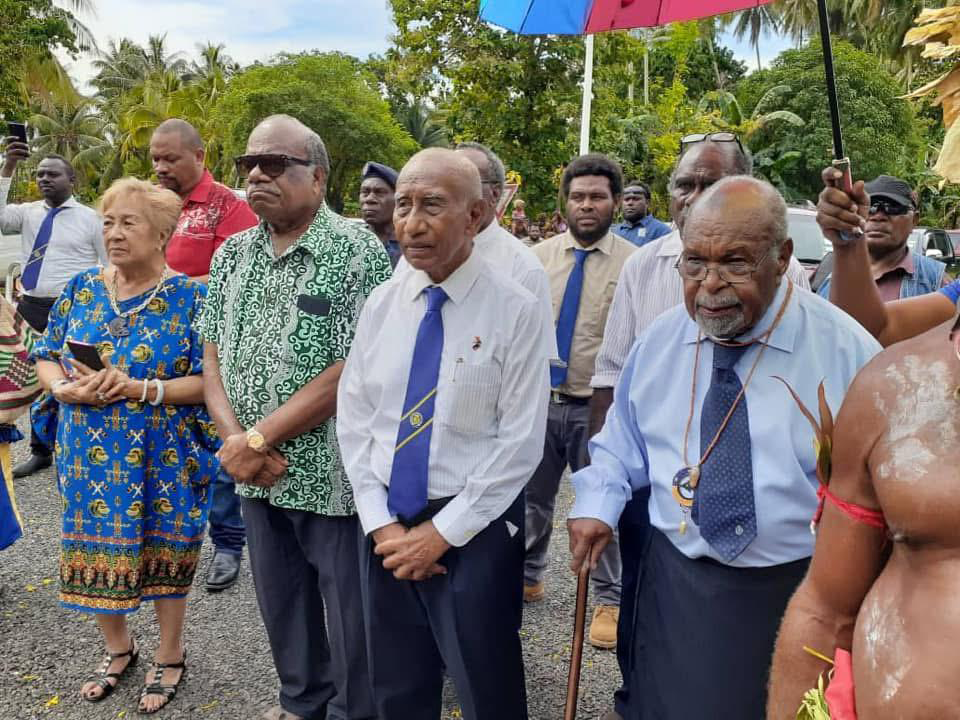
During the auspicious event, a traditional New Ireland ceremony led by a maimai was accorded to the Government for its recognition of their late governor Sir Julius Chan on the new K100 note.
The story of Kina
Sir Yano Belo has also played a crucial role in the establishment of the country’s currency. Among his many other contributions to national development, his proposal to have the Kina as the higher denomination of the money used today will remain as profound legacy for generations.
In an article published in The National on Sept 15, 2025 (The little known story of Kina), the history of the Kina can be traced back to Kagua in Southern Highlands – the very place Sir Yano represented in the soon-to-be-independent State of Papua New Guinea.
But when reflecting on the birth of the currency, Sir Yano recalled that the names proposed and came to Cabinet were chosen with careful deliberation, embodying the spirit, identity, and dignity of the people.
Initially, Kina is the name of the shell money from the coast, which people hung around their necks as something valuable.
Back then, it was highly valued and respected widely in the Highlands.
On Aug 28 last year, 2025, Prime Minister Marape unveiled the new K50 note and 50 Toea coin at the Stanley Hotel and Suites in Port Moresby.
Sir Yano was invited as a guest of honour and when he was called up to speak, he paid homage to the late Sir Michael Somare, Sir Julius, and all founding fathers of the nation.
He said that the strength of a nation lies not only in its institutions, but also in the character, integrity, and vision of its leaders.
He called upon all Papua New Guineans to respect and uphold the law and protect the values instilled by the forefathers, reminding the audience that the blueprint of sovereignty, prosperity, and divine destiny is embedded in the Constitution.
Sir Yano concluded his speech by declaring that the true power of the Kina and Toea would be realised through authentic leadership, leaders who serve, protect, and honour the Constitution.
As the K50 note and 50 Toea coin were launched, Sir Belo offered a heartfelt blessing over the nation, declaring that the currency remains strong and unshaken, reflecting the resilience of Papua New Guinea, and may the nation walk forward in unity, strength, and wisdom.
Significance of a nation’s currency
The currency of a nation is only as strong as the trust placed in it. Papua New Guineans have a responsibility to protect that trust.
The designs and symbols on the new notes and coin reflect the cultural and natural beauty of the country.
And as Papua New Guinea prepares for its 51st Independence anniversary celebrations on Sept 16 this year, it is important to remember the value of the Kina and Toea which is entwined with the tapestry of the country’s different cultures and languages that unites the people.