An independent non-profit organisation that uses data, research, and science to improve tuna fisheries believes more work needs to be done on monitoring of transshipment in the high seas of the Western and Central Pacific Ocean region.
The Pew Charitable Trusts said discussions must focus on stricter measures that need to be taken.
PEW said figures from a 2016 study estimated more than US$142 million worth of illegal fishing in the Western and Central Pacific Ocean.
The report said that total tuna transshipments in the region are worth roughly US$6.5 billion each year
Most of the illegal fishing is misreported or not reported by licensed fishing vessels, with at least 140 carrier vessels involved, and only 25 vessels reporting high seas transshipment.
Its 2018 report said regional fisheries management organisations (RFMOs) found about 1.4 million metric tonnes of tuna were transferred, with 200,000 tonnes of other species.
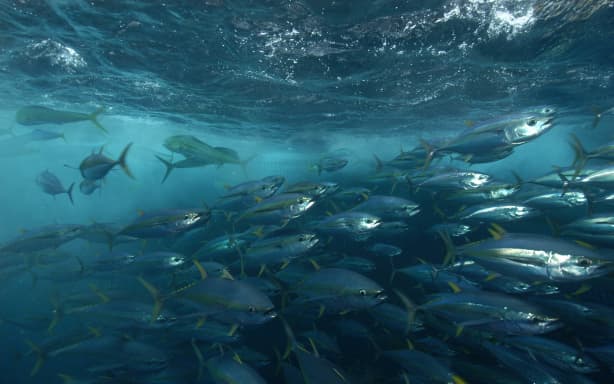
Yellowfin tuna inside a purse seine net
Supplied / SPC
The Pew Charitable Trusts’ senior officer for international fisheries (Australia) Glen Holmes said the relative lack of transparency surrounding the movement of carrier vessels and their activities has meant that transshipment operations remain poorly monitored at both the regional and global levels.
He said the WCPFC, which will meet in Vila, Vanuatu from 30 November, needs to be more proactive around the transshipmnent issue and monitoring in general.
“We hope that there needs to be better monitoring of what’s happening on the high seas,” he told RNZ Pacific this week.
“If we’re talking about transshipment, there needs to be better oversight of vessels that are transshipping on the high seas. If we’re talking about fishing vessels themselves, the purse seine fleet has in place 100 percent observer coverage, for example, and that’s good.
“But the longline fleet is only required to have 5 percent observer coverage, and that’s effectively useless. If you look at the Southern Bluefin Fishery, they have the longline fleets that are operating there, they normally have around 20 percent observer coverage.”
Purse seine fishing vessels are specialised commercial boats designed to catch large schools of surface-dwelling fish by encircling them with a massive net.
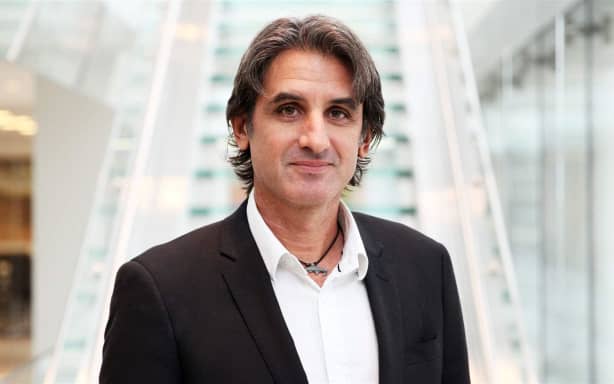
The Pew Charitable Trusts’ Glen Holmes
PEW
Holmes said the WCPFC is not up to scratch with “particularly longline observer coverage”.
He applauded the fact that electronic monitoring will open the doors “to making it more economically and logistically feasible to have observer coverage on longline vessels”.
“But there still needs to be work done on that,” he said.
“Hopefully, there will be some agreements made this year to progress that forward. We have already adopted standards, so that’s good, but it’s not the whole story.
“There needs to be more work done on that. There is some work chaired by the US over the last 12 months. Hopefully that will come to fruition this year and if not, then it needs to be in place by the end of the commission meeting next year.
“So, there is definitely an improvement in the high seas that needs to happen.”
PEW said high seas monitoring and transshipment in the region present major challenges for fisheries governance, conservation, and human rights.
While the WCPFC generally prohibits high seas transshipment, numerous exemptions and loopholes allow longline and select purse seine fleets to continue the practice out of sight of coastal authorities.
It said illegal, unreported, and unregulated (IUU) fishing has cost the Pacific Island nations hundreds of millions of dollars annually in lost economic value.
It noted that severe observer coverage disparities exist between fleets, leading to misreported data and skewed tuna stock assessments.
The lack of regulation and isolation on the high seas also heightens risks for human trafficking, forced labour, and poor crew treatment aboard distant-water fishing and carrier vessels.
WCPFC chair Josie Tamate said all vessels operating in the WCPFC Convention Area, except in territorial and archipelagic waters, are subject to the WCPFC conservation and management measures.
She said the Forum Fisheries Agency (FFA) and the Parties to Nauru Agreement (PNA) have developed a lot of regional measures over the years and a number of implementing arrangements that also apply for their exclusive economic zones (EEZs).
“Over the years the WCPFC have developed compatible measures for the High Seas areas,” she said.
“Transshipment is banned at sea, but under WCPFC’s transshipment measure, there are some exceptions if the operator indicated it is impractical to transship in port.
“There is an ongoing conversation on this issue as members have yet to agree on amendments to the measure. The Marshall Islands have led this discussion to ban transshipment at sea.”
Tamate said the majority of the transshipment at seas is carried out by longline vessels and stated this is where human observers are very important so they can verify the information.
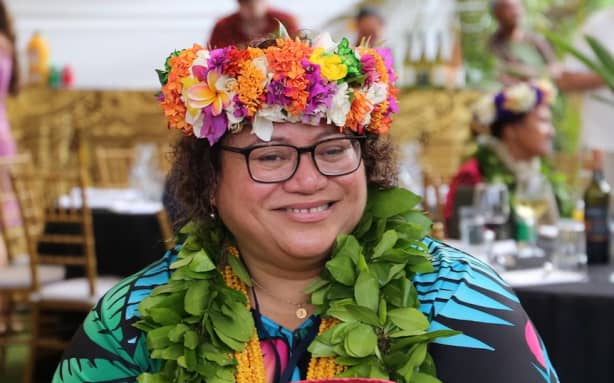
WCPFC’s chair Josie Tamate
Western & Central Pacific Fisheries Commission (WCPFC)
In 2023 in Fiji, the Commission adopted the Minimum Standards for Electronic Monitoring and Reporting, and Tamate said work continues, especially for longline vessels.
“There is an ongoing call for an increase in human observer and also electronic monitoring overall especially, by the Small Island Developing States (SIDS) and coastal States,” she said.
“Transshipment, Regional Observer program (ROP) and monitoring are on the agenda for WCPFC. There are intersessional working groups that allow for continuing discussions and improvements that can be recommended to the Commission for adoption.”
Busy meeting
Meanwhile, Holmes said the upcoming WCPFC meeting in Port Vila will be a “busy one”, with a number of measures and producers in place to be passed and adopted.
He said another key area that the meeting will discuss is the ‘expiring compliance process’, which will expire this year.
“The commission will have to come together and decide how to proceed with its compliance process,” he said.
“Ideally, it should make the compliance process a permanent one. There will be no doubt some toing and froing between members as to what the next iteration of the compliance process will look like, but most importantly, we think it should become a permanent process.”
He said the adoption of management measures for tuna species in the Pacific is critical and a big step, meaning the WCPFC – the biggest of the tuna regional fisheries management organisation – will be proactively managing its dominant species.
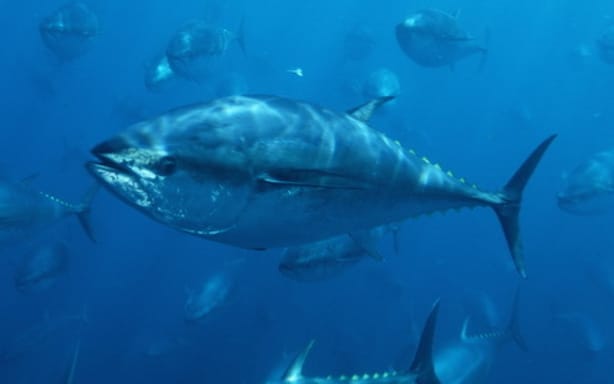
Pacific bluefin tuna.
Supplied/WWF
Outgoing WCPFC chair Tamate told RNZ Pacific last week that the big decisions for the Commission would be the adoption of the implementing measure for the South Pacific albacore, and also the bigeye management procedure.
“This year the commission is expected to adopt the implementing measure for the South Pacific albacore and the management procedure for bigeye tuna,” she said.
“In addition to that, maybe the yellowfin management procedure as well and there’s some expectation to adopt the Pacific bluefin tuna management procedure. This Pacific bluefin is work that is led by the Northern Committee, and they will be presenting that for adoption at the WCPFC.”
Holmes said this year’s meeting was going to be a critical one for management procedures, which he believed would benefit all members.
“The old way of managing tuna stocks was to see what the state of the stock was in and then negotiate out how much people could catch for the following year or two or possibly three years,” he said.
“The way management procedures work now is that they look at how the stock is going to behave if there is a specific rule in place that determines how much that catch can be and how the stock will fare for 10, 15, 20, 30 years into the future.
“It’s a very, very proactive form of management rather than a reactive form of management. It’s scientifically based, it’s much less open to political influence and it gives a much better outlook for sustainability into the future, which is good for industry because it means that they know over the long term that there is going to be an industry there for them.”
Science
Holmes said the availability of science to help decision-making in the tuna fisheries sector is important.
He said “the science is a critical element” with inputs into the bigeye and Pacific bluefin stocks and migration needed before the two management measures covering both species can be adopted at the upcoming meeting in Vanuatu.
“So, the scientific element is a very, very important stage of the process,” he stated.
He also referred to the science behind how climate change is going to influence the distribution of tuna stocks.
Holmes said while this is “relatively young”, “there is likely to be a shifting of Tuna stocks with climate change” under the projections that have been made by the Intergovernmental Panel on Climate Change (IPCC).
“But there is still a lot of uncertainty around it,” he said.
“The exact magnitude of that shift, we’re still uncertain about. But it’s the fact that there is a shift and that there is some scientific evidence for it, can then be built into these management procedures.
“And so that is another important element of the whole management procedure process is that we’re able to build in this scientific foundation for a changing environment. That’s going to be critical as we move forward, particularly with this year, looking like it to be the strongest El Niño year on record. It’s just an example of what’s to come, unfortunately.”
El Niño has affected almost all islands in the Pacific region so far.
The WCPFC’s 23rd Regular Session and related meetings will be held in Vila, Vanuatu from 27 November to 5 December.
Meetings will include the Special Session of the Scientific Committee on 27-28 November, the 20th Session of the Finance and Administration Committee on 29 November and the Regular Session of the Commission (WCPFC23) from 30 November to 5 December.