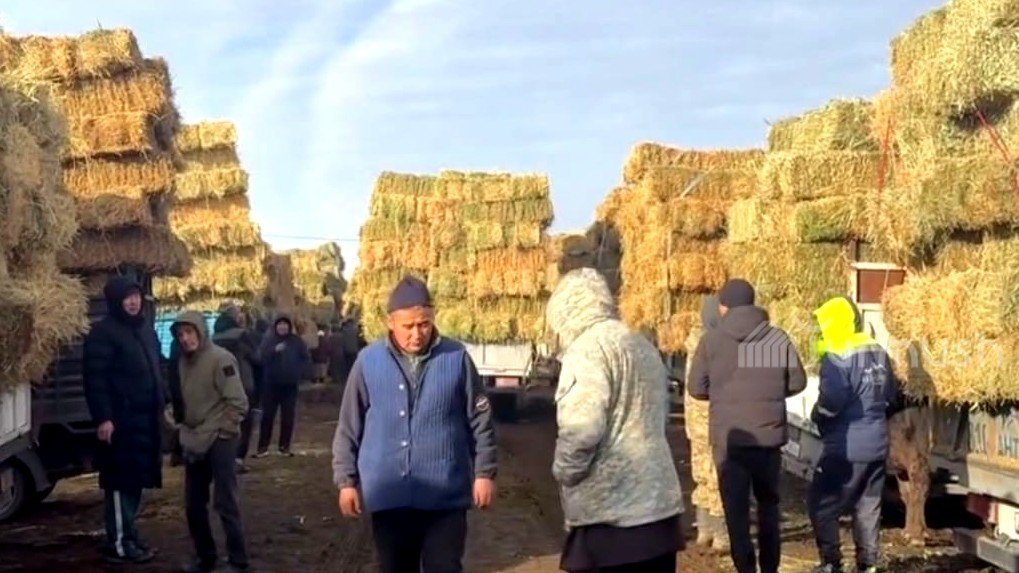
Turmush — This year, heavy rains contributed to good growth of forage grass in the regions of Kyrgyzstan, however, despite the rich harvest, prices for hay in particular in the Chui region are rising.
According to some residents of the Chui region, despite the abundance of grass, the final cost of hay is directly affected by the increased costs of fuels and lubricants (diesel), maintenance and labor.
“The costs of mowing and collecting maturing grass or straw are very high. Is it possible that when diesel fuel is expensive, hay will be cheap?” they noted.
Due to high prices, some farmers believe that feeding barley, wheat or mixed feed to livestock instead of hay is much more profitable. “Instead of buying one bale of hay for 420 soms, it is better to feed, which costs 21 soms per kilogram. It’s probably more profitable to provide food all winter,” such opinions are also voiced.
At the same time, experts and experienced farmers warn that feeding livestock exclusively with grain or mixed feed is wrong. According to them, the digestive system of animals necessarily requires fiber, that is, hay or straw, otherwise feeding only grain can harm the health of livestock.
Currently, prices and quality of hay vary across regions. In some places, the cost of one bale of alfalfa is estimated at 350–450 soms, and the price of straw is around 200 soms.
As reported by the presidential plenipotentiary office in the Chui region, this year 83,457 hectares of land were sown with forage grasses throughout the region. On average, 4–5 tons of crops are harvested per hectare.
- In January 2026, farmers in the Chui region told Turmushwhat they are switching to silage en masse (feed made from corn). In this regard, farmers in the region are no longer dependent on buying hay from each other. At the same time, hay from the Chui region is mainly purchased by farmers from the Naryn and Issyk-Kul regions.