SEIGONIE MOHAMMED
Climate Change Editor
A new draft climate agreement released at COP31 on Thursday has dropped references to phasing out fossil fuels, raising questions about how far countries are prepared to go to tackle global warming.
The revised text, released by the COP31 Presidency, instead focuses on cleaner energy, cutting emissions and getting more climate financing to developing countries.
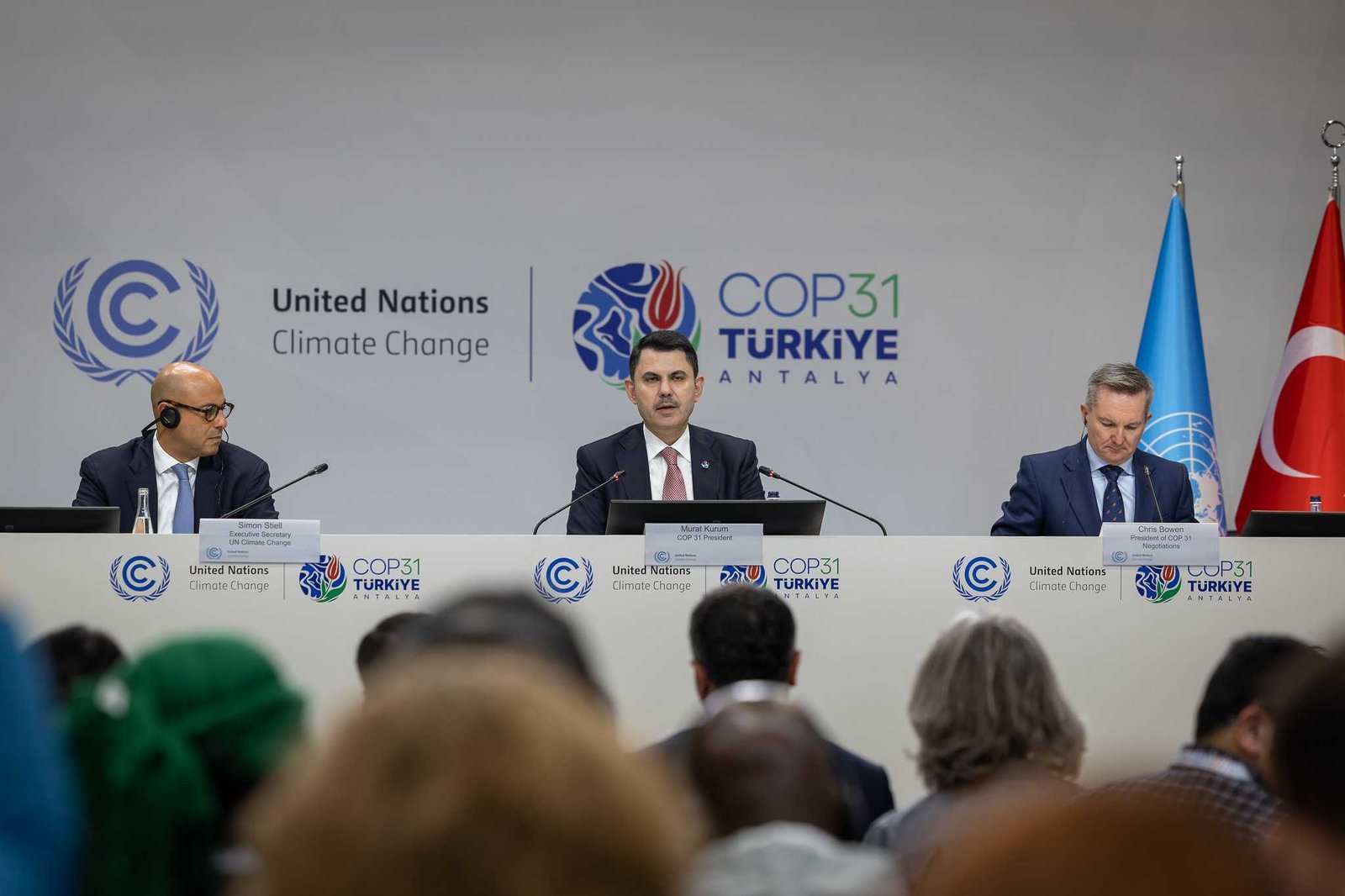
At a press conference in Antalya, Australia’s Climate Change Minister and COP31 President of Negotiations Chris Bowen defended the move, saying the aim was to reach an agreement all countries could support.
“We’ve put forward what we think, based on all our consultations, gives us the best chance of receiving the most ambitious result that consensus will allow,” Bowen said.
He maintained that the commitment made at COP28 in Dubai to transition away from fossil fuels still stands.
“What we’re about is practical ways to do that. There’s no better way than electrification and the other things that are included in the decision.”

But the missing language has become a sticking point, particularly for small island developing states, which have been pushing for stronger action on fossil fuels.
Asked what message the draft would send to those countries, Bowen said the Presidency was working towards “the most ambitious outcome that consensus will allow.”
He acknowledged the threats facing vulnerable island nations.
“There are parties here at COP31, countries, communities whose very existence is at stake, and the oceans are central to their chances of survival,” he said.
UN Climate Change Executive Secretary Simon Stiell also insisted that the earlier fossil fuel commitment had not been abandoned.
“The commitment to transition away from fossil fuels was made in COP28. You do not erase that. That commitment is very clear,” Stiell said.
“The measure now is how that is implemented and how quickly.”
What it means for the Caribbean

For Trinidad and Tobago and the wider Caribbean, the negotiations matter on two fronts.
As an oil and gas-producing country, Trinidad and Tobago has an interest in how quickly the world moves away from fossil fuels. But like its Caribbean neighbours, it also faces the costs of climate change, from flooding and coastal erosion to extreme weather.
The draft acknowledges that the world is projected to exceed the 1.5°C warming limit countries agreed to pursue under the Paris Agreement.
It also calls for efforts to triple financing to help developing countries adapt to climate change by 2035.
That money is particularly important for small island states trying to protect roads, homes, coastlines and other infrastructure from worsening climate impacts.
However, the draft shows how far funding still has to go.
It records approximately US$2.8 billion in requests to the Fund for Responding to Loss and Damage, compared with allocations of just US$342 million.
COP31 President Murat Kurum said countries must make climate financing easier to access.
“Access to finance must be simplified. Approval and disbursement processes must be accelerated. Grants and concessional funding must be increased,” he said.
Talks continue into the night

The draft also proposes increasing electricity’s share of global energy consumption to 35 per cent by 2035, alongside expanding renewable energy and improving energy efficiency.
Kurum rejected suggestions that removing the fossil fuel language amounted to weakening climate commitments.
“I don’t think that there’s any backsliding,” he said.
With COP31 scheduled to end on Friday, November 20, negotiators are expected to continue consultations into Thursday night in an effort to settle the remaining disagreements.
Bowen made clear that the Presidency was not prepared to leave without a deal.
“We won’t be leaving the rooms of Antalya until we have that consensus,” he said.
The latest text remains a draft and could still change before countries sign off on a final agreement.