Patients at the nation’s polyclinics will be able to receive free diabetes test results within five minutes using new machines, as health officials seek to improve early detection in a country where almost one in five adults has the condition.
Amid concern over diabetes figures that place the country among the Caribbean’s 10 highest, HbA1c testing machines were touted as the first of several strategic investments in primary healthcare.
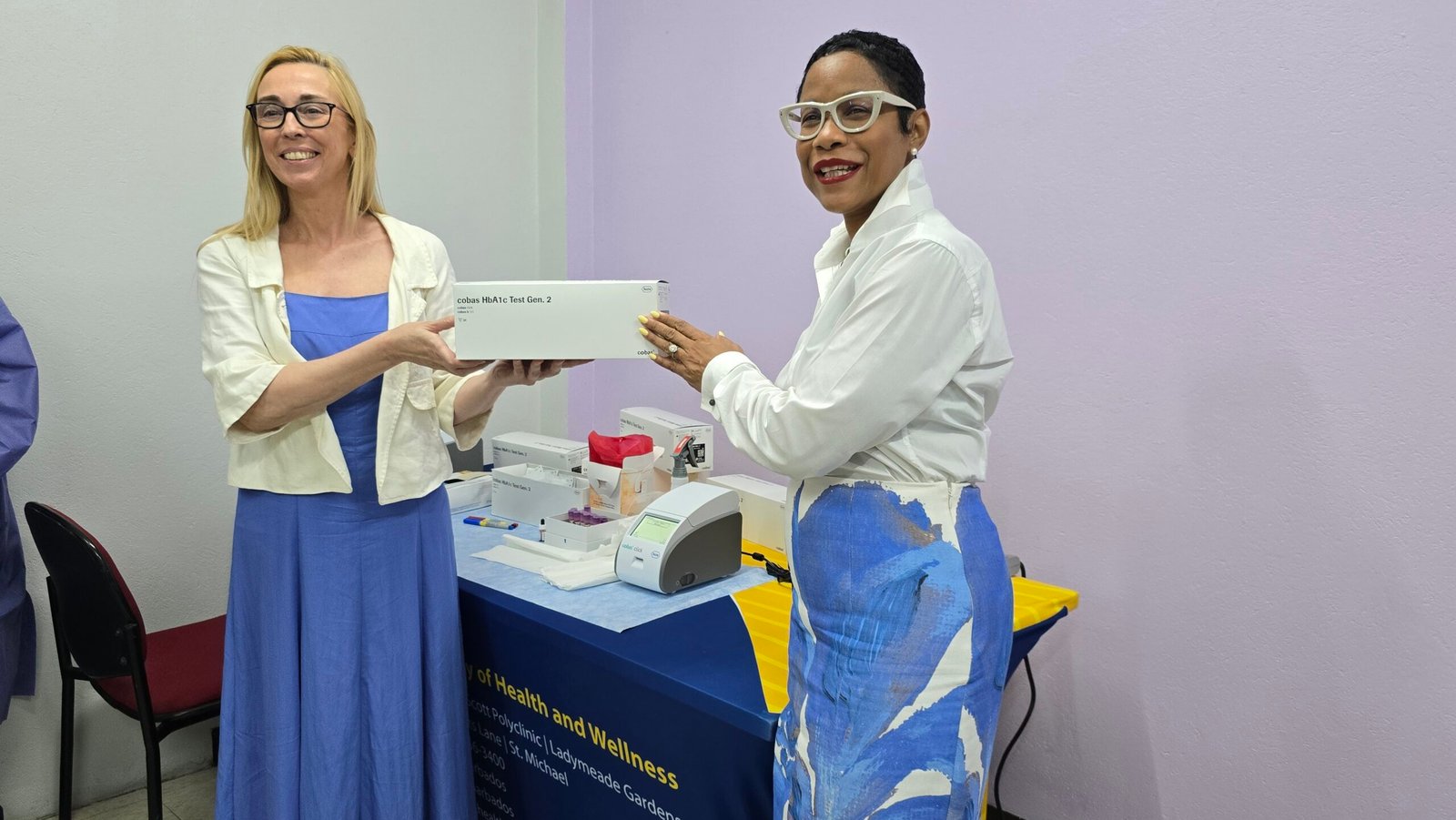
At the presentation ceremony at the Winston Scott Polyclinic on Jemmotts Lane, the machines were handed over on Tuesday by the Pan American Health Organisation (PAHO), three days after World Diabetes Day, which was marked on Saturday.
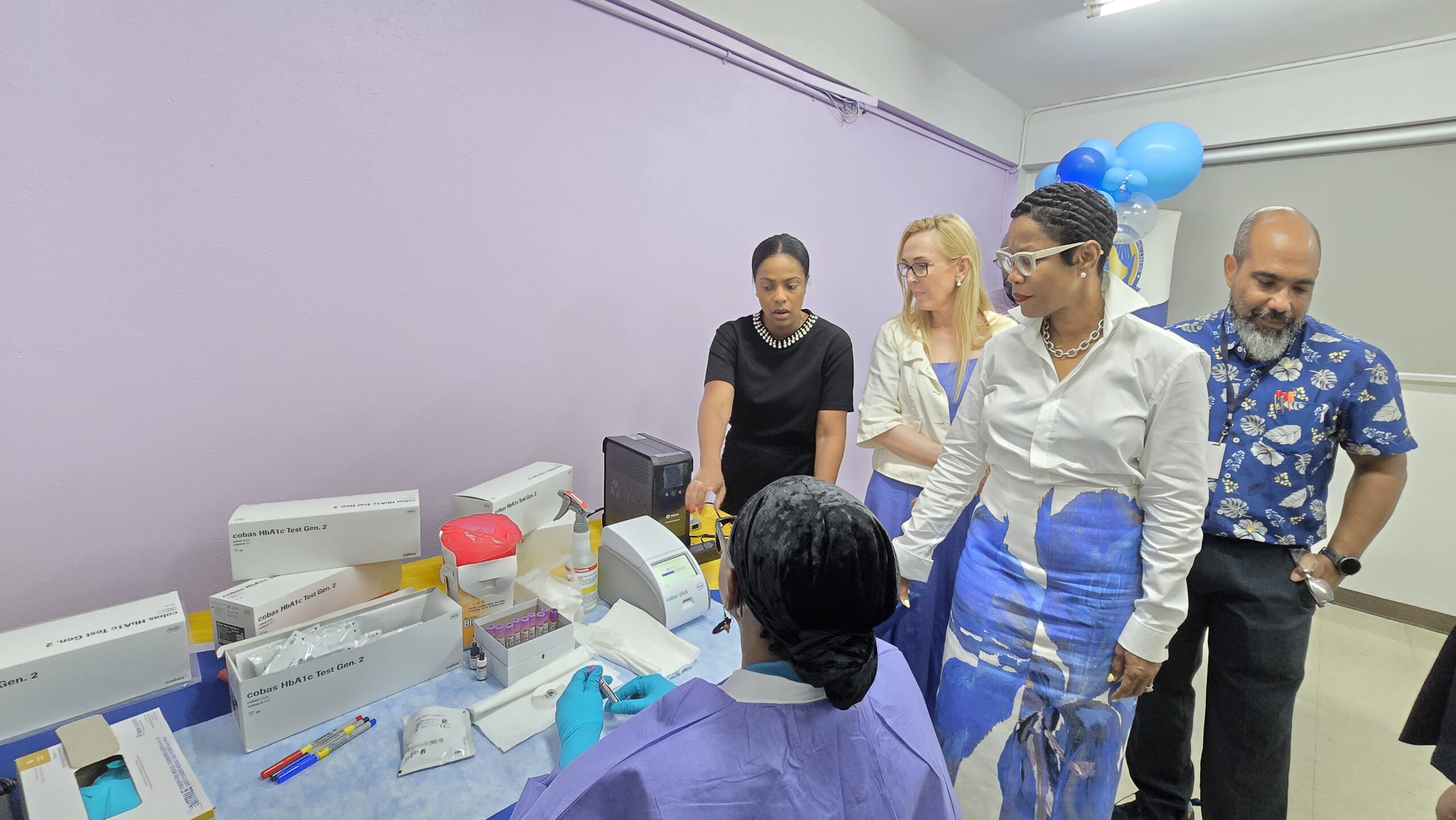
Minister Cummins gets a demonstration of how the HbA1c machines work. (Photo Credit: Lourianne Graham/Barbados TODAY)
Health and Wellness Minister Senator Lisa Cummins said the machines would replace a wait of several days for results: “It means that typically for those of you who are accustomed to getting your HbA1c tested as part of your annual checkup, you know, you go in, you get your blood drawn, you send it to the lab. It takes a couple of days, you’re able to get the results back and then you’re able to go from there.”
The new machines, which would go to every polyclinic on the island, would give results within five minutes, she said.
She said the benefit lay in prevention and identifying patients at the pre-diabetic stage.
Dr Eva Llopis, the PAHO/WHO representative for Barbados and the Eastern Caribbean, said the testing would be free of charge to patients.
“This is important, because this is something that we haven’t had in many places to date. So this investment from the government shows that there is a true commitment to make sure that people can access it and can access it free of charge.”
Dr Llopis said almost one in five adults in Barbados had diabetes and that the country ranked fifth in the Caribbean and sixth in the Americas. Cummins cited the same PAHO figures.
The minister linked the figures to what Barbadians eat, pointing to the school nutrition policy and the tax on sugar-sweetened beverages.
“Barbados is not even just the highest in the Caribbean, but it is leaps and bounds above the global average in terms of sugar consumption,” she said. “Leading us to become what we have described as the diabetes capital of the Americas, the amputation capital of the world, and those are trends that we have to absolutely reverse.”
She said the HbA1c machines were the first in a series of investments in the polyclinics, with mobile diagnostic equipment and telemedicine kits to follow through PAHO.
A separate donation of 100 digital thermometers from the American University of Barbados, to help monitor cardiovascular disease, had already been received, she said.
Cummins said PAHO’s directing council had combined the organisation’s Revolving Fund and Strategic Fund this year, a decision she said would widen what Barbados could buy.
“Not only does it allow for countries like ours to make the kinds of strategic investments that we’re making, but what we will share in time to come is that a number of the high-cost medications that typically were out of reach for Barbados, we’ve begun to engage with PAHO on making those medications available here in country as well,” she said.
Dr Llopis said the kits were procured through the PAHO Revolving Fund, a mechanism that gives countries in the region access to medicines, vaccines and diagnostic kits at the lowest prices available.
(LG)