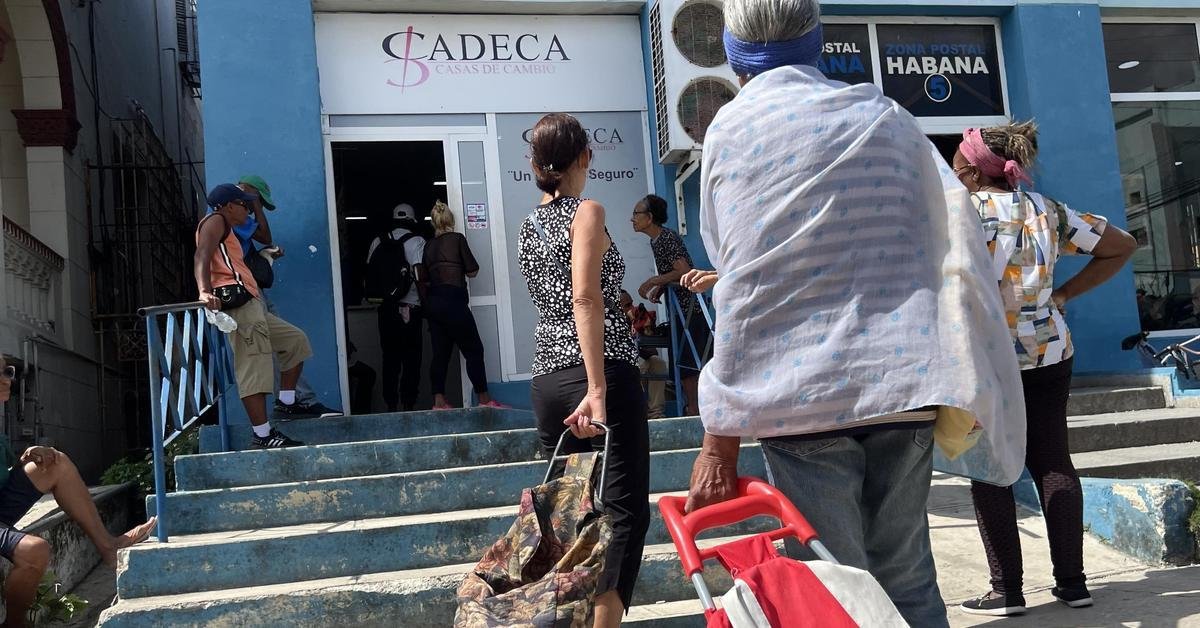
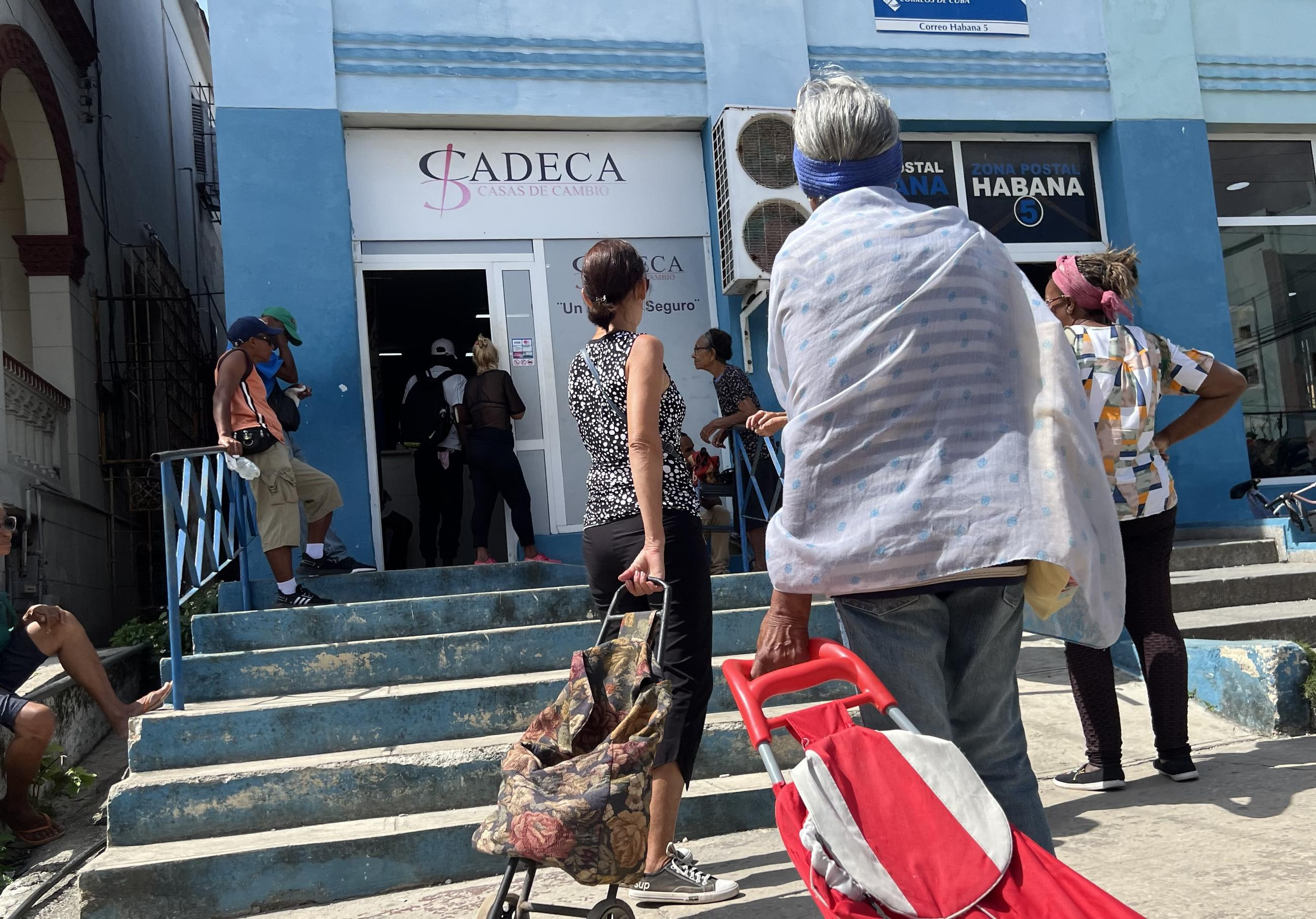
Havana/This Tuesday one week is over since the state Exchange House (Cadeca) suddenly modified the parameters for setting its rate. However, the authorities have not yet announced what the rule will be from now on, points out Cuban economist Pavel Vidal in the most recent bulletin from the Observatory of Currencies and Finance of Cuba (OMFi).
The report describes this decision as “an important, although insufficient, step for the formalization of the exchange market.” A graph illustrates the giant leap that the dollar exchange rate made that day in the Cadeca, going from a quote slightly below 800 pesos on the 9th to 920, exactly the same as the one given at the same time by the theTOUCHwhich measures the informal market from 2022.
The analysis recalls that, to date, official rates applied a profit margin on the reference rate of the Central Bank of Cuba (BCC). In banks, buying was 2% below and selling was 2% above. The Cadeca agencies had a margin between 1% and 3%, with the exception of hotels and airports, where the largest bite was applied, with 6%. Suddenly, Cadeca jumped to 10.4% above the BCC rate and was unified with both theTOUCH as with ADT 64, the first private exchange house on the Island, located in Santa Clara.
The OMFi does not lose, once again, the opportunity to vindicate years of work that has been vilified to the greatest extreme by the ruling party.
The OMFi does not miss, once again, the opportunity to vindicate years of work that has been vilified to the greatest extreme by the ruling party. During the year 2025, the campaign that accused theTOUCH of artificially distorting the price of the currency by inducing inflation in order to generate an uprising against the regime, reached its highest levels, to the point of linking its founders and part of the team with economic crimes and, even, “economic terrorism”. But time has proven right to the methodology defended, without fanfare, from the middle.
In December 2025, the Government approved the creation of a floating rate which, although it was still far from what was detected in the informal market, was light years away (410 CUP) from the 120 pesos per dollar in force at that time in banks for individuals and from the rate of 24 CUP used in the state sector. Throughout 2026, the official floating rate has been approaching that of the black market, until reaching it last week.
“That Cadeca buys the dollar today at practically the same value as theTOUCH “It is consistent with what we have maintained, and at the same time it denies what the Government has been saying,” the report boastfully reproaches, adding that the correction made by the state exchange houses finally “better reflects the internal and external monetary balances and imbalances of the economy.”
The OMFi admits that the prices are not popular on the street – except, of course, for sellers – but that it is on the right track by being realistic, which provides greater security, leads to the formalization of the exchange market and encourages exports to the detriment of imports. The result of this, naturally, should be an increase in national production, especially when market reforms are being applied. The question is whether the Government will be able to materialize it.
Vidal raises doubts about whether Cadeca will be able to replace the informal foreign exchange market. For it to work, the offices should remain active not only buying, but also selling and promoting the circulation of currency. “If the dollars purchased are not sold or the limits are strict, demand will continue to go to the informal market,” he reflects. Furthermore, there is a doubt as to whether it will be able to raise as much foreign currency as is needed to finance imports, since a very high volume is required.
“But even in this scenario, other limitations persist: the lack of credibility in the banks, logistical and connection problems, and above all the effect of sanctions and the few international correspondent services that Cuban banks have,” the report warns.
“It will be key to know Cadeca’s daily update rule, and for there to be transparency in this regard”
It is also not easy, in the absence of public information, to know whether Cadeca’s rate is going to fluctuate or stabilize and whether it is going to capture market expectations, due to its practically monopoly position. “It will be key to know Cadeca’s daily update rule, and that there be transparency in this regard,” argues Vidal, who considers essential the macroeconomic stabilization program that the Government has not planned and that would wreck any good intention to adapt to the financial reality of the country.
“In the mid-nineties, Cadeca did manage to displace the informal currency market. It was possible because, in parallel, there was a significant fiscal adjustment, inflation was controlled and structural reforms important for the time were introduced,” he recalls, but now a similar process is needed, especially to correct the fiscal deficit.
“It is also a process that requires gaining credibility, greatly damaged by high inflation rates, bank defaults, fiscal imbalances, and, above all, by the failed monetary regulation of 2021,” he says. “Until that is done, it will be very difficult to achieve.”