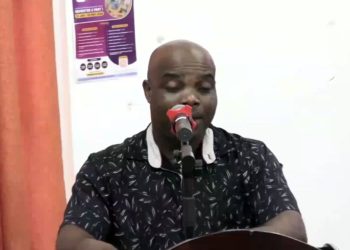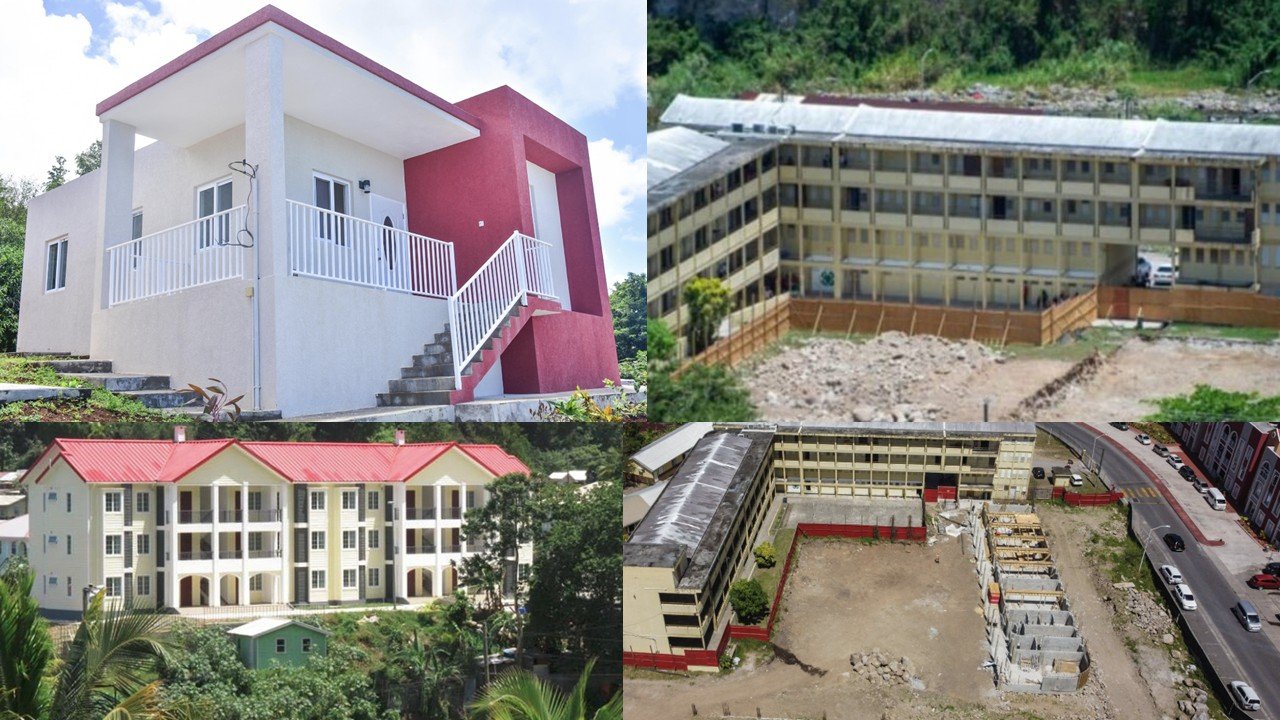

Opposition Senator Delbert Paris has challenged government expenditure figures tied to the national housing programme and the Dominica Grammar School project, calling for greater financial transparency and accountability during a recent parliamentary debate.
While acknowledging the importance of providing citizens with safe and dignified accommodation, Paris questioned sharp discrepancies between revised spending and new funding requests in the supplementary appropriation bill.
According to figures presented in Parliament, the Ministry of Housing and Urban Development had an original capital allocation of approximately $18.43 million for the 2025–2026 financial year, with revised expenditure recorded at roughly $11.8 million. However, the supplementary appropriation reportedly included about $63.1 million for the ministry.
Paris focused specifically on a $32.59 million allocation for the Modern Resilient Housing Development Programme, contrasting that request with approximately $1.3 million in revised expenditure recorded for the initiative at the end of June 2026.
“How do we reconcile that?” Paris asked, arguing that lawmakers require sufficient financial data to explain such wide variances.
The senator also scrutinized the government’s housing delivery record, referencing an earlier commitment to hand over 210 homes by January 2026. He requested clarification on how many units were actually delivered by that deadline and how many were handed over between January and June. Stressing that homes still under construction must not be counted as completed, Paris questioned whether increased spending was translating into measurable results for citizens.
The debate also addressed capital spending on the Dominica Grammar School project. Paris questioned a supplementary allocation of approximately $7.7 million, noting that revised expenditure stood at roughly $140,000 at the end of June 2026. In addition to demanding an explanation for the gap, he renewed calls for accountability regarding a previously reported roof collapse at the school. He raised questions about the management of construction funds, responsibility for the incident, and the status of an investigative report, expressing hope that the Minister of Education would address the outstanding issues.
Concluding his contribution, Paris argued that public investment should be judged by efficiency, timeliness, and tangible benefits to citizens rather than spending totals.
“Development cannot be measured by expenditure alone,” he said. “The amount spent tells what resources were consumed. It does not by itself tell us whether those resources were used efficiently.”
Paris maintained that Parliament cannot properly evaluate public investments without reliable financial data, clearly defined project costs, updated commitments, and measurable outcomes. He called for substantial improvements in the supporting documentation attached to supplementary appropriation bills.
While reaffirming his support for major national initiatives, including the international airport and the housing programme, Paris pointed out that backing national development and demanding financial accountability are not competing positions, but essential responsibilities that must go hand in hand.