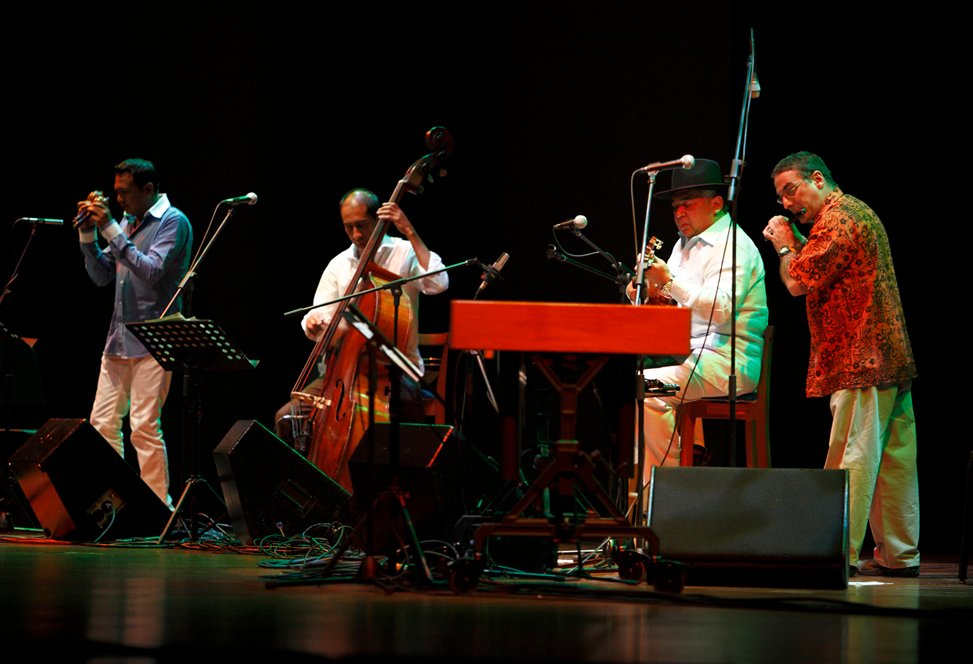
“Music is healing and decisive in situations as complex as this,” says David Peña, double bassist of the Gurrufío Ensemble, which this Sunday will offer, together with the Venezuela Symphony Orchestra, a concert in the Aula Magna of the Central University of Venezuela to raise funds for the affected in La Guaira after the earthquakes on June 24th.
“We were all affected by the earthquakes, although physically – thank God – we are fine,” says the musician, known as “Zancudo.”
After the announcement of the recital, called This is what Venezuela sounds like and organized by Amigos Sinfónico, Peña received a message that made him very happy. A friend, who spent more than 30 hours under the rubble after the building where she lived in Camurí Chico collapsed. He found out about the concert and wrote to tell him that he thought it was a very good idea. He expressed his desire to attend, despite still being convalescing.
“He told me: ‘David, it can’t be, what a wonderful thing. I’m still a little convalescing, but I’m going to try to be there, because there’s nothing better to help us overcome this psychologically than a good concert by the Gurrufío Ensemble and the orchestra.’
This is what Venezuela sounds like proposes a musical journey through the different regions of the country through the songs of the album that they recorded with the Orquesta Gran Mariscal de Ayacucho in 1999 and that the teachers Vinicio Ludovic and Paul Desenne orchestrated. “It will be a very nice recital because, in addition to the fact that there is a charitable motivation, we will be representing through merengues, joropos and drums the wide range of wonderful sounds that Venezuela has,” says the musician.
Although throughout its more than 40 years of experience the Gurrufío Ensemble has tried to cover a good part of the different genres and styles of traditional Venezuelan music, they have focused on the most emblematic ones, which will be the ones that will have the most prominence in Sunday’s recital. “We have concentrated on the most emblematic rhythms of the country, especially the 5/8 merengue, which is a very particular and unique rhythm in Venezuela,” says Peña.
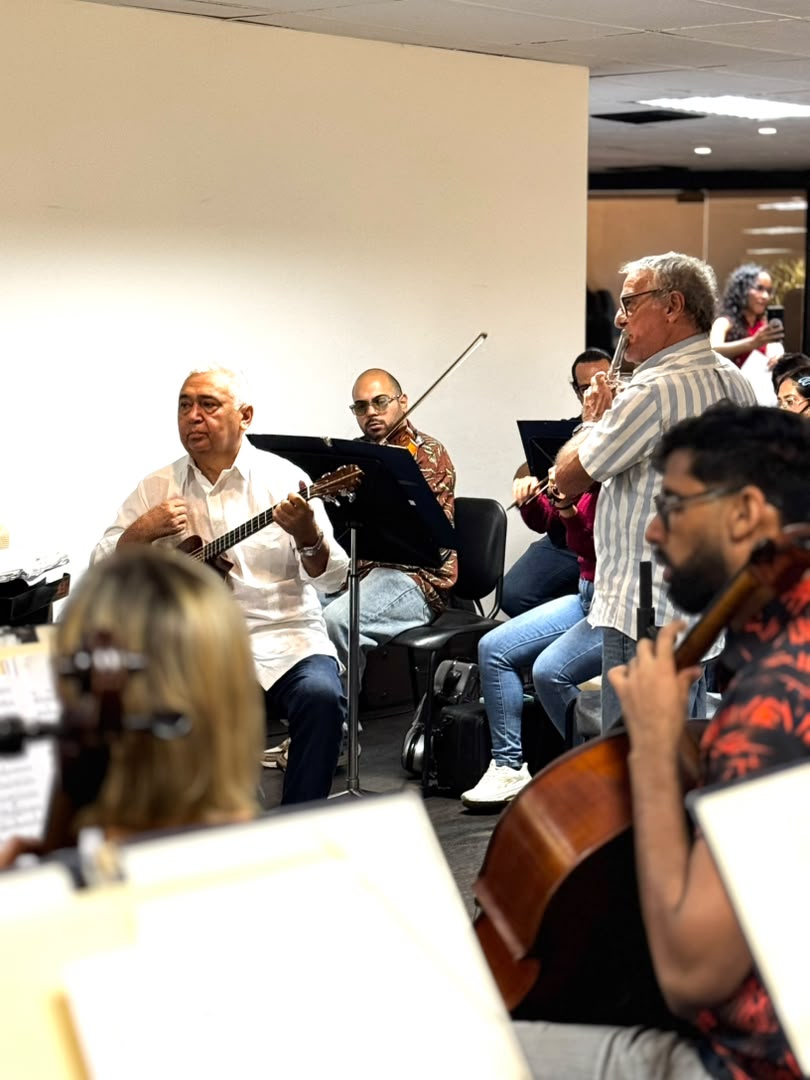
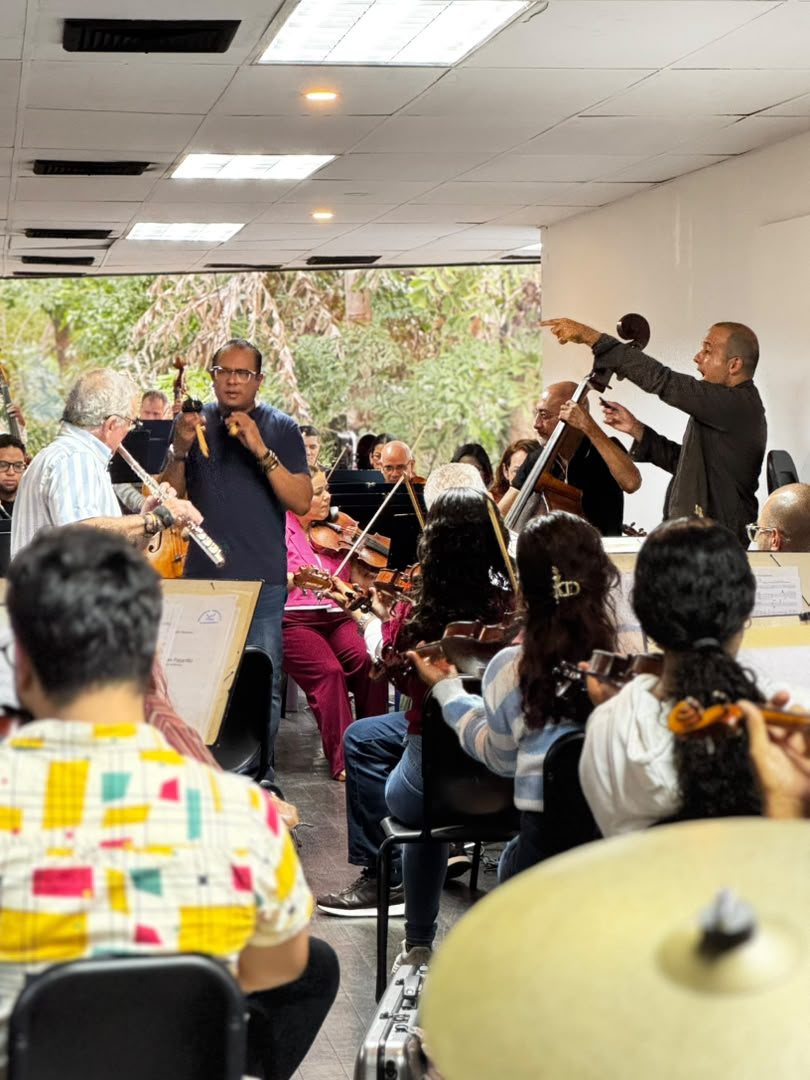
Regarding the interaction between the traditional improvisation and the structured orchestral, the musician says that the arrangements of the songs were so well orchestrated that there is room for both to shine. “The brass have a part in the song ‘Ay Compa’e’, a 5/8 merengue that is quite demanding for the orchestra, in which they have a special participation in which they also improvise.”
“I dare say that we (the Gurrufío Ensemble) have been quite responsible for combining the traditional with the academic, because before there was a Berlin Wall there. It was frowned upon. But that is now over because, simply, music is music,” adds the double bassist.
Although María José Castejón on the maracas and Orlando “el Chino” Reyes on the harp had been announced as guests, the maraquera will not be able to accompany them in the recital. On this occasion, Juan Ernesto Laya, a member of Ensamble Gurrufío, who, although he does not live in Caracas, is in the capital, may be present. The other musicians that make up the group are the flutist Luis Julio Toro and the cuatrista Cheo Hurtado.
In their more than 40 decades of experiencethe members of the Gurrufío Ensemble are satisfied that young musicians see them as references and follow and admire their work. “Historically, Gurrufío has had young followers who have followed the style and form of what we have done. Gurrufío’s style has been a magnet for young musicians in these 42 years. My message to them is always the same: that they continue to develop within traditional Venezuelan music or in the academic world, but that they continue to define their own style within traditional Venezuelan music or what they do in music,” says Peña.
Regarding the perception of traditional Venezuelan music, the double bassist assures that, both inside and outside the country, it is considered a marvel thanks to the versatility of Venezuelan musicians. “There are many young people and many musicians outside the country doing wonders with traditional Venezuelan music or doing other things, but always taking that piece of Venezuela around the world. Wherever they play traditional Venezuelan music it is always successful. People get caught up, they like it and they fall in love with the country.”
Peña also celebrates that musicians of different genres incorporate elements of traditional Venezuelan music in their songs. “Óscar D’León, for example, has had Cuatrista guests in his shows. It is something that has no limits, especially because of the ability that Venezuelan musicians have to understand any type of music. Venezuelan musicians have an impressive ability to adapt. They are among the most versatile in the world.”
The double bassist attributes this characteristic of Venezuelan musicians to the cultural environment that the country offers. “We have a synthesis of so many things with which we have been formed as a society. We have the African, the Spanish, the Arab through Spanish, and our own, which is the indigenous, but also the Venezuelan. We have a totally different personality from many others. Within Latin America we are different in how we think, how we act and how we approach music.”
For next year, the Gurrufío Ensemble plans to work on two new musical projects, which Peña did not want to delve into in order to maintain the surprise. “There are at least two projects that are already in the sauce, almost ready to go. It’s something we’ve been very aware of for a while because we haven’t recorded anything new for a while and we want to do it.”