
One in five godparents in Andorra la Vella alive in an area in bad conditions to access public services. As one points out study commissioned by the common to the Charlemagne University on the conditions for walking in the parish, nearly 80% of the elderly live in neighborhoods where commuting on foot is easy or affordable, while in peripheral sectors and with steeper slopes, difficulties persist in reaching services.
“Hearing who makes them every day (complicated journeys) helps us make decisions”
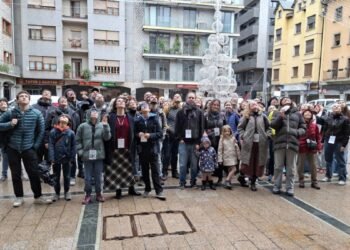
The conclusions of the study were presented yesterday morning at the Congress Center in one of the working sessions of the day Iberoamérica walks for urban health, organized by the municipality of the capital and the Union of Ibero-American Capitals (UCCI). The project involved 13 cities of the Iberian Peninsula and Latin America.
A lack
In the revision process of the parish planning and urbanism plan (POUP)the common already noted the “good quality” of the voravies and of “the pedestrian island” of the central part – that is, theaxis of Meritxell and Carlemany and Prada Ramon-, as well as the “poor connections with the most distant neighborhoods”. In these areas there is “a lack of quality itineraries”, either because “lack of steps” and the presence of too narrow edges, which forces you to “long trips” and takes the most unsafe routes. For citizens with mobility problems, these difficulties are obviously compounded. That is why, among other things, the mobility study of the POOP establishes as a priority the improvement of the connection on foot between the center and the peripheral areas.
“These principles (decalogue) offer a basis for continuing to move forward”
On the other hand, the study of town planning plan points out that the number of passengers of the communal bus line has grown in recent years and points out that each time there is an “increasing presence of bicycles and personal mobility vehicles on the road network”, despite the absence, in both cases, of infrastructures in optimal conditions of quality and safety.
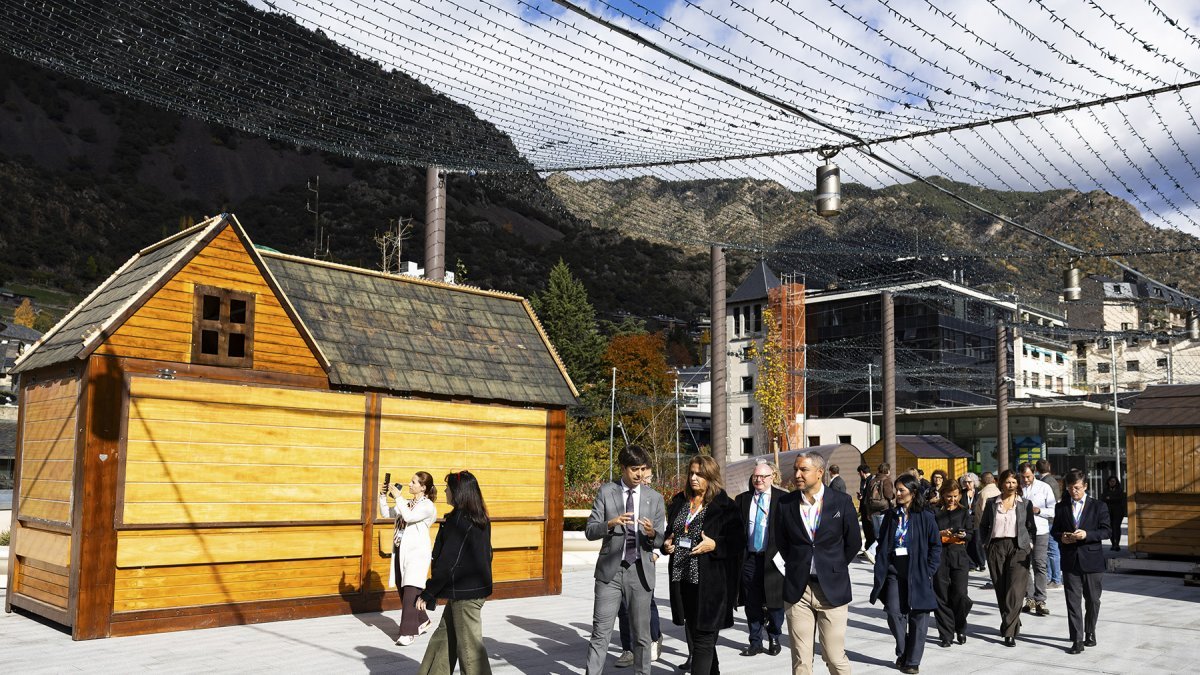
The mayors attending the day.
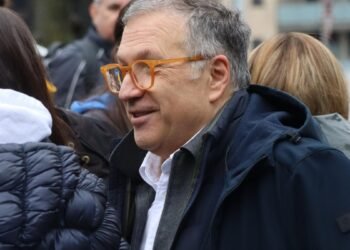
The Consul General, Sergio Gonzalezstressed the importance of studying the entire journeys that citizens usually take before deciding where to intervene. “A person walking to the health center is of little use having an accessible sidewalk if they cannot safely cross the last street. In Andorra la Vella, where the slope conditions many journeys, listening to who makes them every day helps us make concrete decisions“, argued the president.
the day of theUCCI closed with the presentation of a decalogue to help local governments improve walking routes. For her part, the general secretary of the association, Almudena Maílloemphasized the value of the day, pointing out that “these principles offer a basis for continuing to move forward. It will be up to each city to find a way to apply them, taking into account its neighborhoods and its possibilities”. mail he also pointed out that the future of countries depends, above all, on cities, since in regions like Latin America up to 75% of the population is concentrated there.