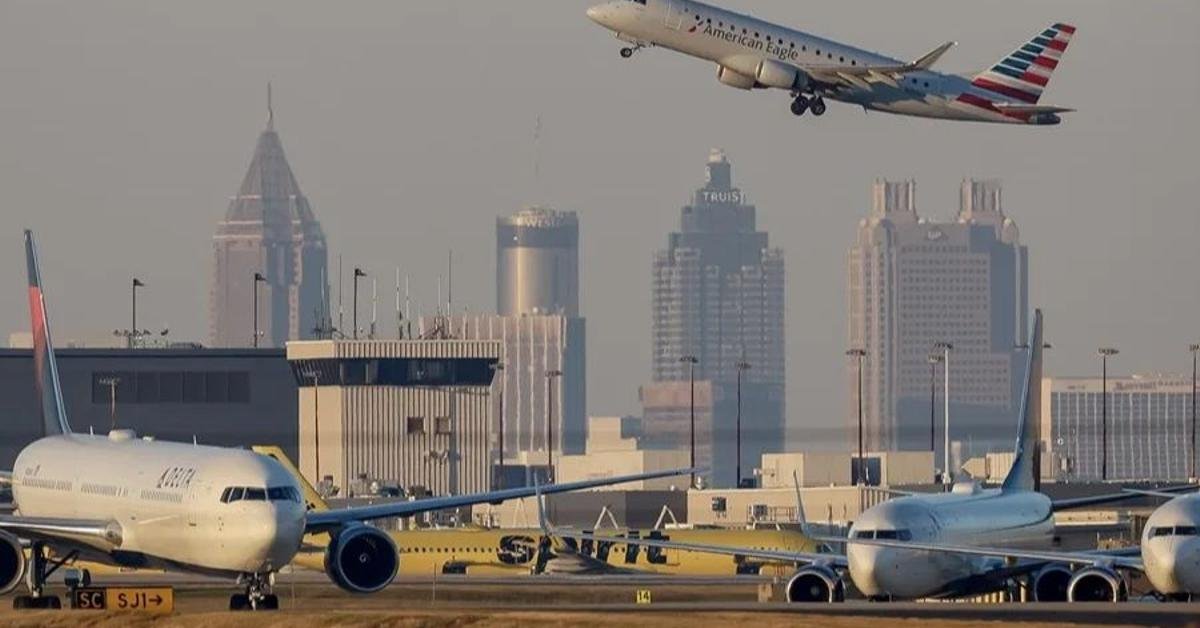
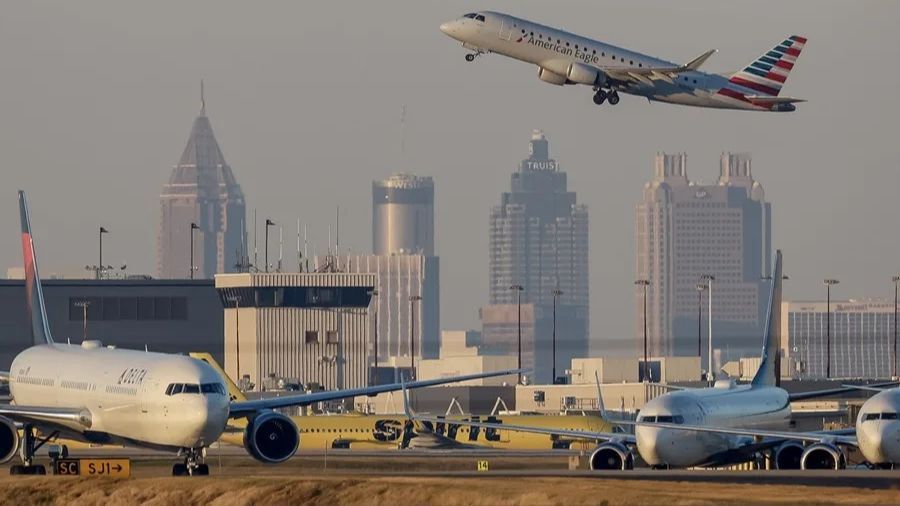
Washington/The Government of US President Donald Trump this Friday attributed the failure that forced takeoffs throughout the United States to be suspended for four hours and caused thousands of cancellations and delays to the obsolescence of air communications systems. The White House demanded another $30 billion from Congress to modernize airport infrastructure and air traffic control systems.
The Federal Aviation Administration (FAA) lifted the suspension at 8:15 p.m. local time on Friday (01:15 GMT on Saturday, November 14), but the resumption of takeoffs did not mean an immediate return to normality.
“It’s going to continue to fail,” Transportation Secretary Sean Duffy warned during a White House conference, referring to the old equipment still used by the FAA.
“It’s going to continue to fail,” warned Transportation Secretary Sean Duffy during a White House conference.
The official defended that the technological renewal must be accelerated to avoid new interruptions, while the Secretary of Homeland Security, Markwayne Mullin, assured that the suspension was decided as a precaution and that “there were never lives at risk.”
More than 6,600 flights had been canceled as of 9:30 p.m. ET on Friday (02:30 GMT Saturday, Nov. 14), according to FlightAware. The suspension caused more than 10,000 delays across the country.
The disruptions will extend into the weekend, with around 1,500 cancellations expected for Saturday.
More than 3,500 aircraft were in the air when the FAA ordered takeoffs stopped. The disruption also affected international connections and cargo operations.
At airports like New York’s JFK, passengers faced long lines to change their reservations and retrieve their luggage.
Duffy explained that a data overload on the FAA’s telecommunications systems caused inconsistencies in the information transmitted by the routers, leading authorities to shut down the network as a preventative measure.
The secretary described the incident as a problem of aging infrastructure, which has not been renovated since 1980, and which did not withstand the load of new technological upgrades.
“The solution we applied gives us a pretty clear indication that this was a problem with an old network that stopped working,” said the Secretary of Homeland Security.
“The solution we applied gives us a pretty clear indication that this was an issue with an old network that stopped working,” he said.
Mullin assured that the authorities had found no evidence of a computer attack against the communications systems that caused the suspension, although he avoided ruling it out completely.
Asked by journalists whether they could say with complete certainty that it was not a cyberattack or an artificial intelligence intervention, he responded: “Right now nothing is certain. It doesn’t seem like that.”
The Secretary of Homeland Security also ruled out a relationship between the FAA ruling and the problems reported in Microsoft Outlook the previous day.
“There is no reason to relate those two things,” he said, as he explained during the appearance.
The official request, presented by Duffy and the director of the Office of Management and Budget, Russell Vought, includes 10.1 billion dollars to modernize air control systems, another 2 billion to renew or replace control towers and 18 billion for airport infrastructure projects, including 10 billion for terminals.
During the appearance, Duffy claimed up to $50 billion.
The secretary repeatedly criticized Congress for not allocating more funds to air infrastructure.
“I can’t build things if I don’t have money,” he said.
Congress had already approved an allocation of $12.5 billion in July 2025 to begin the renewal of FAA systems. However, the Government Accountability Office (GAO), a legislative oversight body, warned in September that the agency still lacked a complete cost estimate and an integrated timeline for executing the project, increasing the risk of cost overruns and delays.
The accumulation of cancellations and the movement of aircraft and crews away from their usual positions threatened to prolong the disruptions into the weekend.
Duffy said he expected trading to improve the following day, although he warned the recovery would be gradual.
Delta announced that it had resumed all its scheduled flights, but recommended that passengers check the status of their journeys before going to the airport.