It’s remarkable to say the least. Four days after Wendy Jap-A-Joe also lost her legal battle for the directorship at the Telecommunications Authority of Suriname (TAS) on appeal, the institution received a visit from a bailiff. On November 3, bailiff Sergio Niekoop, at the request of sawmill De Unite, imposed an enforceable garnishment under TAS for a multi-million dollar judgment from the state. In the lawsuit that preceded the seizure, the state was represented by lawyer Harish Monorath, the then chairman of TAS and signatory of the controversial employment contract with Jap-A-Joe.
Text Ivan Cairo
Image Terence Oosterwolde & CDS
The issue started in January 2017 when the government withdrew timber concessions from De Eenheid due to overdue concession rights. The company challenged the withdrawal and claimed damages. On June 10, 2025, subdistrict court judge Sabitrie Nanhoe-Gangadien ruled that the government had acted unlawfully. The state was ordered to pay more than 3.66 million US dollars, plus 6 percent statutory interest from September 28, 2022.
“The Unit ended up with its enforcement measures at TAS, the institution where Monorath was previously involved as chairman of the commissioner in the employment contract that was central to the recent proceedings against Weendy Jap-A-Joe”
The way in which the state has defended itself in these proceedings deserves special attention. The statement of defense was not submitted in time, after which the judge granted a declaration of non-service. In doing so, the state missed an important opportunity to substantively contest the claim.
There was also hardly any contradiction in the further course of the procedure. The subdistrict court judge stated in the judgment: “The state has not put forward any substantive defense and therefore does not dispute any of De Unite’s statements.” The damage calculation that The Unit had submitted also remained undisputed. The company had initially demanded more than 7.5 million US dollars, but reduced that amount to more than 3.66 million based on an accountant’s calculation.
The judge deemed the withdrawal of the concessions unlawful. However, this did not automatically establish that every damage item stated was eligible for compensation. This is also evident from the rejection of two additional claims due to insufficient substantiation. It is precisely for this reason that it is striking that the state has not substantively disputed the size of the most important damage claim.
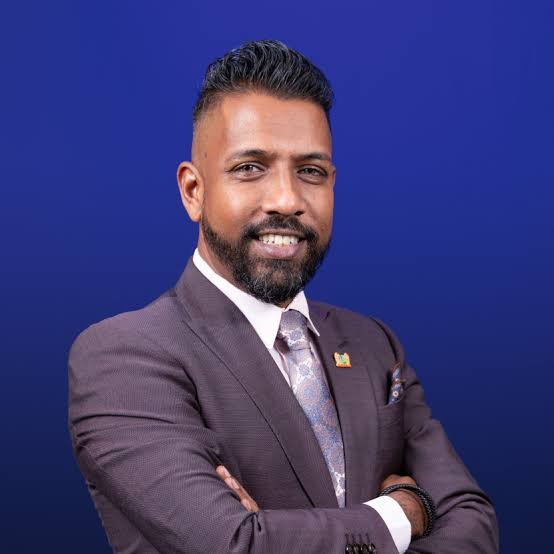
Monorath acted as the state’s attorney in these proceedings. It is not clear from the judgment why the statement of defense was not submitted on time and why the damage calculation remained undisputed. Nor does it appear what instructions he had received from the government. When this edition went to press, Monorath had not yet responded to questions the True Time brought this matter to him.
Bill continues
On January 16, 2026, the judgment was served on the state, with the order to pay within two days. More than nine months later, The Unit had still not been paid. In the attachment writ of November 3, a claim is made for the full allocated principal sum, plus interest and costs. No mention is made of partial payment.
The statutory interest of 6 percent on the principal amount is approximately US$219,600 per year. That’s over six hundred dollars a day. Based on a rough calculation, approximately US$ 175,000 in interest was added between the service of the judgment and the seizure, based on a rough calculation, on a fully outstanding principal amount. In addition, the bailiff mentions more than sixty thousand US dollars in execution costs.
It is not a novelty that the state of Suriname does not implement a court decision in a timely manner. The Public Prosecution Service has repeatedly challenged ministries about this. In February 2023, Attorney General Garcia Paragsingh warned department directors about the high penalty payments resulting from non-compliance with judgments. This issue was also discussed with representatives of ministries in 2025.
In the meantime, the financial consequences continue to pile up. Interest continues to accrue for monetary claims, while penalty payments imposed in other cases can lead to significant additional obligations. Sometimes there are additional costs for seizure and other enforcement measures.
The government is aware of these consequences. Yet judicial convictions sometimes remain pending for a long time. Whether this is due to a lack of money, administrative problems, insufficient coordination or deliberately delaying payment varies from case to case. In the De Eenheid case it is not clear why the state did not make (full) payment after notification in January.
The additional costs are ultimately paid from public funds. As far as is known, there is no public accountability for the financial damage caused in this case by the failure to pay on time.
“It is not new that the state of Suriname does not implement a court decision in a timely manner. The Public Prosecution Service has repeatedly confronted ministries about this”
Other Monorath involvement
The name Monorath also appears in another legal file that has received a lot of attention in recent weeks. As then chairman of TAS, he signed the employment contract with Wendy Jap-A-Joe in 2021. This stipulated, among other things, an employment contract for an indefinite period, with a notice period of 24 months and compensation of 36 months’ salary in the event of termination under certain circumstances.
The agreement recently became a major point of contention when Jap-A-Joe’s term as director expired. The judge ruled that her statutory five-year appointment term had ended by operation of law on October 19, 2026. The employment contract could not yet grant her an unlimited right to directorship.
The establishment of the employment conditions also encountered legal objections, including due to the required ministerial involvement and approval by the Council of Ministers. On October 30, the Court of Justice confirmed the previous court decision. Jap-A-Joe had to accept the end of her directorship and the transfer of company assets and information.
Seizure under TAS
Four days after that ruling, the bailiff appeared at TAS. The seizure was made of all monies, monetary values and goods that TAS might owe or become liable to the state or had or would acquire for the state.
TAS is an independent legal entity, but under the Telecommunications Facilities Act it has a legal obligation to annually pay the surplus, after deduction of operating costs and reservations, to the state. Such state claims may be eligible for third party attachment under the legal conditions.
The attachment is therefore not aimed at TAS as debtor of The Unit, but against any assets of the state that are held by TAS or to which the state can claim against TAS. The bailiff has instructed TAS to retain the affected funds and goods and to make a statement after no later than four weeks about the claims and items affected by the seizure.
Responsibility
The events also expose the government’s responsibility for its legal interests. In the De Eenheid case, a claim worth millions was hardly contested substantively, resulting in a conviction. Then, more than nine months passed after the judgment was served, without full satisfaction, while interest continued to accrue.
The supervision of the proceedings, the instructions to state lawyers and the implementation of judicial decisions are among the responsibilities of the government. The financial consequences of shortcomings in those areas are not limited to the original compensation.
De Unit has now ended up with its enforcement measures at TAS, the institution where Monorath was previously involved as president of the employment contract that was central to the recent proceedings against Jap-A-Joe. The ruling on appeal dates from October 30. The third party seizure followed on November 3. It is currently unclear whether there is a connection between these developments or whether it is simply a coincidental coincidence.