– Where are the penguins?
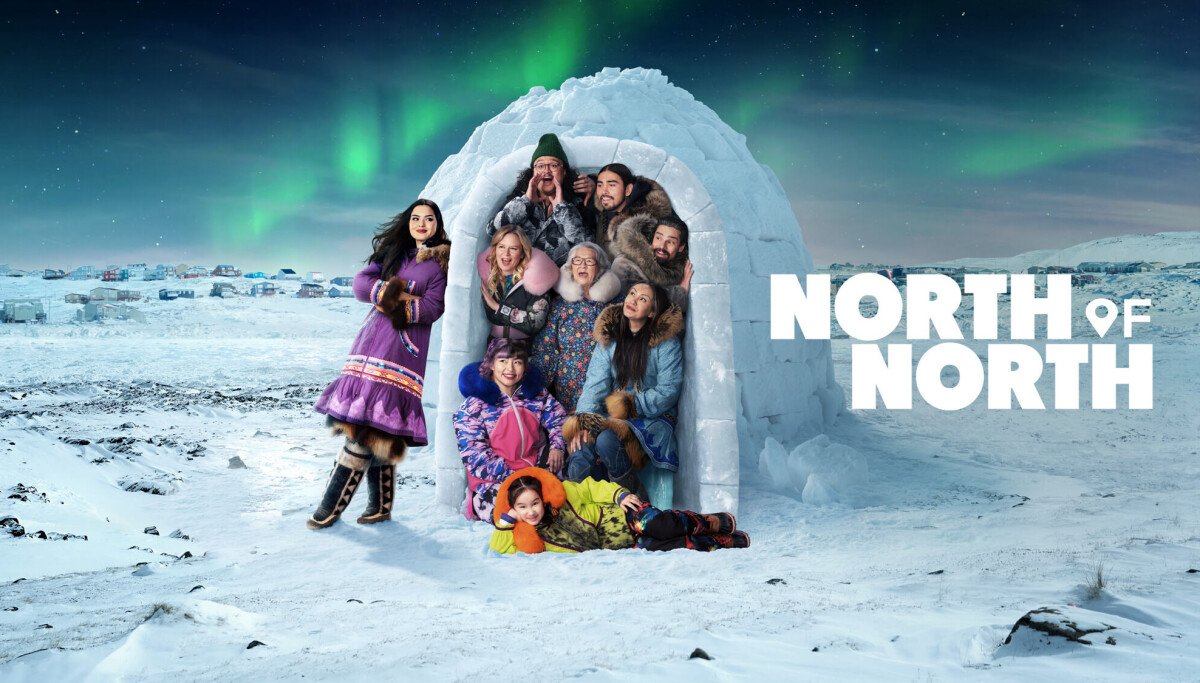
The question comes from tourists visiting the arctic community in the Netflix series “North of North”. It may be meant as an innocent question, but for many Inuit it is also a well-known misunderstanding.
– Where are the penguins?
The question comes from tourists visiting the arctic community in the Netflix series “North of North”. It may be meant as an innocent question, but for many Inuit it is also a well-known misunderstanding.
No, there are no penguins in Greenland. And that’s not the case in Nunavut, where the series is set, either.
It is precisely these kinds of small situations that make “North of North” so recognisable. The series pokes fun at the notions that outsiders may have about life in the Arctic, and at the same time lets the Inuit tell the story themselves.
However, it is not only the humorous situations that make an impression.
When the actors speak Inuktitut, and the language is allowed to fill the dialogue, it is hard not to be moved. It is something special to hear one’s own mother tongue on an international streaming service, where it does not have to be translated into a Western reality in order to be meaningful.
The Mother of the Sea, tunniit and the cultural traditions are not just small props in the background. They are a natural part of the universe in which the characters live.
As an Inuk living in Greenland, it gives me a sense of pride to see these elements displayed with such naturalness.
Ask the elders – not ChatGPT
In the series, students are given the task of writing about climate change. The teacher gives them a message that encapsulates an important part of the Inuit understanding of life:
“Don’t use ChatGPT. Ask the elders.”
It’s a small remark, but it says a lot. The experiences and knowledge of the elderly have a value that cannot necessarily be found in books or can be retrieved by artificial intelligence.
In a world where western and academic knowledge is often given the greatest place, it is liberating to see a series that reminds us of the importance of the knowledge that has been handed down through generations.
It is also noteworthy that the Greenlandic mask dance, uaajeerneq, finds its way into the series.
Although we as Inuit share many cultural roots, our society also has different traditions and expressions. Therefore, it is interesting to see how the series makes room for cultural elements that extend beyond the local society it depicts.
An arctic soundtrack
It is not only through the language and traditions that the connection between the Arctic societies becomes clear. The music also plays an important role in the series.
The Greenlandic artist Tûtu is represented with the song “Nuuk”, which is part of the series’ soundtrack together with music from a number of other Arctic artists such as Elisapie and Tanya Tagaq.
The soundtrack also contains a more wistful moment. The late Inuit artist Kelly Fraser performs with her version of Rihanna’s “Diamonds”. Kelly Fraser died by suicide in 2019, so it is particularly touching to hear her voice given new life in the series.
For me, it also gives the music an extra dimension. Suicide is a serious and present problem in Greenland, and therefore it is particularly striking to be reminded of an artist whose voice and music still lives on.
It will be a moment when the series goes beyond entertainment and reminds us of the people and stories that also exist in our Arctic society.
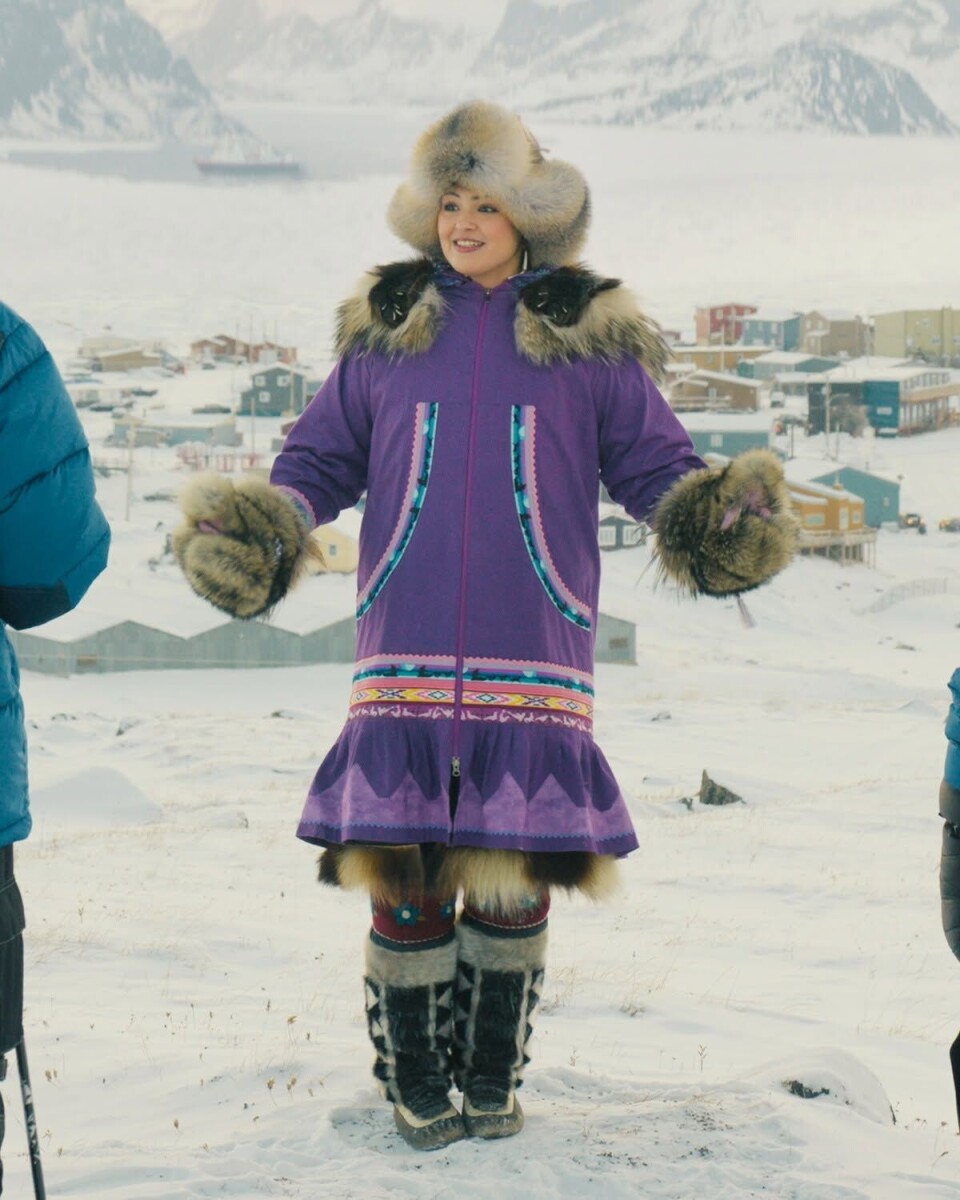
The series also has plenty of humor. Among other things, foreigners learn that “anaq” means hello, even though it doesn’t. It is the kind of small cultural encounters that create laughter and make the series’ humor both alive and recognisable.
But behind the humor there are also stories about people struggling with life. Among other things, the main character meets a sister she has never known, after their mother previously had to give her up due to alcohol-related problems. It adds an emotional layer to the series, where the choices of the past and family break-ups have significance for the present.
“North of North” does not attempt to portray a perfect Arctic society. The characters are allowed to be fallible, embarrassing and complicated. The series contains many stories about love, motherhood, alcohol problems and family secrets. It creates a living universe, although individual stories could well have deserved more space.
Inuit are the main characters
As the episodes end, I’m left with a sense of pride. A special kiisami feeling – kiisami means “finally” in Greenlandic.
Not because North of North portrays a flawless society, or because all the stories end happily. But because the Inuit are allowed to be the main characters in their own story.
They speak their own language, laugh at their own jokes, display their traditions, and struggle with problems that people everywhere can recognize.
It’s a romantic comedy, yes. But it is also a series that shows how much culture, language and community matter.
And that is perhaps its greatest strength.