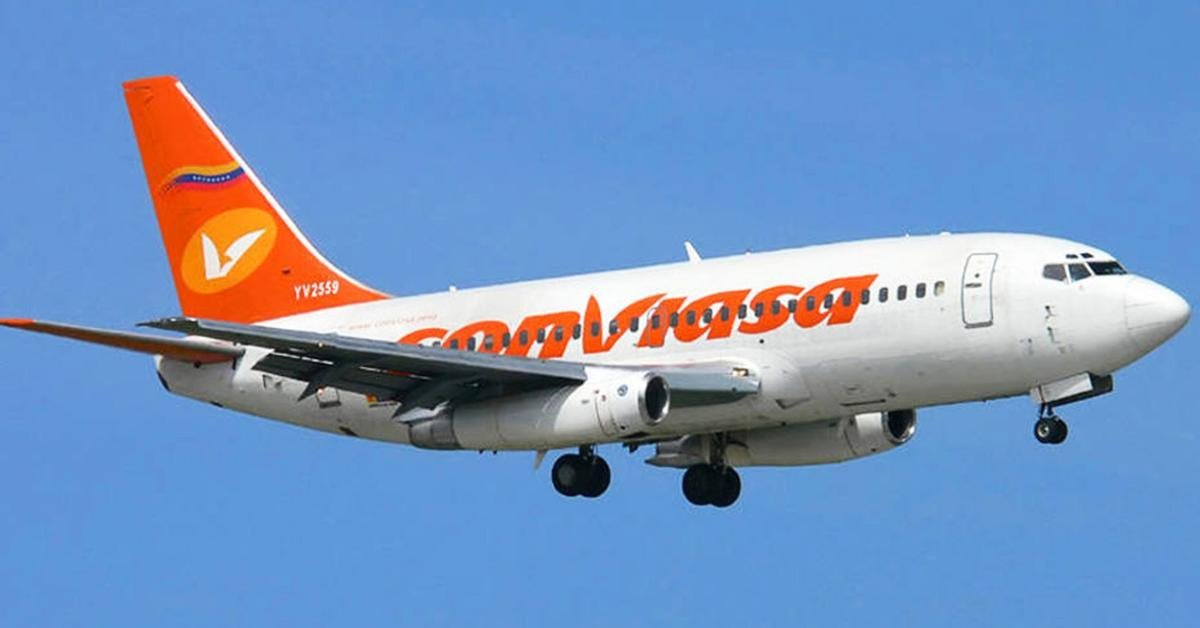

Madrid/The Venezuelan state airline Conviasa advertisement which will resume its flights between Caracas and Havana next Friday, November 13, despite the shortage of kerosene at the airports to refuel the planes at least until December 1, according to aeronautical notices issued by the Cuban Air Navigation Company. The company plans to operate two weekly frequencies, on Wednesdays and Fridays, as reported this Monday by the specialized media. Aviationline.
While Conviasa prepares its return to Havana after a two-week interruption, the Spanish tourism group Iberostar, owner of World2Meet (W2M) and owner of the tour operator Newblue, has canceled its programming to Varadero from Portugal due to the deterioration of operating conditions on the Island, which already forced it to abandon the management of all its hotels on the Island at the end of the first half of this year. Now it has decided to replace Cuba by Isla Margarita, in Venezuela.
The Spanish tourism group Iberostar, owner of the tour operator Newblue, has canceled its programming to Varadero from Portugal due to the deterioration of operating conditions on the Island
It will be World2Fly, also owned by W2M and which suspended its flights between Madrid and Havana in Mayin charge of operating a weekly charter between Lisbon and Margarita Island since June 1, 2027, with a 355-seat Airbus A330. Newblue will market vacation packages from 1,490 euros per person.
Conviasa’s route was interrupted when it decided to concentrate on domestic flights. Venezuelan media attributed the suspension to the high operating costs of its Airbus A340 and the low passenger demand. The connection with the Cuban capital was then partially covered by the Venezuelan capital. Rutaca, which operates from Valenciastate of Carabobo. The state company will also resume its services to Mexico City on November 17, with a weekly frequency.
Among the travelers interested in connections with Venezuela are Cubans who buy goods on Margarita Island to resell them at home. In August, many travelers they were looking for information about accommodation, transportation and products to purchase in Valencia, especially hardware items and solar panels. Offers for shopping packages starting at $720 were also circulating. There is no data that allows us to establish how many Conviasa passengers use the route for that purpose.
The return occurs in the midst of the fuel crisis for commercial aviation in Cuba
The return occurs in the midst of the fuel crisis for commercial aviation in Cuba. The aeronautical notices, identified as Notam A3875/26 to A3884/26 and issued on October 30, maintain the unavailability of Jet A-1 kerosene until 04:00 UTC on December 1, a restriction that affects ten airports, including those in Havana, Varadero, Santa Clara, Camagüey, Holguín and Santiago de Cuba. He corresponding notice to the José Martí airport in Havana confirms that date.
The measure does not imply the closure of the terminals. Companies can load enough fuel for the round trip or make technical stops in other countries. Conviasa has not publicly explained how it will supply its flights to Havana. Copa Airlines additional fuel load in Panama to complete both journeys without refueling in Cuba, as do the US airlines that maintain their routes to the Island. The extra weight forces them to slightly reduce passenger capacity and dispense with part of the commercial cargo.
Conviasa had already modified its operations due to this problem. In February, rescheduled his flights between Caracas, Havana and Managua from the 10th to the 19th of that month. The company itself attributed the changes to a Cuban aviation advisory regarding fuel supplies and to Nicaragua’s new immigration requirements.
Among the most affected companies is Air China, which maintains the Beijing-Madrid-Havana route, but accumulated cancellations in October that left dozens of Cubans stranded in Spain. The airline uses Nassau, in the Bahamas, to refuel on the return journey from Cuba. The works on a runway at that airport complicated operations and forced the organization of a extraordinary flight to pick up affected passengers. The Chinese Embassy attributed the suspensions to technical reasons.
In Spain, Iberia will keep your connection canceled direct with Havana until the end of June 2027, due to the drop in demand and operational difficulties, while Air Europa continues to fly from Madrid, with a technical stopover in Punta Cana, Dominican Republic, to refuel on the return journey to Spain.
US airlines have not escaped the crisis either, although American Airlines and Southwest maintain connections with the Island. The former maintains flights from Miami to several Cuban cities, while the latter continues to link Tampa with Havana. Both can operate without depending on supply at Cuban airports.
Delta, on the other hand, eliminated in June its Atlanta-Havana route and reduced its frequencies from Miami by half. Subsequently, solicitous keep part of its flight permits unused during the winter season, from October 25, 2026 to March 27, 2027, alleging that market conditions had not improved sufficiently.
The main Canadian airlines, including Air Canada, WestJet and Air Transat, also suspended their operations to Cuba, while other international companies have had to resort to alternative routes or reduce their frequencies.
The lack of fuel coincides with the collapse of international tourism. In September they arrived in Cuba just 27,354 touriststhe worst result for that month since comparable records exist, with the exception of the pandemic years.