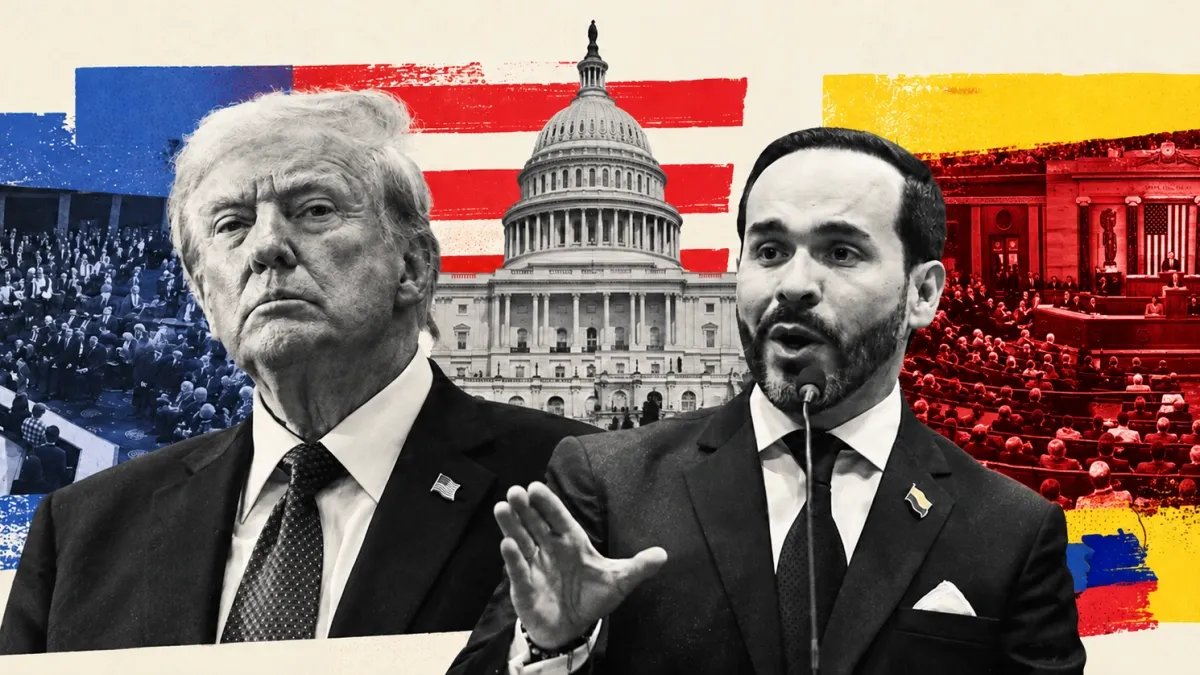
That the Democrats were going to have a good night in Tuesday’s legislative elections was something that was anticipated. What no one imagined, not even themselves, was the enormous size of the tsunami that was unleashed during a historic day in which They largely regained control both the House of Representatives and the Senate.
A referendum against President Donald Trump, but also against the Republicans who have supported his policies during these 22 months that he has been in the White House. So great was the so-called “blue wave”, and so extensive its penetration, that it is being compared to the worst defeat that the Republican Party has suffered in its modern history: that of 1976 after the Watergate scandal that caused the resignation of President Richard Nixon.
READ ALSO
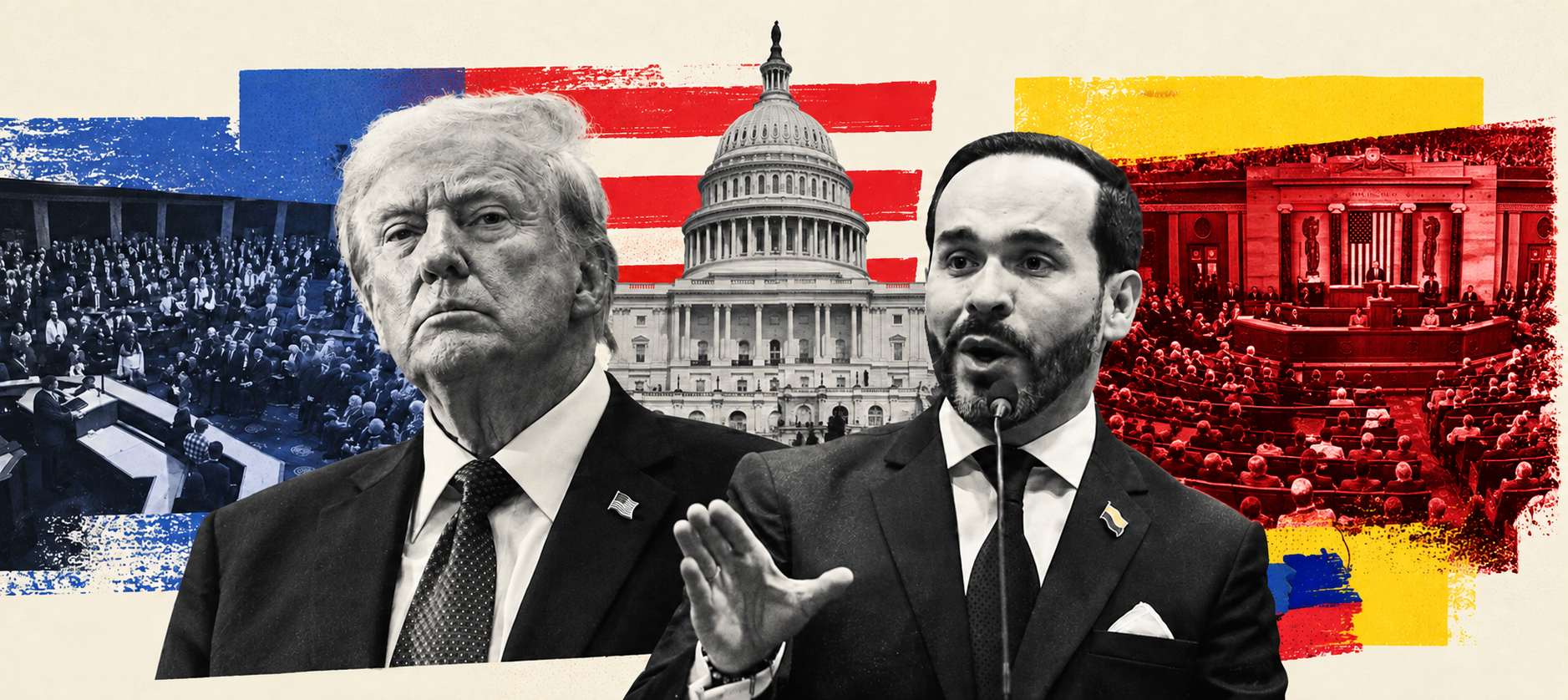
The numbers speak for themselves: in the House, Democrats have a projected majority of 259 votes compared to 176. In the Senate, they already have 54 seats secured, with the possibility of adding two more (Alaska and Mississippi). At the governorate level, They recovered 5 and there are at least 28 states (possibly 30) in which they will exercise power. Even more surprising: the tsunami swept away the Republicans in traditionally red states like Kansas, where they had not lost for 94 years; Texas, with more than three decades in power; South Carolina, Iowa, North Carolina, Alaska and even Mississippi, although the last two are yet to be determined with Democrats leading the count.
As former President Barack Obama once said, elections have consequences. Starting January 3, 2027, Democrats will have more control over the budget and greater powers to oversee the administration. Something that foresees wide repercussions, not only at the domestic level, but also in the international arena.
Polling stations in Ann Arbor, Michigan. Photo:AFP
Colombia, one of the main US partners in the region, will be no exception. Although Trump will exercise great power, especially in foreign relations and trade issues, The new Congress will have a very relevant role on critical issues such as tariffs, access to critical minerals, as well as cooperation in the fight against drug trafficking and organized crime. At the same time, Trump emerges weakened for the last years of his government and leading a party that could begin to distance itself.
This same week, Vice President JD Vance, who is rumored to be a candidate for the 2028 presidential election, attributed the defeat to the war with Iran, a direct criticism of his boss.
This “new world” that begins in 2027 does not necessarily imply that Colombia will lose support. In fact, the country has enjoyed broad bipartisan support for decades.
Even during his first administration (2017-2021), Trump tried to cut aid to the country in their budget projects, but the resources were restored with bipartisan support. Additionally, the congressmen who head the key committees for Colombia, including Gregory Meeks and Chris Coons on the Foreign Relations Committee, and Senator Tim Kaine, know the country very well. The obvious, of course, is that Democrats come with their own priorities.
United States elections Photo:
What I would change
Adam Isacson, an expert on hemispheric security at the Washington Office on Latin America (WOLA), warns that The legislators who will assume key positions are pragmatic figuresalso concerned about the expansion of drug trafficking and organized crime.
“People like Gregory Meeks or Tim Kaine are moderate politicians,” says Isacson, who, to place them on the Colombian political spectrum, compares them with Sergio Fajardo or Carlos Fernando Galán. Center or center-left leaders who, in addition, would like to recover the bipartisan spirit that characterized the relationship during the years of Plan Colombia. In other words, their arrival does not imply that they will hinder any initiative by Trump or the Colombian Government. In fact, could support more active military cooperationas long as you have clear objectives, limits and supervision.
READ ALSO
The power accumulated by the ELN, the dissidents and the Gulf clan, explains Isacson, is a shared concern that generates a willingness to help the country. The difference is in how to do it.
Voting in Arlington, Virginia. Photo:AFP
“There is a refusal in the Democratic Party to simply say that they are all terrorists and we have to wipe them out,” says the analyst, who believes that also there would be resistance to security formulas like mass incarceration.
That does not mean that the party has a fully articulated alternative. Isacson recognizes that he still needs to develop a more concrete vision to confront insecurity in the Americas and resolve the differences between a progressive wing, more inclined to negotiations, and a moderate one, more willing to support military aid and force.
But there are principles that could guide that approach. Among them, that the fight against crime involves the entire State, respects human rights and international law, and does not fall solely on the military and police.
Drill of the United States and Colombian Armies. Photo:Courtesy
A reading that coincides with that of María Claudia Lacouture, president of the Colombian American Chamber of Commerce, who considers that The change of majorities does not modify the policy of the Executive regarding tariffs, trade or security, but it does change the interlocutors and the conditions of the discussion in Washington: “There will be more questions and conditions about human rights, peace, labor rights, rural development and military cooperation.”
For Colombia, this condition would have concrete consequences. If evidence of extrajudicial killings or other serious abuses emerges, Isacson anticipates, Democrats could impose strict limits on the flow of aid. In turn, the Administration’s decisions would be subject to much greater scrutiny. Requests for documents, appearances by officials and hearings would allow the objectives, costs and legal basis of the operations that Washington promotes in the region to be examined.
The unknown, according to Isacson, is whether Trump will be willing to work with Democrats to build that bipartisan policy. For the Colombian Government, the challenge will be to understand that support for the fight against crime can be maintained, but that must respond to new demands in terms of methods and results.
The Colombian ambassador in Washington, María Consuelo Araújo. Photo:Chancellery
Precisely for this reason, Lacouture believes that Colombia must strengthen dialogue with both parties. This requires approaching both Democrats and Republicans, bringing “facts, figures and verifiable results.”
His recommendation is to preserve a state relationshipthat transcends partisan or ideological affinities. A task that involves explaining how cooperation with Colombia also contributes to US interests and demonstrating its results in security, trade and development.
In Washington’s new scenario, allies will continue to be important. But, as Lacouture suggests, the work will consist of turning that closeness into a concrete agenda that has bipartisan support.