Madrid/Kenya has for the first time linked the closure of its embassy in Havana and the transfer of its diplomatic operations to Jamaica with the “administrative and operational difficulties” derived from the US sanctions against the Government of the Island. This was explained by the Kenyan permanent secretary of Foreign Affairs, Korir Sing’oei, according to the local newspaper reported The Star.
Sing’oei stated that the effects of the sanctions had complicated the work of the mission in Cuba. During a bilateral meeting with the Chief Foreign Minister of Barbados, Christopher Sinckler, the Kenyan official assured that the decision responded to “the need to provide temporary operational relief to the staff of its embassy in Havana.” The meeting was held on the sidelines of the Commonwealth Heads of Government Summit, in St John’s, Antigua and Barbuda.
The explanation contrasts with the initial Nairobi version. When Kenya inaugurated its first resident High Commission in Kingston in July, the Foreign Ministry presented the step as a way to expand its presence in the Caribbean and strengthen ties with the region. The Foreign Ministry then spoke of a “fluid transition” of its operations from Havana. Sing’oei’s words shed new light on that decision.
The Kenyan ministry did not specify what difficulties its diplomats faced in Cuba, but the Washington sanctions They have contributed to complications in financial operations, particularly in relation to international banking and access to goods and services.
The Kenyan official assured that the decision responded to “the need to provide temporary operational relief to the staff of its embassy in Havana.”
Kenya has repeatedly condemned the US policy of pressure on Cuba. On October 27, its deputy permanent representative to the UN, Ambassador Yabesh Monari, stated during the General Assembly debate that “the embargo and unilateral sanctions inflict indiscriminate suffering on the civilian population.” The next day, Kenya voted in favor of the Cuban resolution calling for ending the embargo.
The Kenyan Embassy in Havana It was inaugurated in 2016 by then-president Uhuru Kenyatta and was the first diplomatic mission of the African country in the Caribbean. Its closure, announced last Augustput an end to ten years of permanent representation in Cuba. Ambassador Karisa Mwenda, who was stationed on the Island, became the first resident representative of Kenya in Jamaica, in addition to being accredited in Cuba with concurrent status, while Havana will retain its embassy in Nairobi.
Cuba and the African nation have maintained close relations for decades, especially in health cooperation, since Cuban doctors have worked in Kenyan health centers while Kenyan professionals have trained on the Island. But that bond went through a conflictive episode a few years ago.
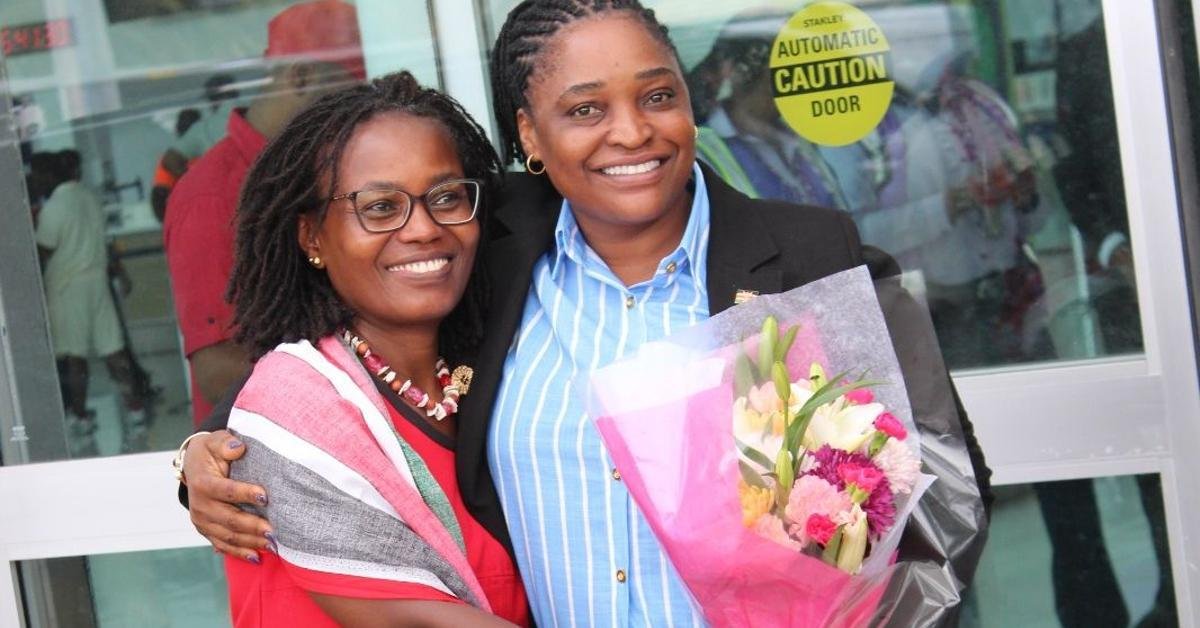
Ambassador Karisa Mwenda, who was stationed on the Island, became the first resident representative of Kenya in Jamaica
The surgeon Landy Rodríguez Hernández, from Villa Clara, and the specialist in Comprehensive General Medicine Assel Herrera Correa, from Las Tunas, were kidnapped on April 12, 2019 in Mandera, in northeastern Kenya, near the border with Somalia, and later transferred to Somali territory.
Both were part of a contingent of a hundred Cuban doctors who arrived in 2018 through a bilateral agreement. The authorities of the two countries They attributed the kidnapping to the jihadist group Al Shabab. In February 2024, the organization stated that Cubans They had died in a bombing American in Somalia, something that Havana never managed to confirm.
Despite this, there was no rupture between Havana and Nairobi. In 2022, both governments they agreed to renew health cooperation and, in September 2023Kenyan President William Ruto met with Miguel Díaz-Canel in New York and highlighted the benefits of Cuban aid for the development of his country. That same year, Nairobi decided not to renew the agreement to hire Cuban doctors, but the health collaboration continued. In June 2025the Kenyan Ministry of Health reported that both governments were studying expanding it to research, biotechnology and pharmaceutical production.