Finland’s government has agreed its final spending framework before the next election, combining cuts to health and social services with housing support, transport projects and higher defence spending.
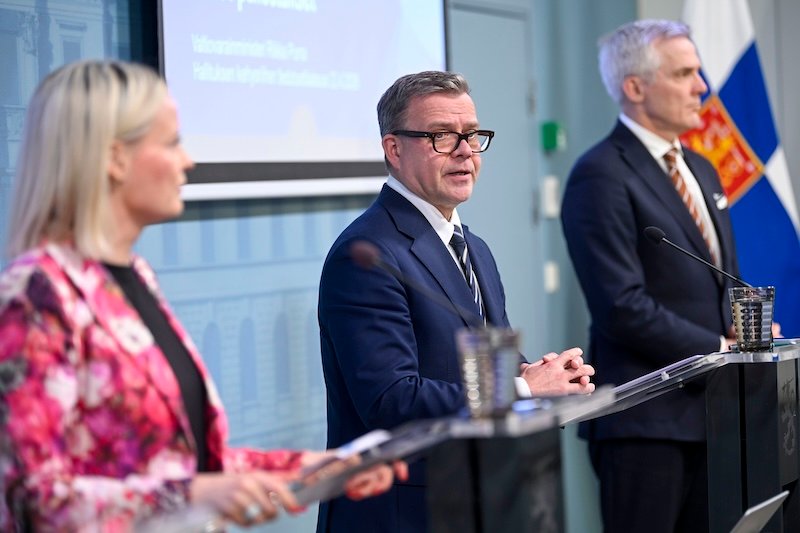
Prime Minister Petteri Orpo and Finance Minister Riikka Purra said the plan for 2027 to 2030 responds to weak growth, higher fuel costs, war in Europe and rising debt costs.
At a press conference in Helsinki on Tuesday, Orpo said the government had little room to act.
“What depends on us, that we will do. We will do everything that is necessary for Finland and Finns,” he said.
Purra pointed to projections showing interest payments on state debt rising from €3.2 billion in 2026 to €6.3 billion in 2030. “Debts will be paid,” she said. The state budget deficit is put at €13.2 billion in 2027. State debt is forecast to reach about €264 billion by the end of 2030.
The package includes about €540 million in new savings by 2030. Central government operations face a phased cut starting at €60 million in 2027 and rising to €166.5 million in 2030. Municipal grants for basic services will also be reduced.
Health and social care face about €240 million in savings. Health centre fees will rise by 20 per cent. Outpatient clinic fees will rise to €78.40. Day surgery charges will rise to €257.20. New fees will apply for special examinations, body storage and cause-of-death investigations. The changes are expected to raise €88 million in 2027 and €106 million a year from 2028.
Support for social and health organisations will be cut by €50 million next year, taking the long term annual reduction to €190 million. Wellbeing services counties will receive €25 million to distribute to groups in the sector.
The government is also trying to lift the housing market and construction. The household tax deduction will rise for 2026 and 2027, with the maximum moving from €1,600 to €2,100 and the deductible share rising from 35 per cent to 40 per cent. The state will also provide €110 million across 2026 and 2027 for repair construction and energy upgrades.
First-time buyers will face lower entry barriers. The self-financing requirement for ASP loans will fall from 10 per cent to 5 per cent. Loan periods will be extended to 40 years. State guarantees on housing loans will also increase.
The government confirmed a reform of pension insurance for the self-employed. From 2028, entrepreneurs will be able to base contributions on taxable earned income or on the current calculated work income. The reform is expected to increase state spending by about €80 million.
Other measures include €20 million for training vouchers for the long term unemployed, €20 million more for youth employment vouchers and plans to hire 500 extra summer workers or trainees in the public sector. Earlier tax cuts for companies will remain in place, with corporation tax due to fall to 18 per cent next year.
Defence spending will rise by more than €1.1 billion across 2027 to 2030. The package includes more money for drone defence, military readiness and equipment. Finland will also provide €300 million in additional military support to Ukraine. The Border Guard will receive €18 million for unmanned air and surface systems, most of it funded by the European Union.
Transport investment also forms part of the plan. The government listed 18 projects, with a focus on eastern and northern Finland, and set aside €112 million for infrastructure linked to military mobility.
Purra said the overall tax burden would still fall over the electoral term. At the same time, the government confirmed further rises in tobacco and alcohol taxes in 2027. She also warned that the next government would face a large adjustment task, which she put at around €10 billion.
HT