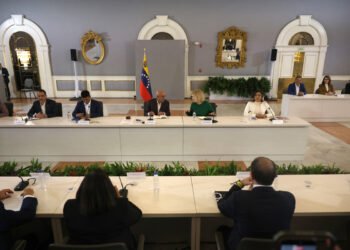
Representatives of the interim government of Delcy Rodríguez and the delegation of the parliamentary opposition concluded a third round of negotiations this Wednesday with agreements to undertake a “deep review” of the legal framework that governs political activity, administrative disqualifications and criminal legislation in the country.
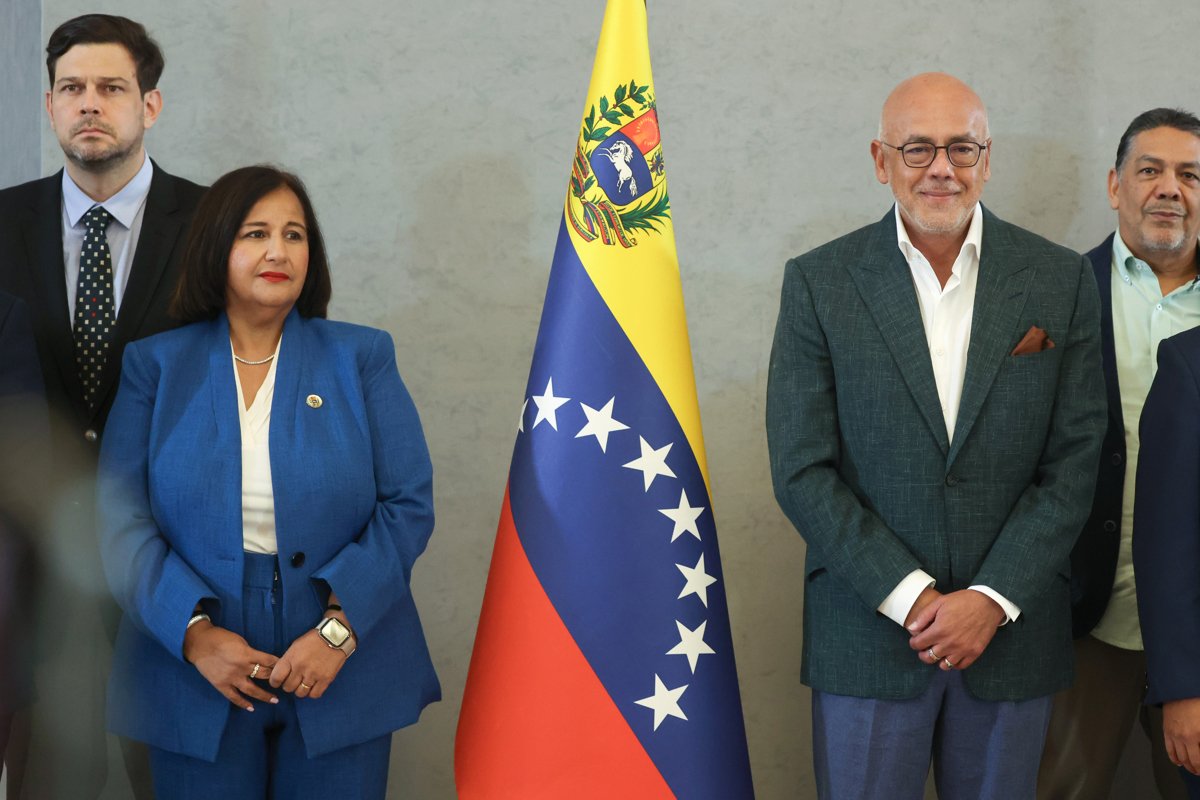
The announcement was made known through a joint statement signed by Dinorah Figuera, head of the delegation of the National Assembly elected in 2015, and Jorge Rodriguezpresident of the ruling Parliament.
The statement ratified the commitment to swear in the Judicial Nominations Committee this Thursday before the legislative plenary session, after completing the selection of 12 representatives from civil society.
According to the official balance of the table, the work cycle covered six operational days, two plenary sessions and 15 meetings distributed among four technical commissions.
Rodríguez specified that this October 22, the Legislative Branch will formalize the swearing-in of the body in charge of evaluating and selecting the candidates to occupy the chambers of the Supreme Court of Justice (TSJ). The 12 civilian spokesmen will be integrated with the 11 deputies to form the final list of candidates for main and alternate magistrates.

Reforms to four legal instruments
The delegations agreed to advance the reform of four laws aimed at rebuilding the institutional ecosystem. The first corresponds to the Law on Political Parties, Public Meetings and Demonstrationswith the purpose of guaranteeing the legalization of organizations and the free exercise of citizen militancy.
The second text under technical evaluation is la Organic Law of the Comptroller General of the Republic and the National Fiscal Control Systemspecifically in the provisions that authorize the imposition of political disqualifications on opposition leaders through administrative means.
The legislative agenda also includes the Simón Bolívar Organic Law and the Organic Law against Organized Crime and Financing of Terrorismin order to specify and adapt the definition of the crime of terrorism, a legal figure used in criminal cases opened against political, union and civil society actors.
In parallel, both sectors began to design the creation of the Ombudsman of Political Guarantees and Citizen Participationconceived as a specialized body to monitor and protect the exercise of civil rights.
The review of the Comptroller’s sanctioning regime responds to one of the core demands of the democratic opposition to restore the rights of passive suffrage, while the criminal redefinition of terrorism seeks to avoid the criminalization of dissent.
Both steps, along with the restructuring of the TSJ, represent the first formal agreements of the dialogue to unblock the schedule for future electoral elections.
It was also agreed to form a joint commission to deal with the institutions of the United Kingdom. the unlocking of gold held in the Bank of England.