It is proposed to strengthen schools and cultural centers… Former Ambassador Driancourt:
The firmness option was released with Sansal and the hugging option failed with Glez
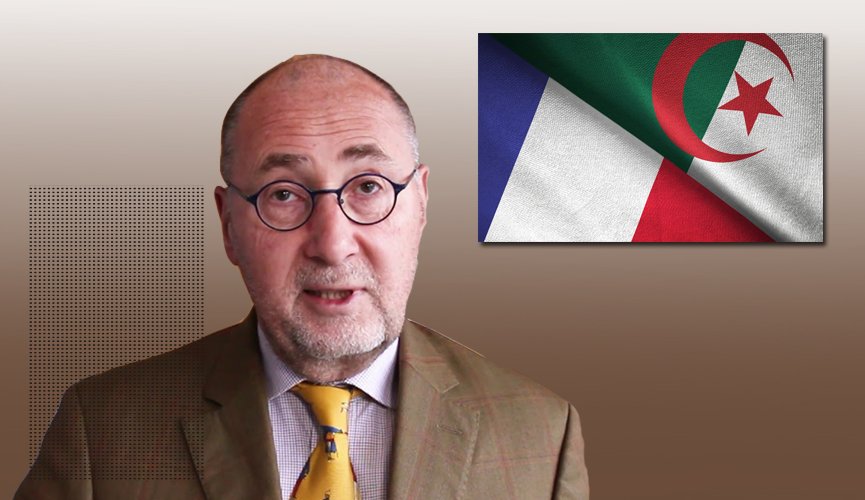
Algeria was strongly mentioned in another new book by the two-time former French ambassador to Algeria, Xavier Driancourt, in which he tried to dissect what he describes as the concessions of the administration of French President Emmanuel Macron towards Algeria in the major diplomatic crisis that has and continues to afflict relations between the two countries since the master of the Elysee Palace decided to follow the “autonomy” thesis, which the Moroccan regime defends regarding the issue of Western Sahara.
The book, which was published last weekend (October 15, 2026) by Salvatore House, is titled “Diplomacy Without Diplomats,” in which Xavier Driancourt sought to judge what he called the failure of the French president to manage the crisis with Algeria, and this formed part of a major problem represented by the major failure of French diplomacy during the era of Macron.
When the reader realizes that the introduction to this book was written by the exciting French storyteller of Algerian origin, Boualem Sansal, and before that the author of the controversial book itself, he can develop a preconceived idea about the content of this book, in which the author tried to settle previous scores with Macron, but he used relations with Algeria as fuel in his new book, an obsession that also dominated his previous books, “Algeria France: The Double Action,” and his other book: “The Algerian Mystery,” as well as the book: “Algeria…facts and myths.”
The title of the book is inspired by a quote by the famous German leader, Bismarck, and it is a reproach to the “state of disarray” that affected the French diplomatic body: The “corps of diplomats,” or what he calls the professional machinery of the French Foreign Ministry, was disbanded under the name “reform,” and was replaced by a unified administrative corps of “state managers,” according to the author’s estimation, who views the book as “a sad conclusion to the disappearance of the French diplomatic corps.”
Through his expertise and experience in the French Foreign Ministry, which extended over a period of about forty years, Driancourt concludes by judging how the French president’s administration dealt with Algeria during the recent crisis as “reckless diplomacy.” This was based on his taking Algerian-French relations as a model.
In this regard, the former French ambassador to Algeria considers that “the embrace diplomacy, always back and forth between Algeria and Paris, rhetorical exaggerations, then successive concessions, proved the limitations of the Macronian style” (relative to Macron). The writer here is trying to distinguish between two periods in the life of the crisis in Algerian-French relations, the period in which the former Minister of the Interior, Bruno Rotayo, was making decisions and imposing a region on the Macron administration, while the second case is the period in which Rotayo left and was replaced by Laurent Noniaz.
As for Xavier Driancourt, the comparison is stark. The political line he described as firm, referring to the Rutayo policy, one of the results of which, as he said, was the release of Boualem Sansal. The second line is the “line of concessions,” which did not achieve anything, according to the author of the book, as evidenced by the continued imprisonment of French journalist Christophe Glez in Algeria, the failure of decisions to expel Algerian immigrants who were ordered to leave French territory, as well as an out-of-control immigration policy.
In the opinion of the retired French diplomat, the upper hand in the battle of the current crisis was in favor of the Algerian authorities, which he said knew how to work with the factor of time, exploiting the volatility of the French position and the weakness of the diplomatic performance of the Macron administration, due to what he described as the “appointments policy” that turned diplomatic positions into political appeasements that benefited defeated representatives in the elections who became ambassadors, former ministers who were included in the diplomatic corps, and even incompetent mayors who also became ambassadors. For boldness, as he described it.
Hence, he tried to highlight what he considered his “boldness” when he was ambassador to Algeria and asked the government about the need to review his country’s policy on visas and the 1968 agreement. Through his study of the repercussions of the crisis with Algeria, Driancourt advised Emmanuel Macron’s successor, to listen to the experts, adopt a diplomacy of silence, reduce noise and advance announcements about every decision, and strengthen the network of French schools and cultural centers in Algeria as they are the most powerful tools of French influence.