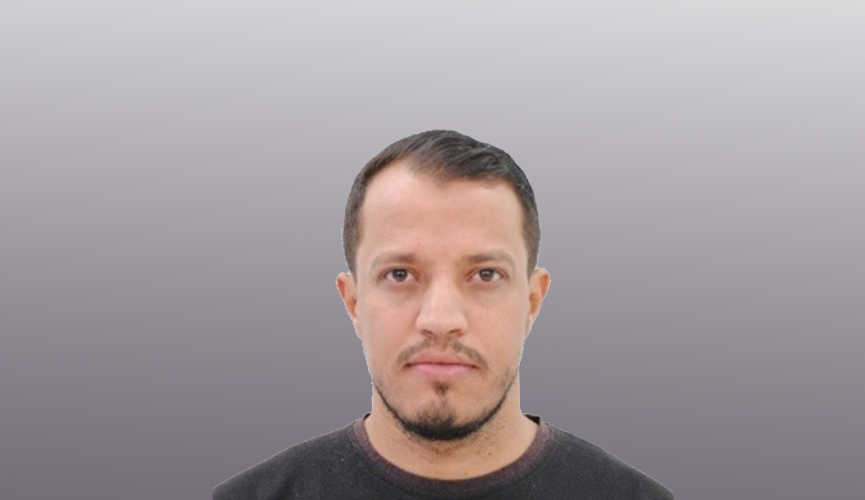
The name of Professor Abdelaziz Rabhi, from the city of Djelfa, stands out among the Algerian academic competencies that were able to build a research path that combines scientific production, technological applications, and openness to international cooperation. His name was included in the list of the top 2% of scientists in the world, associated with Stanford University, according to the Scientific Citation Index.
This scientific presence is an important milestone in the career of a researcher who has devoted years of university work and applied research to studying semiconductors, microelectronics, and renewable energies, which are areas directly related to technological development and the transformations taking place in the energy and industrial sectors.
From university training to specialized scientific research
Professor Abdelaziz Rabhi was born in 1986 in the city of Djelfa, and continued his studies at the “Djilali El Yabes” University in Sidi Bel Abbes, where he obtained a doctorate in microelectronic engineering. He then continued his academic and research path, gradually moving through Algerian university and research institutions, until he became a professor of higher education at the University of Djelfa. His career path has combined applied research in the field of solar energy, university teaching, and research development related to electronic devices and semiconductor materials, with a growing interest in modern technologies and applications of artificial intelligence in the analysis of engineering systems.
Between 2014 and 2017, Rabhi worked at the Applied Research Unit in Renewable Energies in Ghardaia, affiliated with the Center for Renewable Energy Development, where he gained research experience in the field of photovoltaic solar energy and its applications. This stage represented an important aspect of his scientific path, as it allowed him to work in a research environment related to energy challenges in Algeria, and the importance of developing scientific solutions that contribute to improving the performance of electro-optical systems and benefiting from the solar potential that the country abounds with.
In 2017, he joined the University of Tissemsilt as a professor and researcher, and continued there until 2022. During this stage, his activity was not limited to teaching and scientific production, but rather extended to contributing to the development of the university research structure, through the establishment of the laboratory of electronics, automated media, and applied mathematics at the University of Tissemsilt. This contribution highlights an important aspect of his path, which is to contribute to building a multidisciplinary research environment that combines electronics, computing and applied mathematics, and provides a framework for scientific cooperation and the completion of joint research. Since 2022, Rabhi has continued his academic and research path at the University of Djelfa, where he contributes to university teaching and research development in the fields of microelectronics, semiconductors, and solar energy.
From Djelfa to Italy…a continuous research journey
Professor Rabhi underwent a research experience in Italy at the University of Brescia, within the Sensor Lab. His work there focused on developing and studying “nano” materials based on metal oxides, and their applications in chemical sensing, which is a scientific field that combines materials science, electronics, and “nano” technologies, and opens horizons for developing more efficient sensors in detecting and analyzing materials and gases. This experience falls within a research path that seeks to combine basic knowledge in materials physics with modern engineering applications, as well as enhancing scientific communication with research teams outside Algeria.
Professor Rabhi’s research focuses on a group of overlapping scientific fields, most notably microelectronic engineering and semiconductor physics, which includes studying the electrical and optical properties of materials such as gallium nitride (GaN), gallium arsenide (GaAs), and silicon carbide (SiC).
These materials are gaining increasing importance in the development of electronic components, power devices and optoelectronics, given their properties that make them suitable for applications requiring high performance under different operating conditions.
His research interests also include photovoltaic solar cells, modeling the performance of electronic devices, extracting electrical parameters of solar cells, in addition to using signal processing, artificial intelligence, and deep learning techniques in predicting solar energy production and diagnosing industrial faults.
This diversity reflects a trend towards employing mathematical modeling, numerical simulation, and modern computational methods to address scientific and engineering problems of applied importance, especially in the fields of energy, technology, and industry.
Prolific production and presence in international indicators
According to the scientific indicators provided by the researcher regarding his academic file, his production exceeded 160 indexed scientific articles, while the number of citations to his works reached about 2,800 citations.
These indicators reflect the volume of research production and the extent of the presence of scientific publications in academic literature, noting that their significance varies according to the databases used, the date of their updating, and the scientific specialization.
The inclusion of his name among the top 2% of scientists in the world adds an international dimension to this path. This list is known for its reliance on bibliometric indicators, including scientific citations and research impact indicators, according to a specific methodology. The significance of inclusion is precisely determined by the issuance of the list and whether the classification is related to influence during the scientific career or during a specific year. Rabhi also participated in joint scientific research with researchers from international institutions, within the framework of research cooperation that included countries including Sweden, Italy, Canada, Kuwait, Ethiopia, Saudi Arabia, and Egypt, in addition to other countries, which reflects the extension of his scientific interests to cooperation networks that go beyond the boundaries of a single university institution.