The European Union has approved a €90 billion loan for Ukraine and adopted a new sanctions package against Russia after oil flows resumed through a key pipeline, ending months of political deadlock.
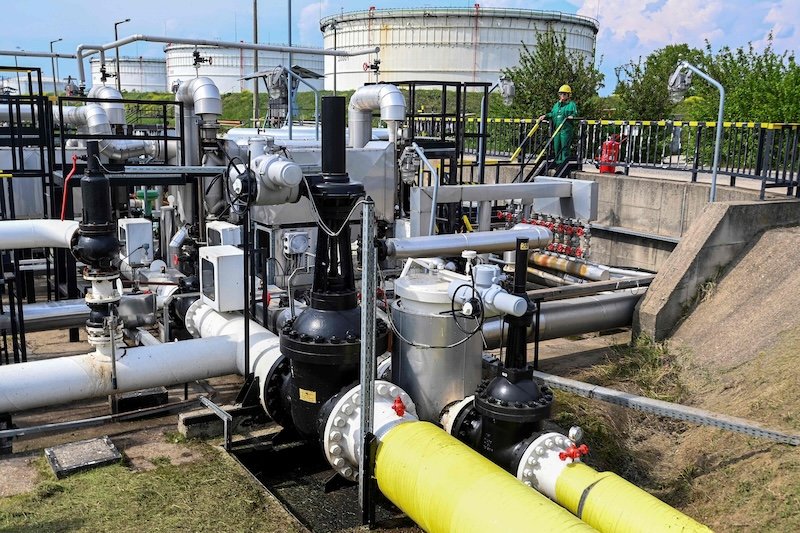
The decision followed the restart of crude oil deliveries through the Druzhba pipeline, which supplies Hungary and Slovakia. Supplies had been halted since late January after damage caused by Russian strikes, according to Ukrainian officials.
EU member states reached final agreement on Thursday through a written procedure, confirming earlier approval by ambassadors in Brussels. The package also includes the bloc’s 20th round of sanctions against Russia.
European Council President António Costa said the move showed unity. He wrote that Europe stands “firm, united and unwavering” in its support for Ukraine.
The loan had been agreed in principle in December but was blocked by Hungary. Former prime minister Viktor Orbán had tied his approval to the restoration of oil supplies through the pipeline, which runs via Ukraine. His stance delayed both the loan and the sanctions package.
Ukraine confirmed this week that repairs to the damaged section had been completed and pumping had resumed. Slovakia’s economy minister Denisa Sakova said oil was expected to reach the country again for the first time since January, based on information from pipeline operator Ukrtransnaft.
Hungarian energy firm Mol also said crude had begun moving through the system and would arrive within days.
The breakthrough came shortly after Orbán’s election defeat, which ended his 16-year tenure. His successor, Péter Magyar, has signalled a shift in relations with Brussels.
EU foreign policy chief Kaja Kallas said the agreement marked the end of the impasse. She said the loan was essential and showed that Russia would not outlast Ukraine.
Ukraine’s president Volodymyr Zelensky welcomed the decision. He said the funding was “an important day for our defence” and called for rapid implementation so that the first payments can be made soon.
The loan is structured as two tranches of €45 billion for 2026 and 2027. According to EU officials, about €28 billion each year will support defence, while €17 billion will cover broader budget needs. The funds will be raised on capital markets and backed by the EU budget.
Economists have warned that Ukraine risks running short of funds by mid-year without external support. EU economic commissioner Valdis Dombrovskis said the first disbursement could take place at the end of May or early June.
The funding model links repayment to future Russian reparations, potentially drawing on frozen Russian central bank assets held in the EU, estimated at about €210 billion.
Alongside the loan, the EU adopted new sanctions targeting Russia’s energy, financial and trade sectors. Measures include restrictions on maritime services linked to oil transport, the addition of dozens of vessels to a blacklist and sanctions on more than 100 individuals and entities. Additional Russian banks and crypto-related services are also affected.
The European Commission said the measures aim to limit Russia’s ability to finance its war effort and bypass existing restrictions.
French President Emmanuel Macron described the agreement as a positive step, linking support for Ukraine with increased pressure on Russia.
The pipeline dispute had become one of the most sensitive issues in European energy politics. Hungary and Slovakia remain dependent on Russian oil delivered through Druzhba. Orbán had accused Ukraine of delaying repairs, while Kyiv said the damage required time to fix under ongoing attacks.
Recent developments have also included Ukrainian drone strikes on Russian energy infrastructure, including facilities linked to oil transport, according to reports from Reuters.
In a separate move, Russia said it will halt oil flows from Kazakhstan to Germany through another section of the pipeline from May, citing technical reasons. German officials said alternative supply routes would ensure continued refinery operations.
EU officials said the adoption of the loan and sanctions marks a step in maintaining financial and military support for Ukraine while increasing pressure on Moscow.
HT