In just three months, the probability of a El Niño Phenomenon (FEN) extraordinary for next summer went from 8% in June to 52% in September, according to the ENFEN commission, and the sea off the Peruvian coast already exceeds the temperatures of 1997 and 1983.
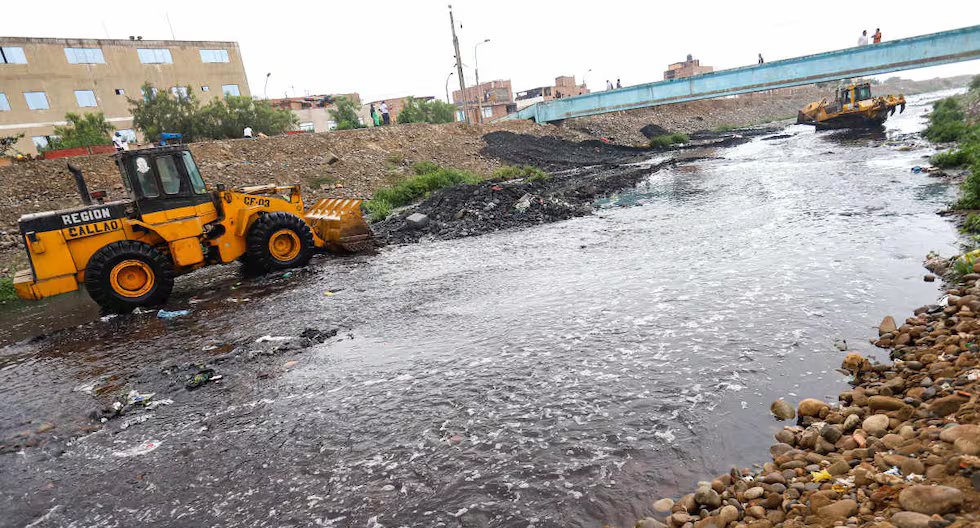
With the rainy season less than three months away, the Executive and regional and local governments must concentrate their execution capacity today on critical areas, and not wait for the emergency.
See also:

In September, the sea temperature anomaly off the Peruvian coast (+4.8 °C) exceeded the maximums of the third quarter of 1997 and 1983, two of the most severe episodes in recent decades. At the end of the month, the sea reached 26 °C, its highest temperature in almost 50 years, when at that time it is usually between 20 °C and 22 °C.
Faced with this scenario, the Government prioritized 536 critical points in eight regions of the coast. However, as of October 7, despite the Executive’s attempts to speed up procedures, only 17% had work in progress, according to the National Water Authority (ANA). In the northern macro-region (191 points) and Lima (141 points), where the risk is concentrated, those points in execution do not exceed 20%.
The delay is not new. According to IPE calculations, by 2025, the country accumulated 926 paralyzed or abandoned disaster risk management works, with an investment of S/302 million. Lima (268) and the northern regions (149) concentrate almost half (45%) of them.

Report from the Peruvian Institute of Economics (IPE).
Prevention has also not been a budget priority in the last decade. Between 2021 and 2025, spending on prevention totaled S/1,572 million, below the previous five-year period (S/1,625 million), despite the fact that the FEN of 2023 occurred in that period. After that episode, spending was reduced in 2025 and, at the current execution rate, it would close 2026 with a second consecutive annual reduction.
The limited impact of prevention has fiscal consequences when emergencies materialize. In 2017 and 2023, spending on immediate emergency care multiplied by three compared to the previous year and exceeded what was allocated to prevention in those same years. That is, the State spends more when it reacts than when it anticipates.
The delay has a direct cost for various sectors, among which agriculture stands out. More than 70% of the interventions in critical points are cleaning and clearing rivers and streams, aimed at avoiding overflows and flooding. This is key for an activity that had already accumulated a 2% drop in production between January and July, and more than 6 million hectares of agricultural land are at high risk from flooding, equivalent to 53% of the total, according to Cenepred. In the case of Lambayeque, 92% of the agricultural area is in this condition.
In that sense, companies anticipate and prepare faster than the State. In September, business expectations in the north moved into pessimistic territory for the first time since 2023, without considering the months of the electoral campaign. Furthermore, according to BCRP data, 77% of northern companies plan to reinforce their facilities and 66% will implement operational continuity plans, compared to almost 40% on the national average.
In aggregate, the group of economic analysts, in line with the BCRP, estimates that the FEN could subtract more than one percentage point from the growth of 2027. In this way, the pattern of 2017 and 2023 is being repeated. The State invested little in prevention and ended up spending several times more in addressing the emergency.

More than 6 million hectares of agricultural land are at high risk from flooding
It is up to the Executive to set public and weekly goals for the 536 critical points, unblock the paralyzed works in Lima and the north, and coordinate with the elected regional authorities so that execution does not stop in January. What is not carried out today in prevention will be paid for later, multiplied, in care and reconstruction, affecting the most vulnerable to a greater extent.